
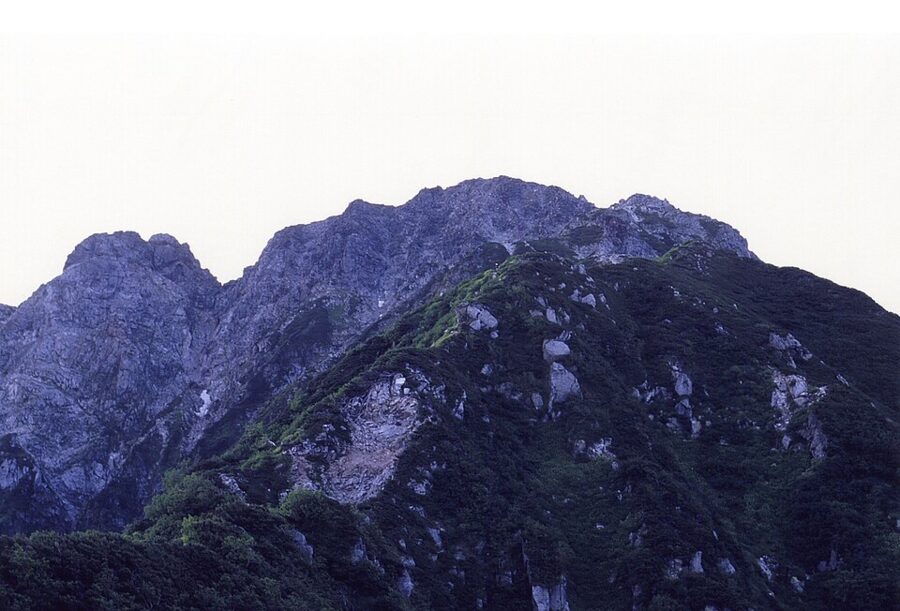

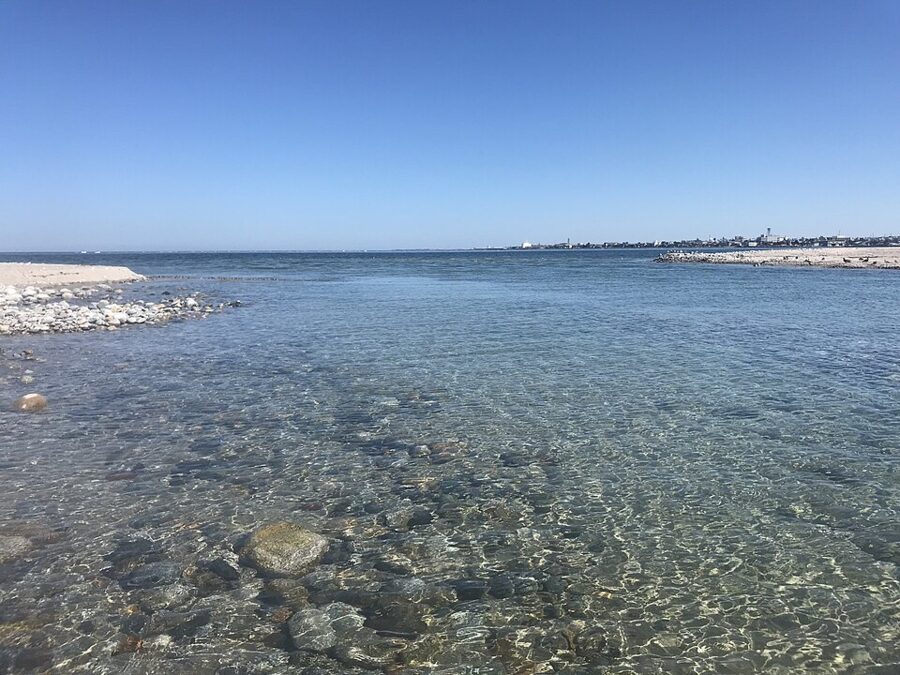
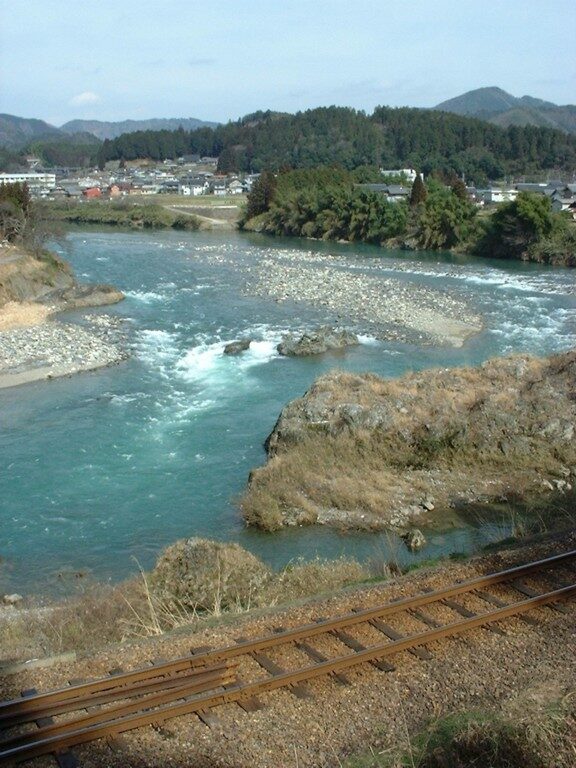
Thirty people stood at midnight on the stones where the Hayatsuki River runs into Toyama Bay, at sea level, each carrying everything they would need for the next eight days. Their first checkpoint was the summit of Tsurugidake (剱岳), 2,999 m above them, by the Hayatsuki ridge, a path with almost the whole height of the mountain in one climb. Behind Tsurugi lay the rest of the Northern Alps, then the Central Alps, then the Southern Alps, then a road to the Pacific. The whole thing is about 415 km with about 27,000 m of ascent, and that night in August 2026 was the start of its thirteenth edition: the Trans Japan Alps Race.

The race is the Japanese end of a story that began thirty years earlier, when the first Japanese teams flew to the Raid Gauloises and the Eco-Challenge and learned the sport in the jungles of Borneo and the deserts of Oman. They came home and built races of their own. Some of those are gone and some still run. The one that starts on that beach asks more of a single person than any of them.

Nobody gets to that beach without years in the mountains, and the qualifying rules make sure of it. The usual way into the sport in Japan is smaller: learn the map at a rogaine or an orienteering meet, race a day, then a weekend, then think about the Alps.
Contents8 sections
What an adventure race is
An adventure race is a team crossing a piece of country by its own power, finding checkpoints with a map and a compass, switching between sports as the terrain demands. The International Adventure Racing Association’s definition of the sport sets the minimum: at least two endurance disciplines from trekking, mountain biking and paddling; an unmarked course found by map-and-compass navigation; and teams of two to four. Everything else is local colour, from rope sections and canyoning to camels and inline skates.
The clock does not stop. A race of 24 hours or ten days runs in real time, and the team decides when to sleep, if it sleeps at all.
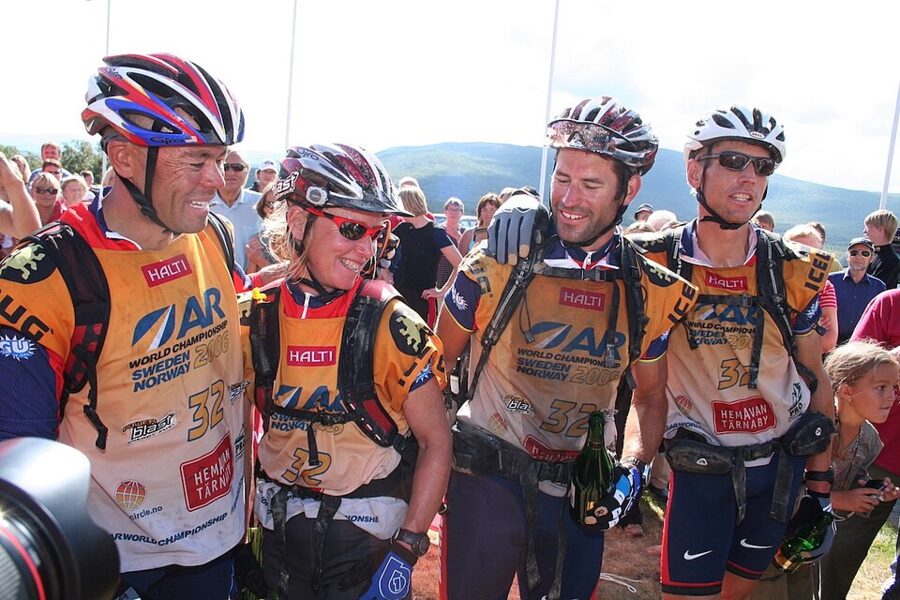
The team also stays together: no substitutions, and if one person drops out, the others may carry on but they are off the results. On expedition races the standard team is four with at least one woman, and three men and one woman is the usual mix. That rule is why so much of this story is about who a team could find to fill the fourth place.

Races are sorted by time rather than distance. A sprint is a few hours and barely needs a map. A 12-hour race brings in real navigation. At 24 hours the night does the damage.
At 36 to 48 hours sleep becomes a tactic, and an expedition race runs from three days to more than ten. A staged race stops the clock each night, which makes it a different event for the body even when the distance is the same.
The navigation is the part that separates the sport from multisport. Checkpoints are marked on the map, not on the ground, and the line between them is the team’s call: the ridge or the valley, the long road or the short bushwhack. The association is plain that events with taped routes are multisport races wearing the name, welcome as a way in but not the thing itself. In Japan the same line runs between the marked-course events that fill sports-entry sites and the handful of navigation races that do not.
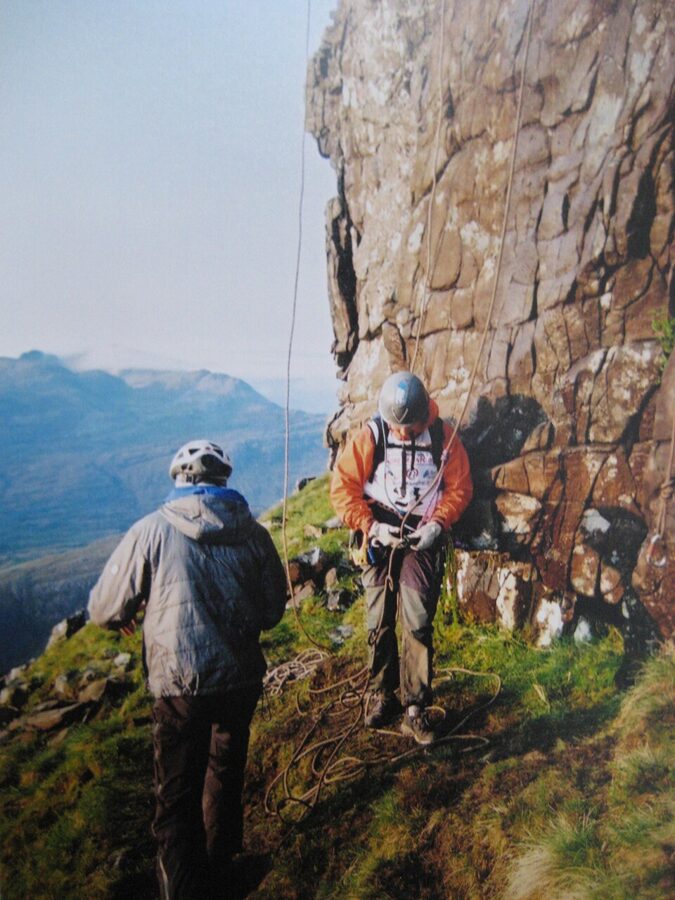

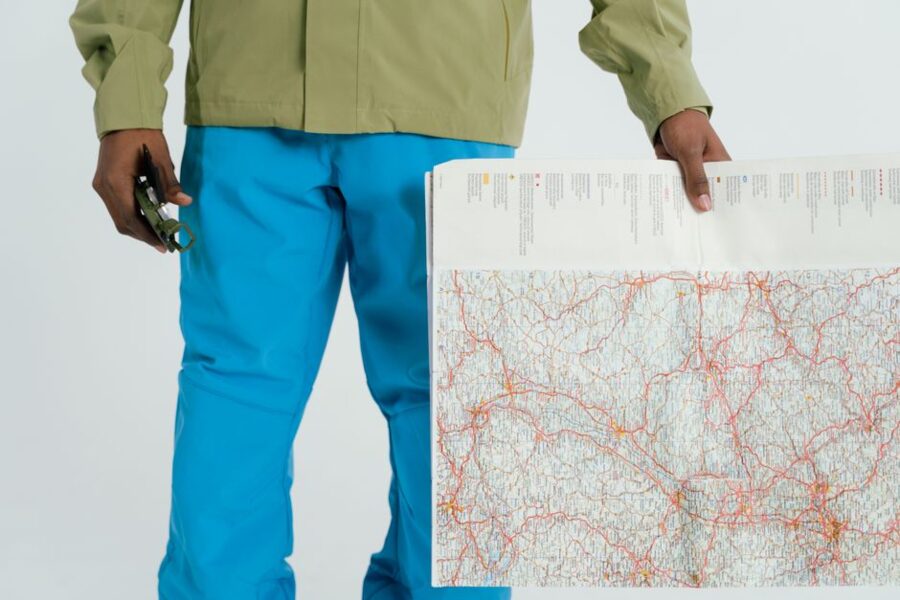
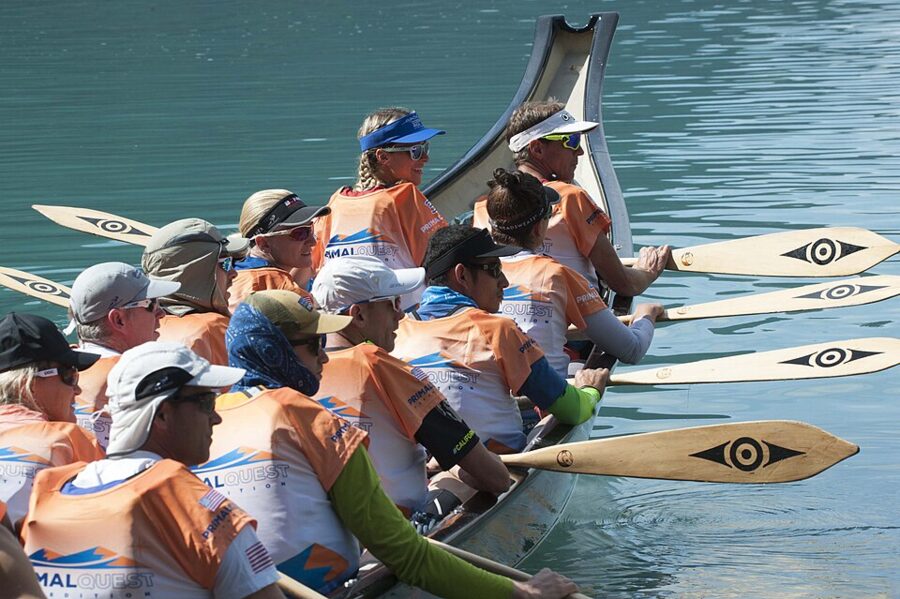
Most of a race is ordinary movement done for a very long time. Trekking means off-trail as often as on it. The mountain bike carries you between valleys on forest roads. The paddling might be a sea kayak on open water, a canoe down a river, or a packraft carried in a rucksack until the river is reached.
The skill that decides results is none of these. It is reading the map at 03:00 when everyone is tired, and noticing that the stream you are following is the wrong one before you have followed it for an hour.

How Japanese teams came into the world races
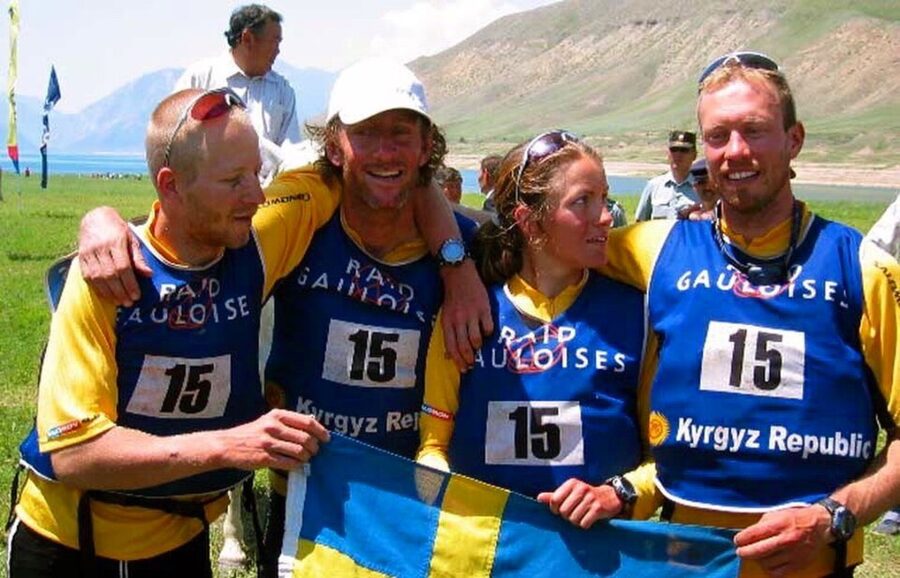
Expedition racing in its modern form began with the Raid Gauloises, which the Frenchman Gerard Fusil first ran in New Zealand in 1989. The Southern Traverse followed in New Zealand in 1991, and in 1995 Mark Burnett, who had raced the Raid, launched the Eco-Challenge in Utah and put the sport on American television. Through the 1990s these three were the world stage, and they moved country every year.
The first Japanese finishes
The first Japanese team at the Raid went to Oman in 1992. It was led by Kimura Tokichi, a model and outdoor writer, and by his own account the team finished but outside the official ranking. He came home and from 1995 spent four years as race director of the Trophee Volvic, one of the first full adventure races held in Japan. His own profile gives the dates, and it is about the only primary record of that first team.
The man who turned the sport into a career in Japan got in by winning a trail race. Tanaka Masato (田中正人), born in Saitama in 1967 and then working as a research chemist, won the first Japan Mountain Endurance Race in the Okutama hills west of Tokyo in 1993. An event producer noticed, and in 1994 he went to the Raid Gauloises in Borneo in a team built around the comedian Hazama Kanpei.
Team East Wind’s history calls that the first Japanese finish of the race, which is true if you count only ranked finishes. Sources differ on what the 1992 team’s unranked finish should count for, and I would not argue with either.

Team East Wind
Tanaka left his job, became a professional racer and in 1996 founded Team East Wind, which is still based in Minakami in Gunma and is still the only professional adventure racing team in Japan. The team’s race history is the best single record of how Japan learned the sport, year by year, with placings and team lists, and most of the dates below come from it.
The early years were a hard education. At the 1996 Eco-Challenge in British Columbia the team finished outside the ranking. The same year three Japanese racers finished the Southern Traverse in 13th place in the three-person class, with Tanaka as support crew.
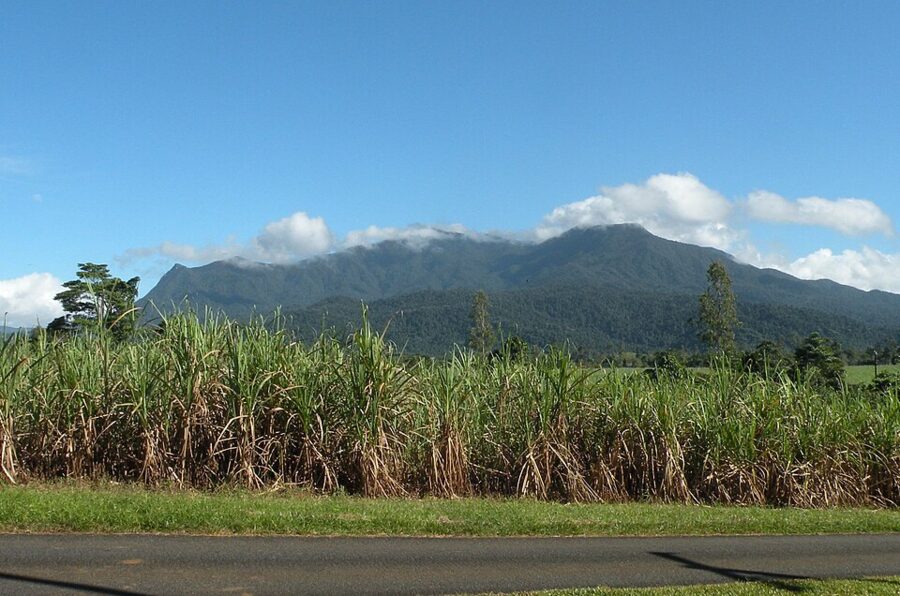
In 1997 East Wind raced the Raid Gauloises in South Africa and Lesotho to 11th, and at the Eco-Challenge in Queensland they retired after one of the team hurt an ankle. They carried their teammate over Mount Bartle Frere anyway, and the organisers gave them a special award for it.

The first ranked Japanese finish of the Eco-Challenge came in Argentina in 1999: 15th, with Tanaka, Tajima Kenji, Takahata Masayuki and Miyauchi Sakiko. In 2000 the team took 13th at the Eco-Challenge in Sabah and 14th at the Raid in the Himalaya, and in 2001 they were 11th at the Eco-Challenge in New Zealand. Those mid-table finishes were the real achievement. Expedition races are won by teams with full-time athletes and sponsors, and a Japanese team was racing against both with a language barrier and long flights to every start.

The team kept going after the big three faded. The Eco-Challenge stopped after 2002 and came back only once, in Fiji in 2019, where East Wind did not finish. The Raid ended after 2003. East Wind raced the world championship in New Zealand in 2005, Primal Quest in Utah in 2006, the Patagonian Expedition Race from 2010, where they were second in 2012, 2013 and 2016, and most world championships of the Adventure Racing World Series since.
A new generation came through the team’s trainee system: Tanaka Yoki (田中陽希), who joined as a trainee in 2007 and later became famous on NHK for walking the 100 famous mountains in one push, took the captaincy in 2022, and Yonemoto Akira took it in 2025.
The team ran 2022 second at Expedition Oregon, 15th of 109 teams at the 2023 world championship in South Africa, and raced the 2026 world championship in Corsica, where they finished outside the ranking among 99 teams. Tanaka is in the Adventure Racing World Series hall of fame, which credits him with more than 60 expedition races, and he still races at 58.
The Mild Seven Outdoor Quest
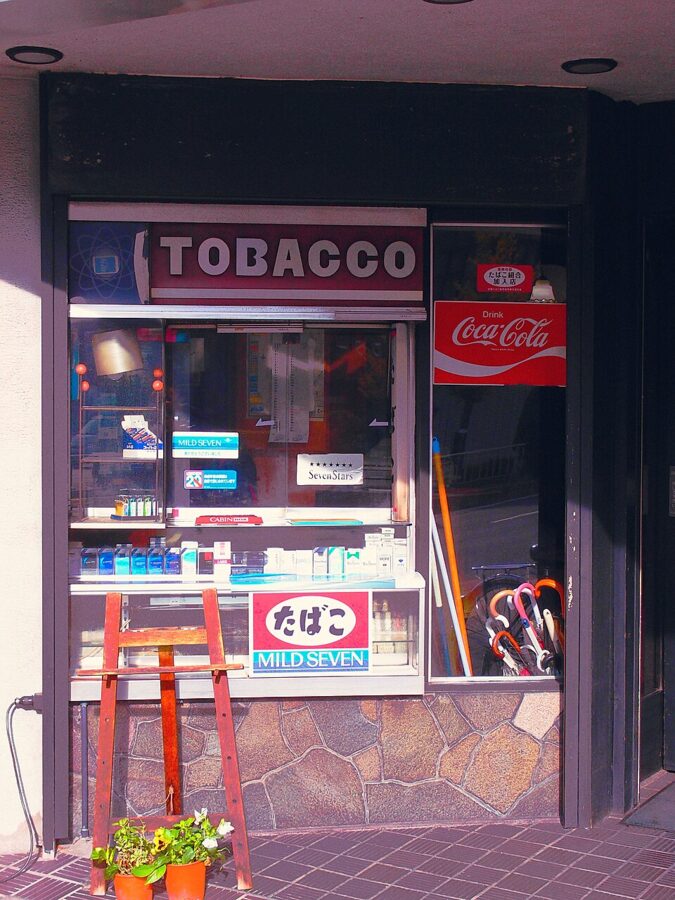
One race in this story is cited in medical research. The Mild Seven Outdoor Quest was a stage race in China sponsored by Japan Tobacco and named after its best-selling cigarette brand. Team East Wind raced it from the first edition, in Sichuan in 1997, where they were 11th, and through four editions in Yunnan from 1998 to 2001.
In 2010 three researchers from Teikyo University and Harbin Medical University published an analysis of Japan Tobacco’s activities in China in the journal Tobacco Induced Diseases. They described the Outdoor Quest as a four-day stage race of about 300 km with seven events, among them mountain biking, kayaking, inline skating and running. They argued it was there to advertise the brand to young Chinese consumers, and that the company could sponsor such events only in China and Malaysia because of stricter laws elsewhere.

The paper gives the race’s dates as China from 1997 to 2001 and Malaysia from 2002 to 2004, and says it finished in 2005. East Wind’s record matches: 16th, 12th and 12th in Borneo from 2002 to 2004, with a special award in the last year. For their list of the Japanese teams in the race, the authors cited a Japanese adventure-racing website of the time. That is why the race comes up at all when anyone looks into Japan Tobacco in China: the evidence was the racers’ own results.
For the racers it was a well-run stage race in big country, and it filled a gap when expedition racing was expensive. For public health it was a case study. Both are true, and the paper is short and worth reading in full.
The races Japan built
By the late 1990s Japan had enough racers to want races at home, and enough mountains to set them. Kimura Tokichi’s Trophee Volvic came first, from 1995. Salomon’s X-Adventure series, which ran rounds in France, Germany, Morocco and elsewhere, came to Nagano in 1999, where East Wind were sixth and the best Japanese team, then to Gifu in 2000, where they were third, and to Hokkaido in 2001.

The Izu Adventure Race ran on the Izu Peninsula from 2000 to 2005, with training camps for new teams before the race. Regional one-day and two-day events followed in the 2000s and 2010s: Team East Wind’s Satoyama Adventure in the low hills, the Extreme Series run by the company Extremo across the country, and others in Nagano and Akita. The Izu race and X-Adventure have ended. Extremo’s entry page currently lists no upcoming events, so I would not plan around the Extreme Series without checking.
Underneath the racing sat a running event that never left. The Japan Mountain Endurance Race, called Hasetsune after the climber Hasegawa Tsuneo, has run every October since 1993 over 71.5 km of the Okutama mountains, with about 4,582 m of climbing, a 24-hour limit and almost no support. The only aid is 1.5 litres of water or sports drink at the second checkpoint, so you carry the rest. Its 34th edition ran on 11 and 12 October 2026, and Japanese runners call it the shortcut to a TJAR application.
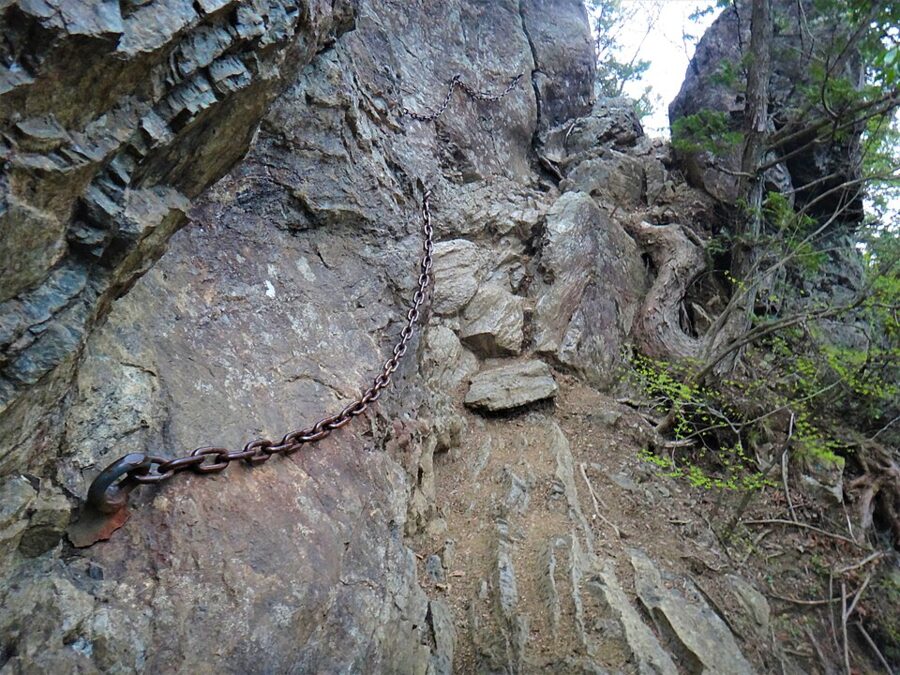

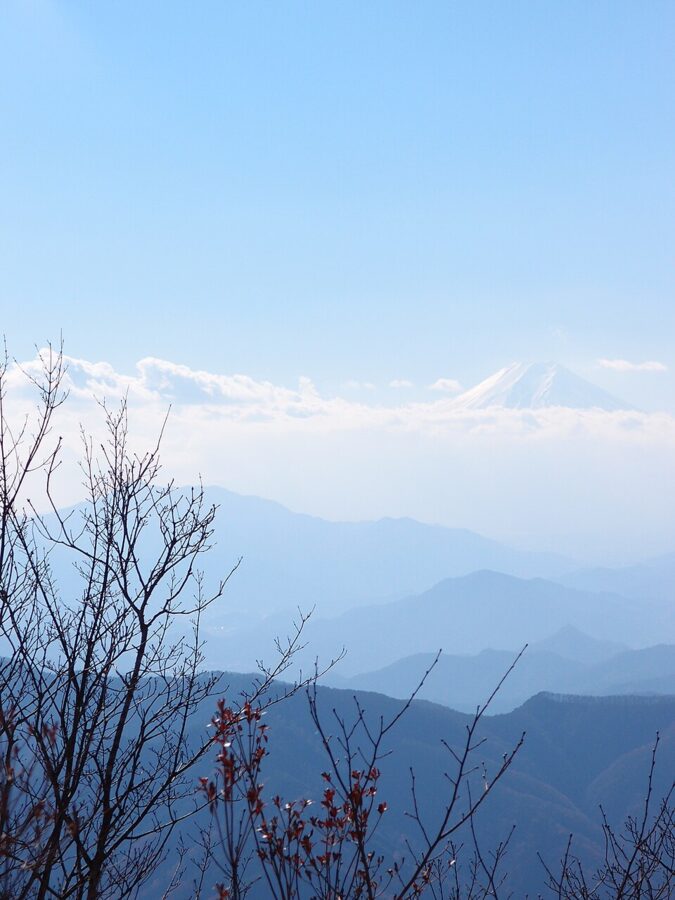

What runs today is a smaller, sturdier scene. The Adventure Racing Japan Series held four rounds in 2026: a two-day race on the Nagara River in Gifu in April, a one-day race at Minakami in July, a three-day sea race at Nagato in Yamaguchi in September and a two-day race at Myoko in Niigata at the end of October. Team East Wind’s people run some of them and the rest are local committees. The series’ race list shows it has run since at least 2019, with a gap for 2020.

The Trans Japan Alps Race
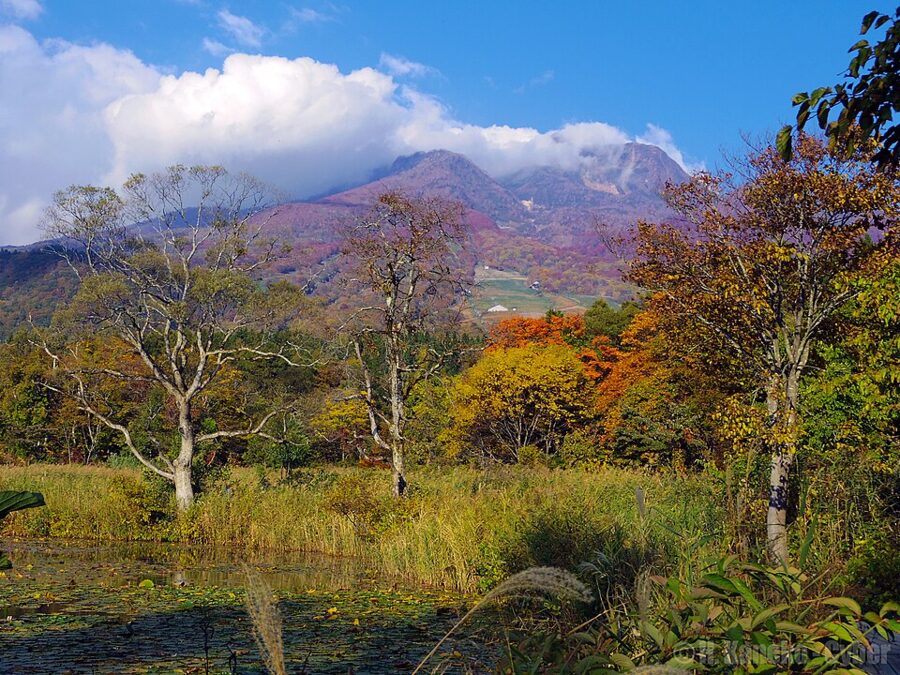
The Trans Japan Alps Race, TJAR (トランスジャパンアルプスレース), is the race this country is known for in the wider sport, and it grew from the same small community. Iwase Mikio ran the first edition in 2002 with three others and was the only finisher, in 7 days 5 hours. Tanaka Masato won in 2004 and 2008. It has been held every two years since, it pays no prize money, and the start list never goes above 30.
The concept, in the organisers’ words on the 2026 race outline, is to cross from the Sea of Japan to the Pacific on your own feet within eight days. The 2026 race started at 00:00 on 9 August at the mouth of the Hayatsuki River in Uozu and closed at 24:00 on 16 August at Ohama beach in Shizuoka: 192 hours. Entry cost ¥35,000.

The route
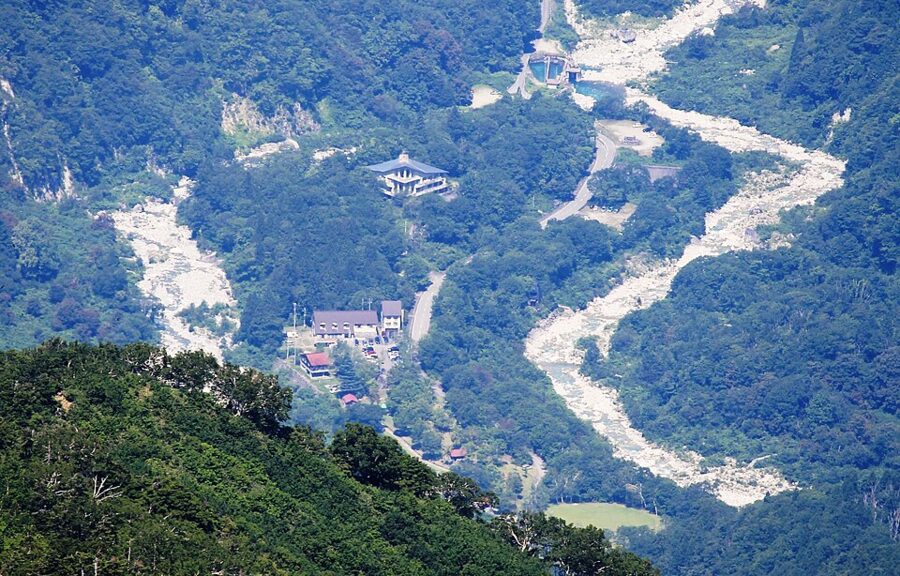
The course is a chain of checkpoints, and the line between them is the racer’s choice, but in practice it follows the main hut-to-hut trails in the mountains and ordinary roads in the valleys. The organisers list it in seven parts. The heights are the Geospatial Information Authority of Japan’s list of mountain elevations.
| Section | Ground | High point |
|---|---|---|
| Hayatsuki River mouth to Banbajima | Road up the valley, at night | Valley road |
| Northern Alps: Tsurugidake, Yakushidake, Yarigatake Sanso, Kamikochi | Hut trails over the high ridges | Tsurugidake 2,999 m; Yarigatake 3,180 m above the hut |
| Kamikochi to Yabuhara station and the old Kiso Koma Kogen ski area | Road across the Kiso valley | Road passes |
| Central Alps: Kisokomagatake to Utsugidake | Ridge traverse | Kisokomagatake 2,956 m |
| Komagane Kogen to Ichinose | Road; the only resupply | Valley roads |
| Southern Alps: Senjogatake, Shiomidake, Akaishidake, Hijiridake | The longest mountain section | Akaishidake 3,121 m |
| Ikawa Dam, Fujimi Pass, Shizuoka station, Ohama beach | Road to the Pacific | Fujimi Pass, then sea level |
About 27,000 m of ascent is roughly seven climbs of Mount Fuji from the sea, end to end, and an ordinary hiker would take about a month over the distance. The Northern Alps section comes first and in the dark, so the hardest technical ground of the race, the descent from Tsurugidake to Maetsurugi, is met by people who have not slept.
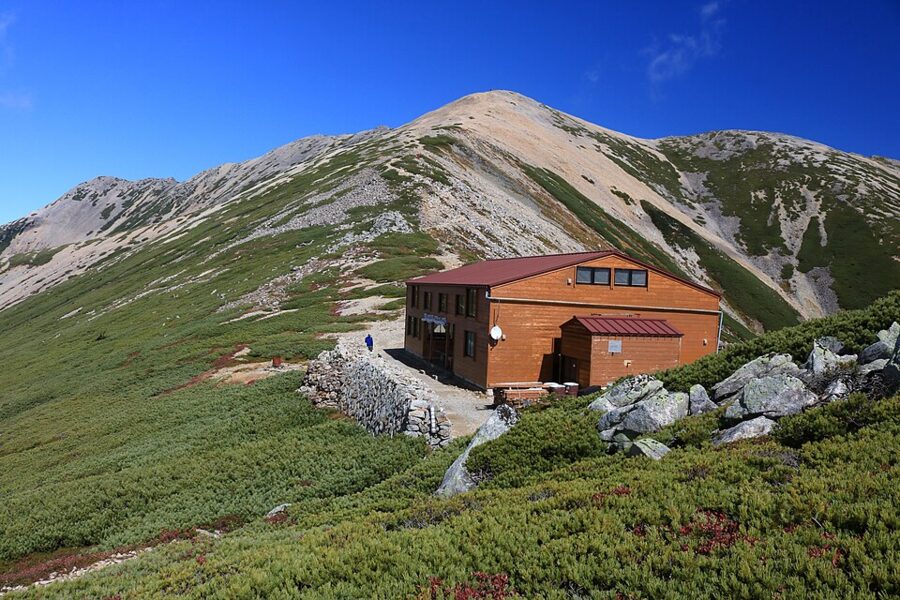

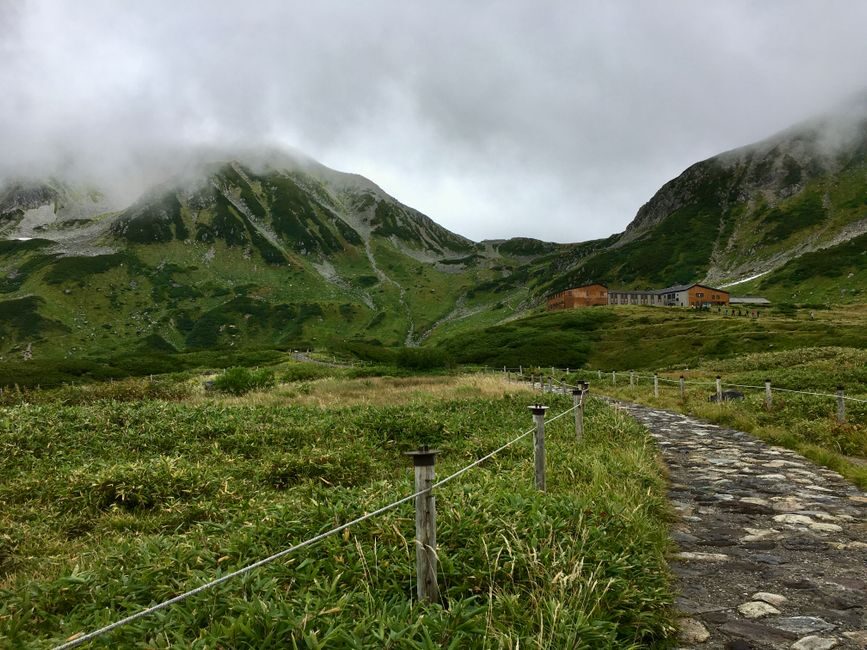
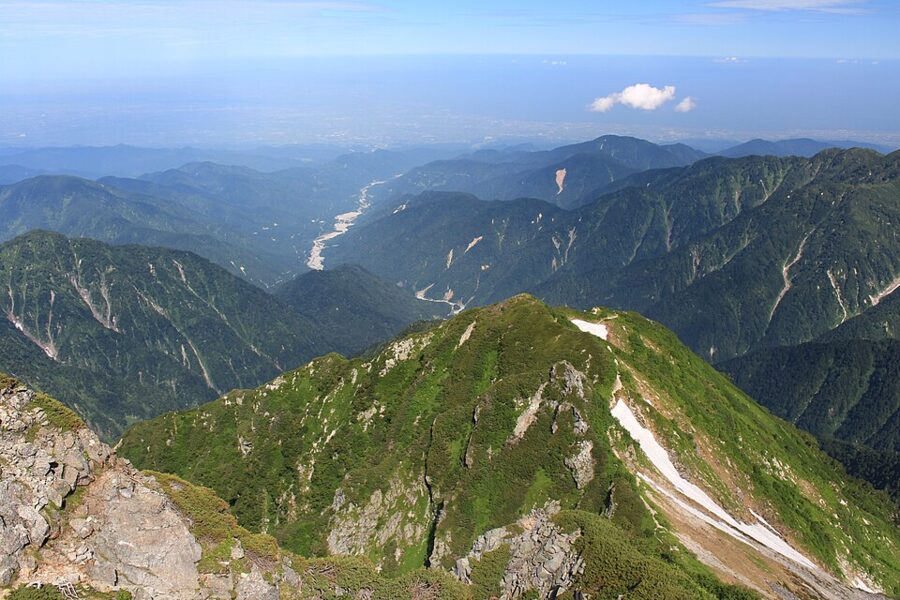
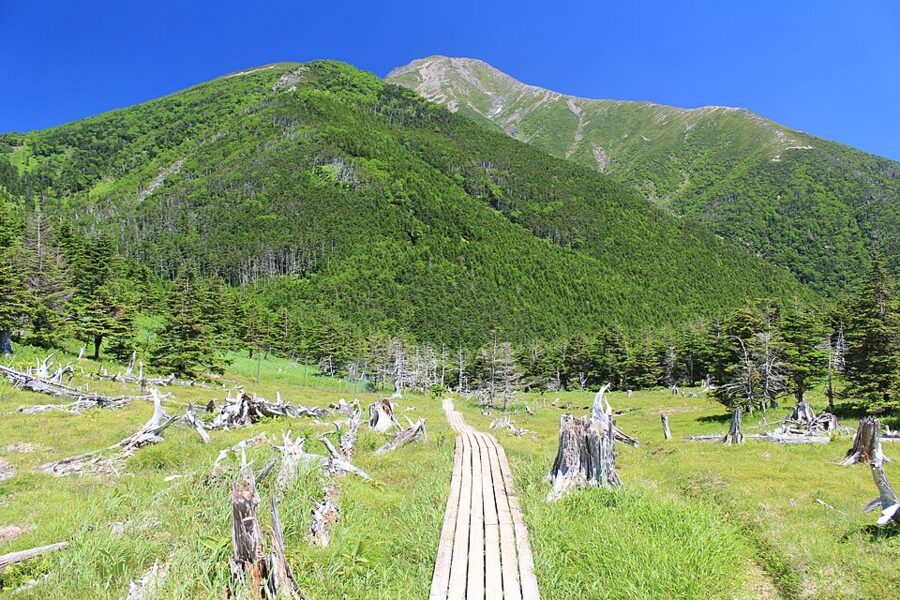
From Tsurugi the line runs south over Tateyama and the long ridges past Yakushidake to Yarigatake Sanso, the hut below the 3,180 m spike of Yarigatake (槍ヶ岳), then down to Kamikochi (上高地). That is the end of the Northern Alps and the first big cutoff. In 2024 the racers had 56 hours to reach Kamikochi from the start.
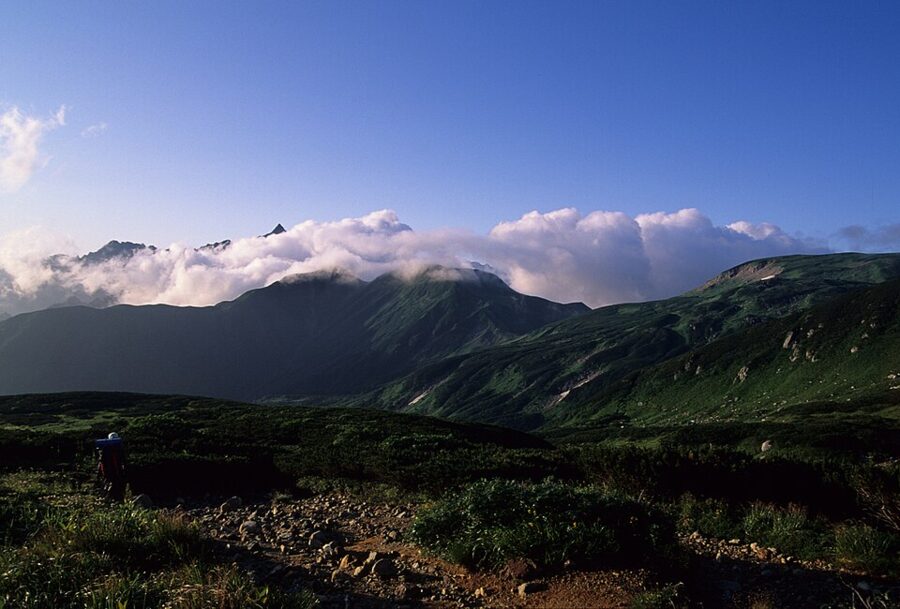

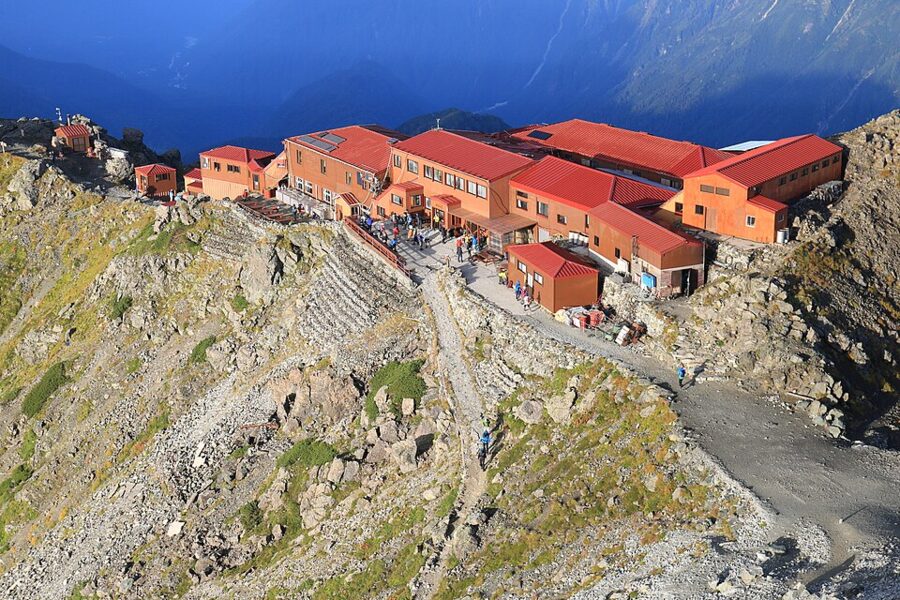

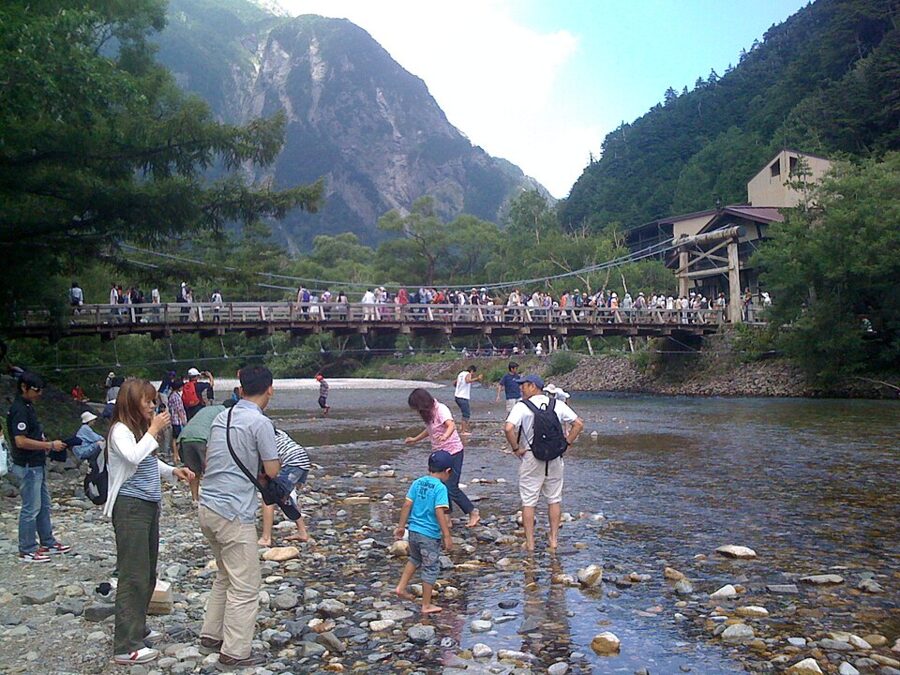

Then comes the part people forget: road. From Kamikochi the course drops to Yabuhara on the Chuo Line and climbs to the old Kiso Koma Kogen ski area, then over the Central Alps from Kisokomagatake (木曽駒ヶ岳, 2,956 m) to Utsugidake (空木岳, 2,864 m).
Shops and restaurants in town are allowed, and so is a bath. Then down to Komagane and along the road to Ichinose, at the foot of the Southern Alps, where each racer may collect one box they posted ahead and send home what they no longer need. In 2024 the cutoff at Ichinose came 108 hours in.
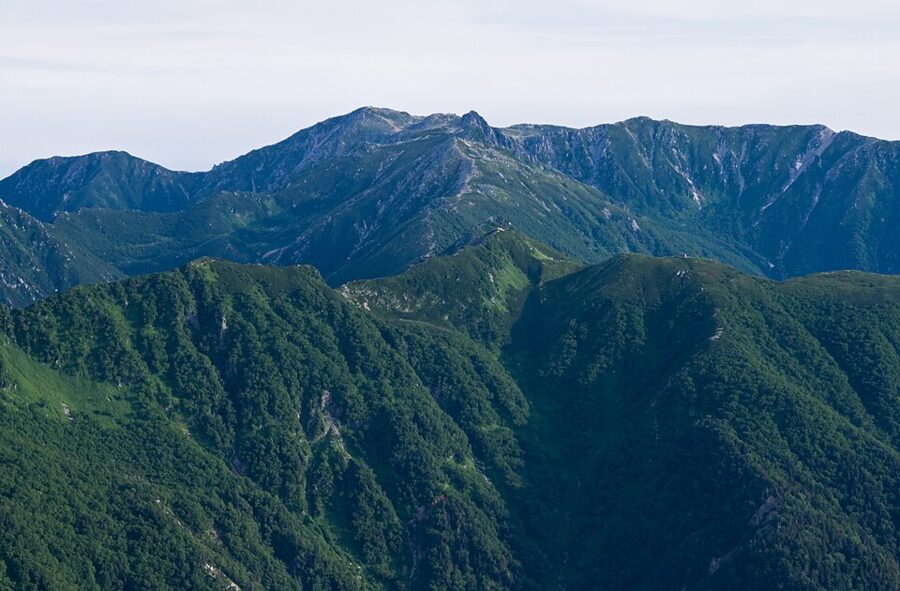

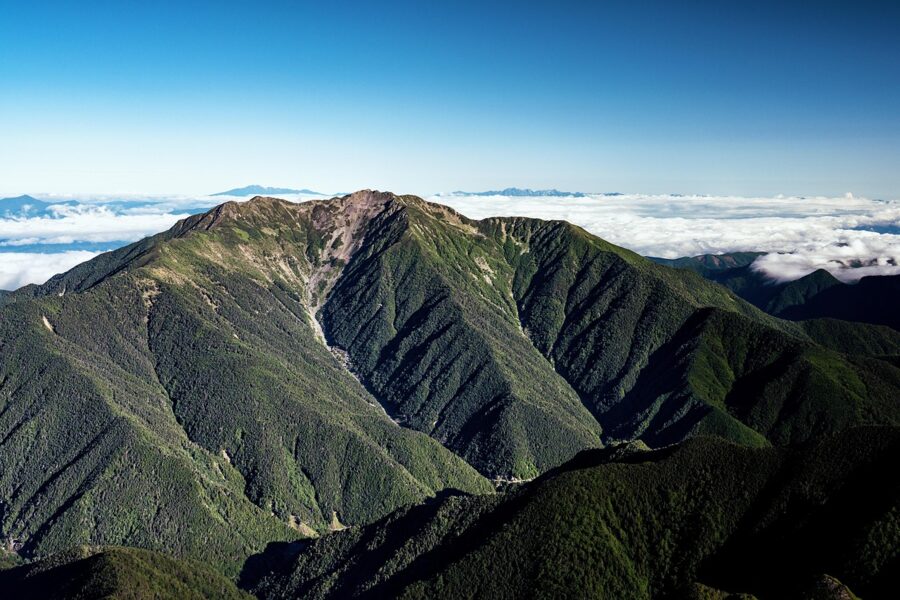
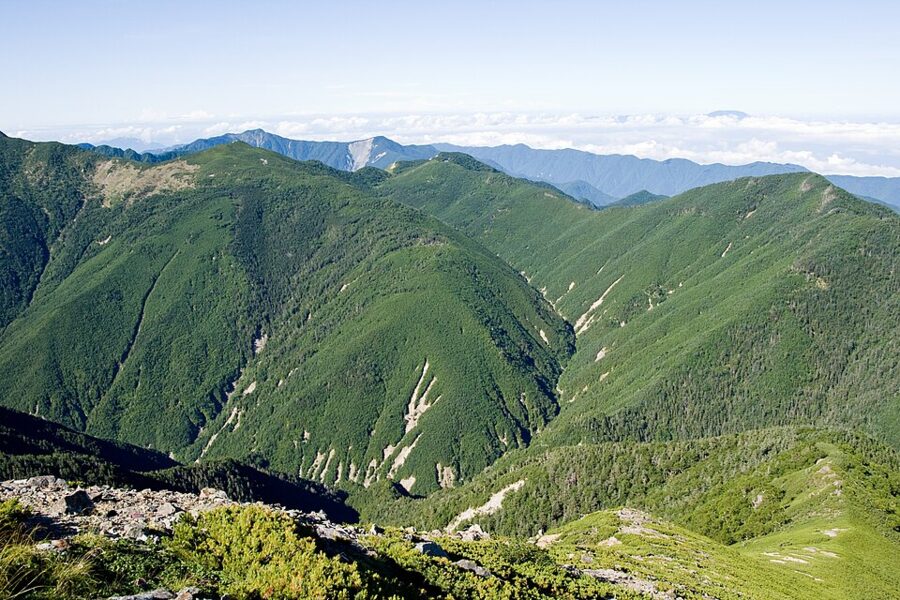
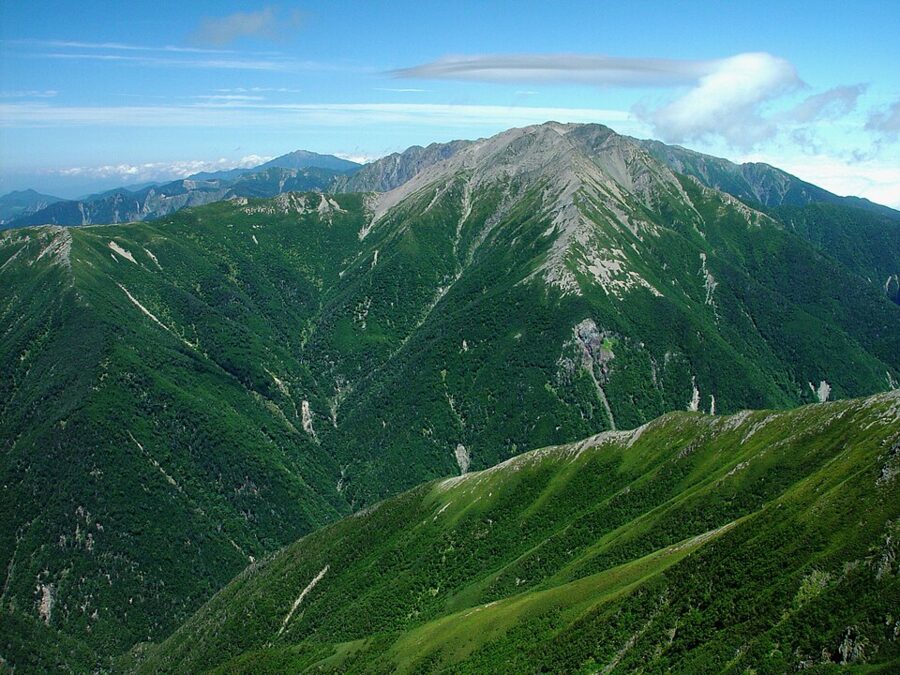
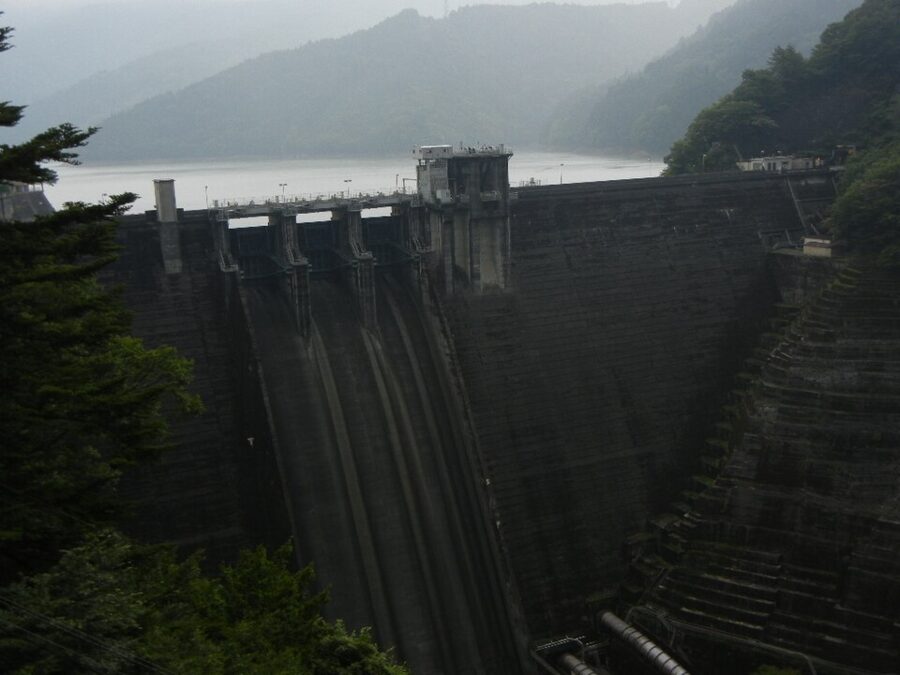
The Southern Alps are the long one. Senjogatake (仙丈ヶ岳, 3,033 m), then Shiomidake (塩見岳, 3,052 m), Sanpuku Pass, Akaishidake (赤石岳, 3,121 m) and Hijiridake (聖岳, 3,013 m), with the huts far apart and the food on your back. In 2024 the cutoff at Sanpuku Pass fell 137 hours in, and at the Ikawa campsite 172 hours in. After Ikawa Dam it is road again over Fujimi Pass to Shizuoka station and the beach, the last of it on legs that have done six days.


Self-supported means self-supported
The rules are what make TJAR different from a long trail race. No sleeping in huts, inns, hot-spring baths or houses: in the mountains you camp at the designated sites in your own tent or bivouac shelter. Since the 2020 edition racers may buy water at mountain huts, between 05:00 and 18:00, but no food or meals, so every mountain day is carried.
In town you can eat, shop and bathe, then leave. No support from friends, no massage, and if race medical staff treat you, you are out. There is one depot, at Ichinose.
The kit list is built for three nights of bivouac at 3,000 m: in 2024 it ran to 22 items, including a phone on the Docomo network, a GPS tracker, a COCOHELI rescue beacon, a specified climbing helmet, warm clothing and rain gear. Running is banned on the steepest sections of Tsurugidake, Tateyama and Yarigatake, and a flashing red light is compulsory at night and in tunnels.

Getting a start is its own project. The 2024 requirements included a finished trail race of 70 km or more; at least ten nights of camping above 2,000 m; at least four nights of bivouac at designated sites above 2,000 m on days of 20 hours’ map time or more, moving at 70% of map time or faster; mountain rescue insurance; a current first-aid certificate; a marathon under 3:20 or a 100 km road race under 10:30; and the ability to run a 25-hour map-time mountain course in 60% of map time. You must be 20 or older, read and speak Japanese without a device, and bring the written consent of your spouse or a close adult relative. Applicants who pass the paperwork go to a two-day selection camp in the mountains (in 2026, 20 and 21 June in the northern Southern Alps), and the committee picks the 30.
The 2026 race went to Ishio Kazuki in 5 days 12 hours 59 minutes, according to the official 2026 results, and 28 of the 30 starters reached the beach, the last of them in 7 days 21 hours. The fastest times belong to the years around it: Mochizuki Shogo won four in a row from 2010 to 2016 and ran under five days in 2016, and Doi Takashi won in 2022 and 2024, in 4 days 17 hours the first time. TJAR will get its own article on this site, with the route stage by stage.

The people who built the sport in Japan
Tanaka Masato is the obvious name, and the one Japanese television knows: the “demon sergeant” of the TBS programme Crazy Journey, which has followed East Wind’s races since 2017. He is also the deputy head of the TJAR committee, a lecturer, a trainer of young racers, and, by a 2023 account, a surveyor for small-scale forestry in Minakami. What he built was less a team than a pipeline: trainees who join, race abroad and then set races at home.
Miyauchi Sakiko (宮内佐季子) is the other figure who runs through the whole record. She raced for East Wind from the 1998 Southern Traverse to the 2008 XPD in Portugal, including the first ranked Japanese Eco-Challenge finish. She was an orienteer good enough to represent Japan at the 2003 World Orienteering Championships, and later a national cyclocross champion in 2012 and 2013. When East Wind set its Satoyama Adventure races, the hardest navigation went to orienteers, and she was one of them.

Around them stood a cast that is hard to list without leaving someone out. Takeuchi Yasue, who supported East Wind at the 1997 Raid as an interpreter and has run the team’s production, foreign negotiations and domestic race offices ever since, is also on the TJAR committee. Shirato Taro raced for the team from 1999 to 2003.
Ishikawa Hiroki raced with them from 1999 to 2001 and went on to win Hasetsune in 2003 and 2004 and become one of the people who made trail running a sport in Japan. Iwase Mikio, the first TJAR winner, is now its adviser.
The sport also had its own media. Trail running magazines covered it, NHK broadcast documentaries on TJAR from the 2012 race onwards and on East Wind’s expeditions, and from 2013 to 2015 there was even a print magazine called Adventure Race. The TJAR committee publishes a report on each race, and the 2026 one went on sale in November.
How to start racing in Japan today
Do not start with TJAR. Start where the Japanese racers started, with a map. The skill that decides every adventure race is navigation, and Japan has two well-organised sports that teach it cheaply and safely.
Rogaining
Rogaining is the gentlest way in: teams of two to five, a map with many checkpoints of different values, a time limit, and the freedom to visit them in any order. It began in Melbourne in 1976 and came to Japan at Sugadaira in Nagano in 2002. Most Japanese events last a few hours, often in towns as well as hills, and many are photo rogaines where you prove a visit by taking a picture.
The Japan Rogaining Association lists its own events and the ones it supports. In November 2026 that meant a beginners’ rogaine at Chihaya in Osaka on 7 November and the second Saitama rogaine of the year on 29 November. Go in a pair, choose a three-hour event, and try to finish with five minutes to spare. That last part teaches more about race timing than anything else.
Orienteering
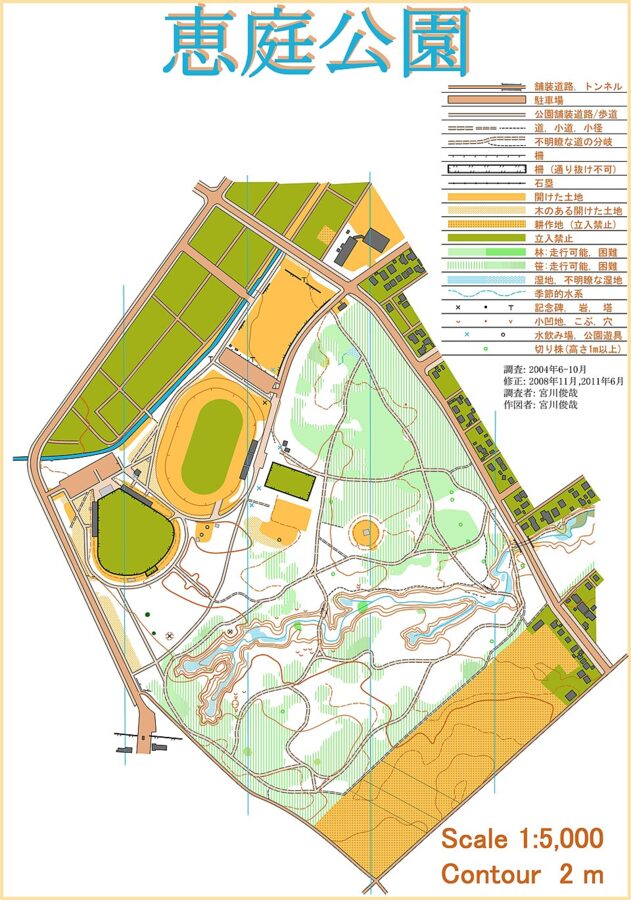
Orienteering is the precision version: checkpoints in a set order, a detailed map at 1:10,000 or 1:15,000, and a stopwatch. The Japan Orienteering Association lists sanctioned events, explains what to bring and runs a guide to permanent courses you can walk any day. Most Japanese events take entries through Japan-O-entrY, a single entry system for navigation sports that also carries rogaines.


One-day adventure races
Once you can navigate, a one-day race is the next step. The Minakami round of the Adventure Racing Japan Series is built as a first race: on 5 July 2026 it ran about 46 km of orienteering, mountain biking and packrafting from the Tsukiyono gymnasium in Minakami, with the leaders expected home in about six hours and the finish closing at 18:00.
Teams are three people of mixed gender, and same-gender teams may enter unranked. Entry was ¥45,000 a team, and the organisers rented mountain bikes at ¥5,000 and packrafts at ¥3,500. The Minakami race page sets out the rules, which are a good short course in the sport: stay within earshot of each other, punch every checkpoint with all three of you within 5 m, carry a GPS as a logger if you like, but navigate with map and compass only.
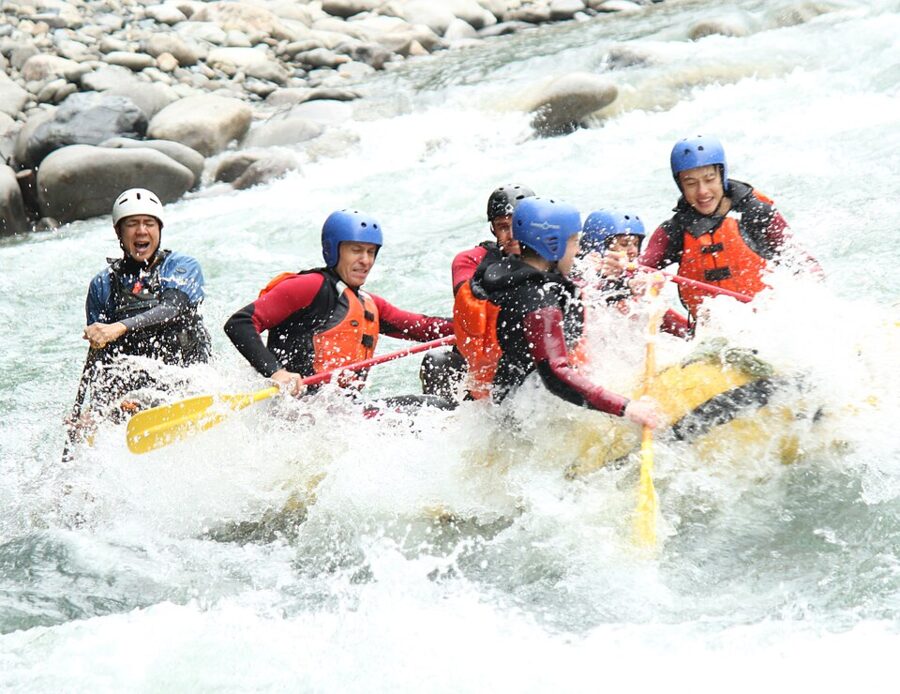

The multi-day rounds are the next step up. The 2026 Nagara River race in Gujo, Gifu, on 25 and 26 April, covered 60 km of orienteering, mountain biking and rafting with a night stage, for ¥54,000 a team. The Choshu race from Yuya in Nagato, Yamaguchi, from 19 to 21 September, ran about 160 km of sea kayaking, packrafting, mountain biking and coasteering for ¥96,000 a team with boats included.
The Myoko race in Niigata, on 31 October and 1 November, was about 140 km over two days for ¥63,000, with a night in your own tent. Each ran for 15 to 20 teams, and the Myoko and Choshu races are called off if eight or fewer teams enter.
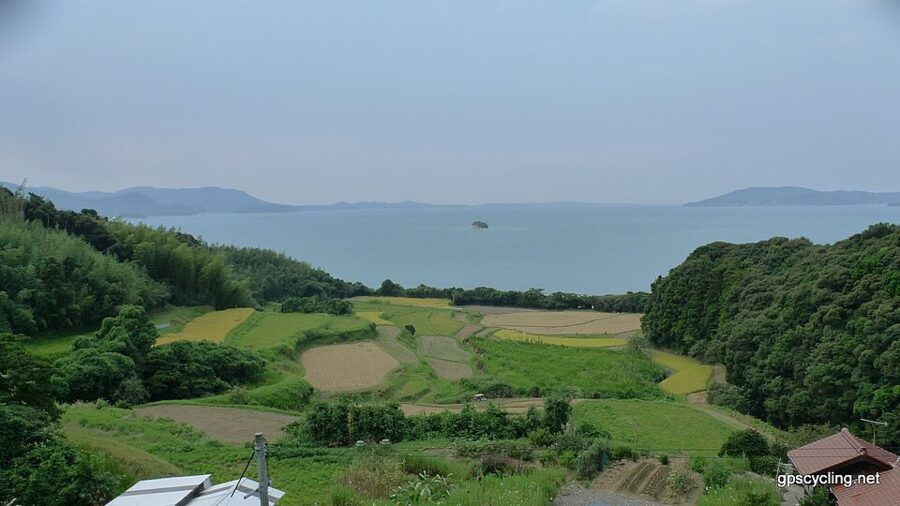

If you want the country without the competition, mont-bell’s SEA TO SUMMIT events do kayak, bike and hike from the sea to a summit in one weekend, with no ranking, at venues around Japan. They are a gentle way to find out whether you like changing sports halfway through a day.
Kit Japanese races ask for
Japanese kit lists are strict and checked at the start, and missing items mean a penalty or no start. The 2026 Adventure Racing Japan Series lists asked every team for a first-aid kit, an emergency blanket, a waterproof map case for A4, a waterproofed phone, a baseplate compass and a watch, ideally with an altimeter. Every racer needed a waterproof jacket and trousers, a helmet, gloves, a headlamp, at least 1.5 litres of water, food for the whole race and a copy of their health insurance card. At Myoko and Choshu a red light had to be visible from behind at all times, and every list included a bear bell.
Two details catch foreign racers. The Nagara River race banned GPS watches outright, not just GPS navigation. And the Minakami race used the NaviTabi phone app to record checkpoints and track teams, so one phone per team had to have it installed and a spare battery to keep it alive. Read the list in Japanese, all of it, before you buy anything.
Safety and the mountain
The death that sport still talks about happened in Washington State in September 2004. Nigel Aylott, an Australian rogaining champion leading Primal Quest with his team, was killed by a falling boulder while lowering himself down a rocky slope on the orienteering stage. The Sydney Morning Herald’s report of his death noted that he was not wearing a helmet, and that helmets were required only on the bike legs. The race stopped, the stage was removed, sponsors withdrew and the event’s senior officials resigned.
Read a Japanese kit list now and the helmet line looks different. Minakami’s 2026 rules say the helmet is worn at all times. TJAR specifies a climbing helmet. Neither document says why, but anyone who has set a course across loose ground knows.
Before any mountain race or training day in Japan, file a climbing notification, the tozan keikakusho (登山計画書). Nagano Prefecture’s mountain safety ordinance of 2015 sets out the duty to file a plan for its designated mountain trails, and other prefectures have their own rules. Plan a training weekend as if there will be no rescue until someone reads that form.
Weather is the other thing that stops races: TJAR was given three extra hours for a typhoon in 2014 and halted for a storm forecast in 2021. The guide to Japan’s mountains covers the seasons range by range. Bears are now a real factor on low and middle trails, which is why every race list asks for a bell; read bears in Japan before you train alone.
Back on the stones at the Hayatsuki River mouth, at midnight, the decision is already made. The racers who reach the Pacific are the ones who learned to navigate somewhere small first, carried a helmet up Tsurugi, and knew before the start which cutoff they were racing. If you want to stand there one day, find a three-hour rogaine this winter and a one-day race next July, and give yourself a few years.