
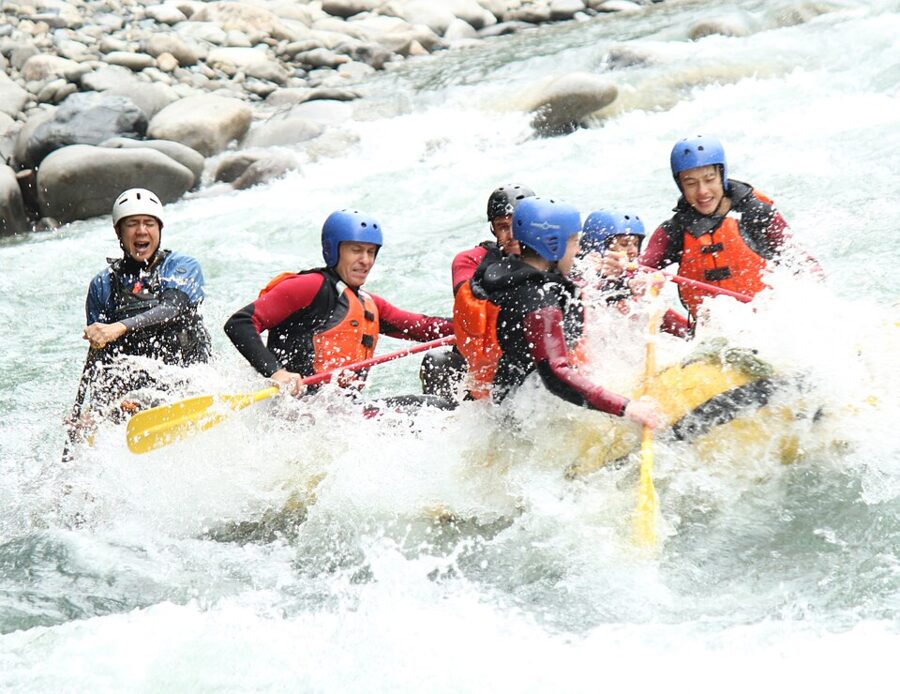

The most important decision of a spring day on the Tone is made before anyone touches a paddle. At the put-in the guides look at the river against the rocks and decide which sections the boats will run, and in May, with the snow coming off the mountains on the Niigata border, the answer can be most of them. One Minakami operator runs its biggest spring trip only on the days the water is high enough and sets the course on the morning; another strings together every section that is runnable that day into one long run with lunch halfway down.
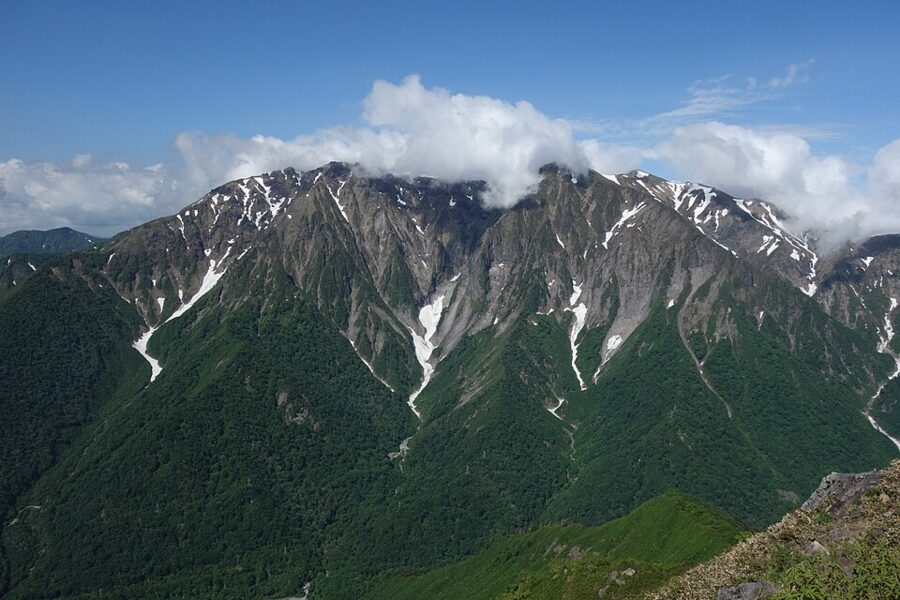
That is Minakami (みなかみ町) in a sentence: a mountain town in the far north of Gunma whose river, in spring, is as serious as anything commercial rafting offers in Japan. Above it stands Tanigawadake, a mountain under 2,000 m that has killed more climbers than any other in the country. Around both are eighteen hot spring villages, a run of gorges built for canyoning, a 42 m bungee bridge and seven ski areas, all 63 minutes from Tokyo by the fastest bullet train.


Contents8 sections
The town at the top of the Tone
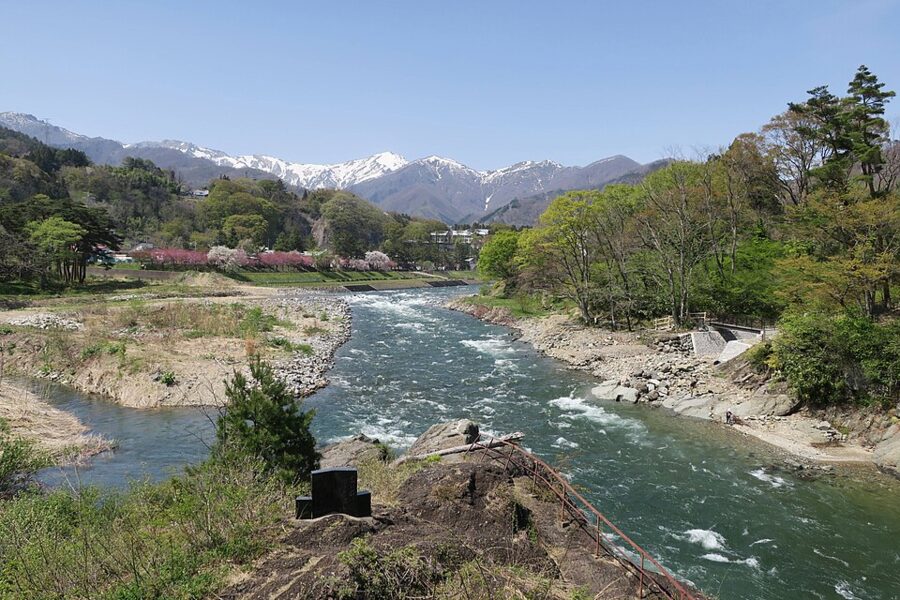
Minakami is the northernmost municipality in Gunma and the largest by area, 781 square kilometres of mountain and forest pressed against the central divide. On the far side of the ridge is Niigata and the Japan Sea weather; on this side the water runs to the Pacific. The town as it exists now dates only from 1 October 2005, when Tsukiyono, Minakami and Niiharu merged, and it took its name from Minakami Kiko, the account of the poet Wakayama Bokusui’s journey through these valleys in the autumn of 1918.
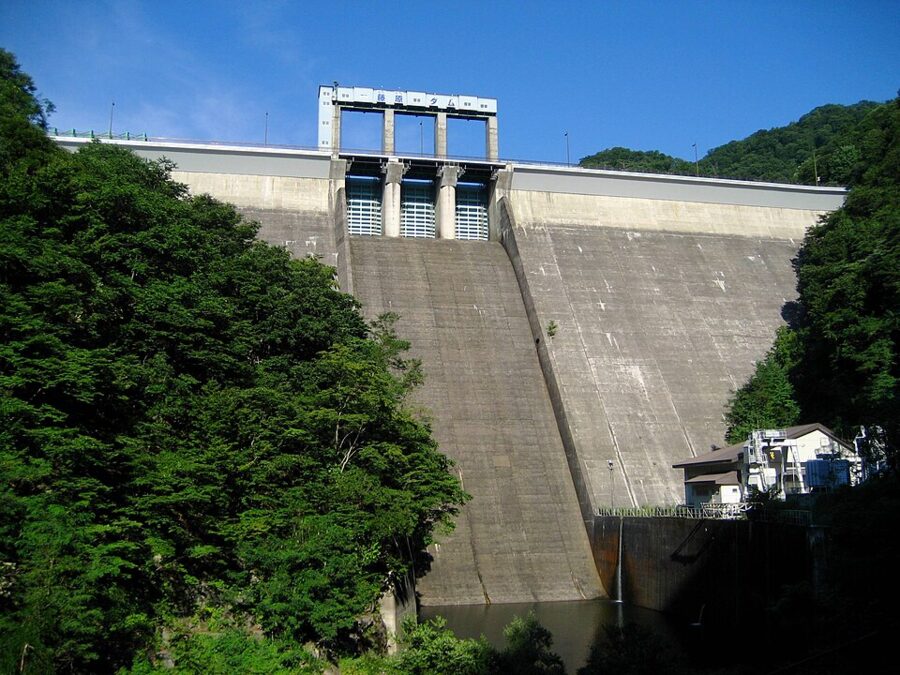
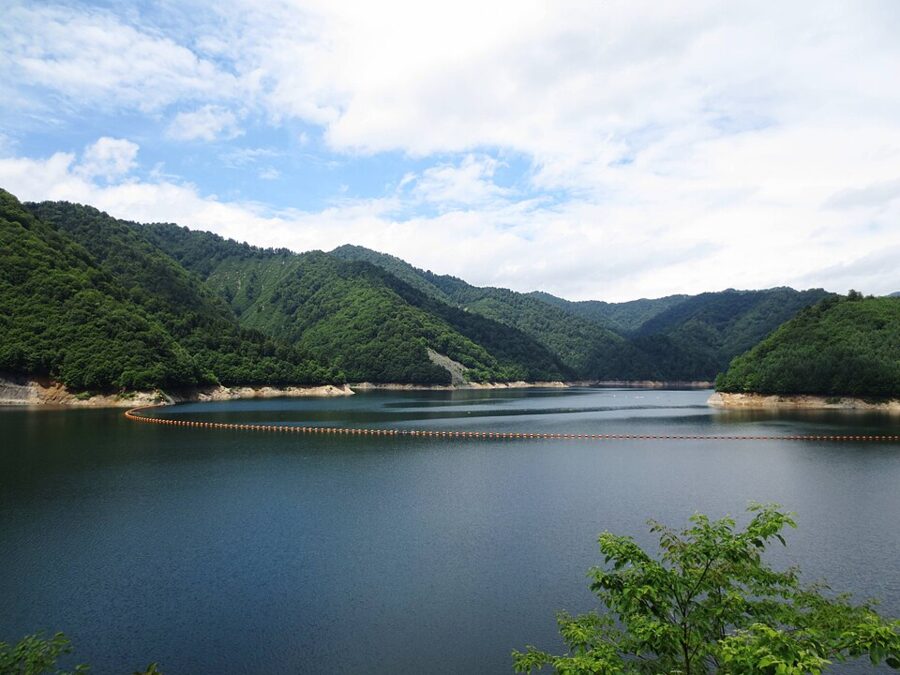
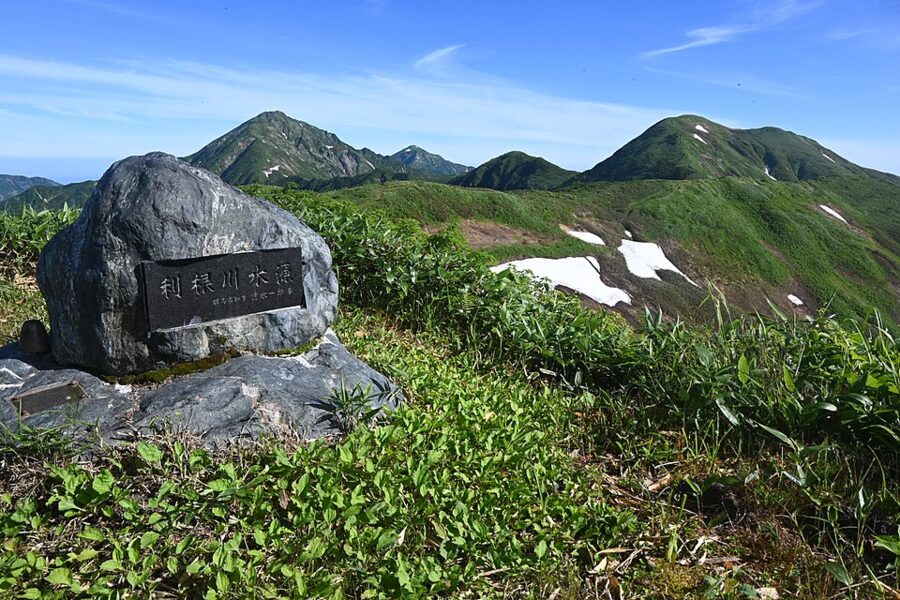
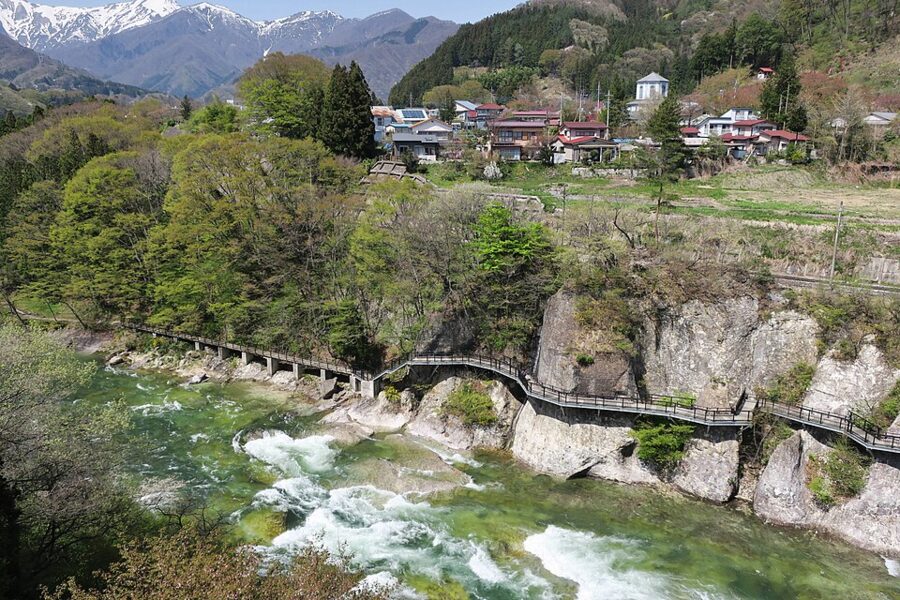
The Tone River (利根川) starts on Omizukamiyama, on the Niigata border at the town’s northern edge. By the time it reaches the sea it has run 322 km, the second-longest river in Japan, and drained the largest basin in the country, 16,840 square kilometres that include much of greater Tokyo. In Minakami it is still a mountain river, and a managed one: Yagisawa Dam holds back Lake Okutone at the top, with Naramata, Sudagai and Fujiwara dams below it and Aimata Dam on the Akaya tributary.

Snow is the engine. The Japan Meteorological Agency’s station at Minakami, at 524 m in the valley, averages 906 cm of snowfall a winter and a deepest snow cover of 155 cm, with a January mean of −1.2°C. Higher up the valley at Fujiwara the yearly snowfall passes 11 m. All of that melts between April and June, and the river carries it past the town.
In 2017 Unesco registered the upper Tone as the Minakami Biosphere Reserve, which the town calls the Minakami Unesco Eco Park. It covers 91,368 hectares, mostly in Minakami with slices of three Niigata municipalities, between about 300 m and 2,000 m, and more than 90 per cent of it is forest. Its core zones are the forest at the Tone’s source and the strictly protected parts of Joshin’etsu Kogen, one of Japan’s national parks.

How a spa town became a rafting town
For most of the twentieth century Minakami was an onsen resort that the railway built. The line reached Minakami station in October 1928, the Shimizu tunnel opened the route through to Niigata in 1931, and Tokyo’s weekend crowds came for the baths and the mountain. The outdoor business came later. Commercial rafting in Japan began on the Yoshino River in Shikoku and spread east to the Tone, and in the second half of the 1990s it boomed.
The best-documented of the early guides is Mike Harris, a New Zealander who was working as a rafting guide in Japan when he ran the country’s first canyoning trips in Minakami in 1998. He founded Canyons in 2000; it still guides with an international crew and holds certification from AdventureMark, New Zealand’s adventure-activity safety scheme. Racing followed the tourism. Japan sent its first team to a world rafting event in 1999, on the Orange River in South Africa, and Rapid Masters, a team formed in Minakami, became Team TEIKEI in 2002, the crew that made race rafting a serious sport here.
The town is also the base of Team East Wind, founded in 1996 and the only professional adventure racing team in Japan, and the Adventure Racing Japan Series held its Minakami round on 5 July 2026: about 46 km of orienteering, mountain biking and packrafting from the Tsukiyono gymnasium, with white water on the Tone at Kamimoku. The story of how Japan learned adventure racing runs through this valley; the series’ last round of the year is at Myoko in Niigata.

Rafting the Tone, season by season
There are really three rivers here, and you choose between them by the calendar, not by the operator. Spring is the big one, from April to June while the snowmelt lasts. Summer, from late June or July, is the same river at a fraction of the volume. Winter rafting is a newer, gentler thing run on the calmest water the operators can find.
Spring: April to June
In spring Canyons grades the upper Tone class 4, with the scale topping out at 5. Canyons’ spring trips cover more than 12 km of white water through three gorge sections on the half day and more than 25 km of class 2 to 4 on the full day, with lunch on the bank. TOP Minakami runs a high-water course only in May and June on the days the river is up, about 12 km on its long half day and more than 20 km on the full day, which is the half-day course run twice.
Prices for 2026 vary by date. Canyons’ spring half day ran up to ¥11,500 and its full day up to ¥20,000, with the wetsuit, jacket, helmet, buoyancy aid and shoes included. The minimum age in spring is 13. TOP puts up to seven paying guests and a guide in each boat, so a group of five or fewer shares with strangers.
In spring the guides do not flip boats on purpose. The water is cold, the current fast and swimmers are hard to collect, so the trip is about staying in, and the safety talk at the put-in teaches the feet-first floating position for when that fails. I would take the spring trip only if everyone in the boat is a confident adult. If you want one day of real white water in Japan within reach of Tokyo, this is it.

Summer: late June to October
From late June the level drops and the Tone becomes a class 1 to 2 river. Summer trips are about jumping off rocks, swimming the easy rapids and being tipped out of the boat where the water is deep and slow enough for it. Canyons took children from six on its 2026 summer half day, priced ¥5,000–9,500, and TOP takes families from late April to the end of November.
Skip summer rafting if you came for white water; it is a swim with a boat attached. Book it for a mixed group with children, or pair it with canyoning, which is where Minakami’s summer thrills have moved.

Winter, booking and what to bring
Canyons runs winter rafting from November to March, and TOP has run it since 2021, on the quietest water available on the day, at Minakami or on the river near Maebashi. It is a scenic float rather than a white-water trip. For any season, book ahead: Canyons advises two weeks for a weekend and three in the summer holidays, and charges 20 per cent of the fare for cancelling 15 to 7 days out, rising to the full price on the day.
Bring swimwear, a towel and a strap for glasses; the operators supply everything else. Canyons’ rafting wetsuit is a 5 mm long john under a 3.5 mm jacket, which tells you what the spring water is like. Both companies collect from Jomo-Kogen and Minakami stations if you ask when you book.
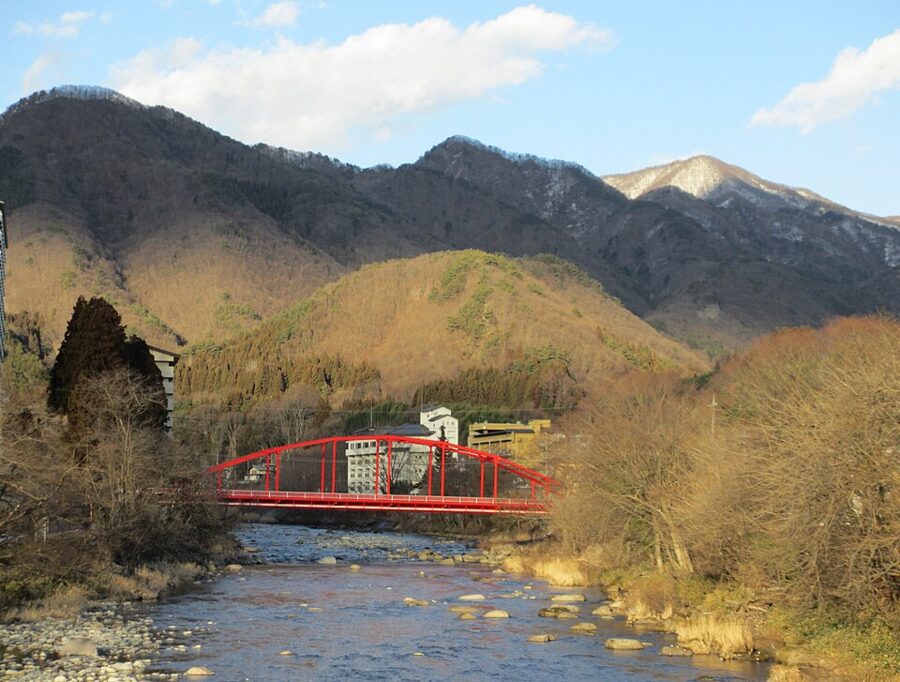

Canyoning, packrafts and the 42 m bridge
Canyoning in Japan started here. A canyoning trip is a descent of a mountain stream on foot and on your backside: down natural slides, off ledges into pools, along fixed lines and abseiling beside waterfalls, in a thick wetsuit and helmet. There is usually a short walk to the top of the gorge and then most of the time is in the water.
Canyons rates its canyons on a six-level scale; levels 1 to 3 are open to first-timers and 4 to 6 need previous experience. Its Minakami trips run daily from late April to mid October, and May to July brings the most water. The 2026 range ran like this:
- Family canyoning on the lower Fox gorge below the 20 m Inari waterfall, with ziplines, slides and jumps: from the first year of primary school, ¥7,000 for anyone 13 or older and ¥5,000 for children aged 7 to 12, children only with a parent.
- Fox, the first-timer’s canyon, short walk in, good jumps and slides at any water level: from age 10, up to ¥11,500.
- Fox Plus: from 13, up to ¥13,500.
- Willow, a rope canyon with a series of waterfalls over 10 m to abseil and a slide section at the bottom: from 13, up to ¥11,500.
Non-swimmers can go: the buoyancy aid and wetsuit float you. Someone who panics in water should not, and the operators say so. TOP Minakami runs its own canyoning from 1 April to the end of October, from beginners’ courses up, and both companies take snowshoe trips down the same valleys in winter under the name snow canyoning.
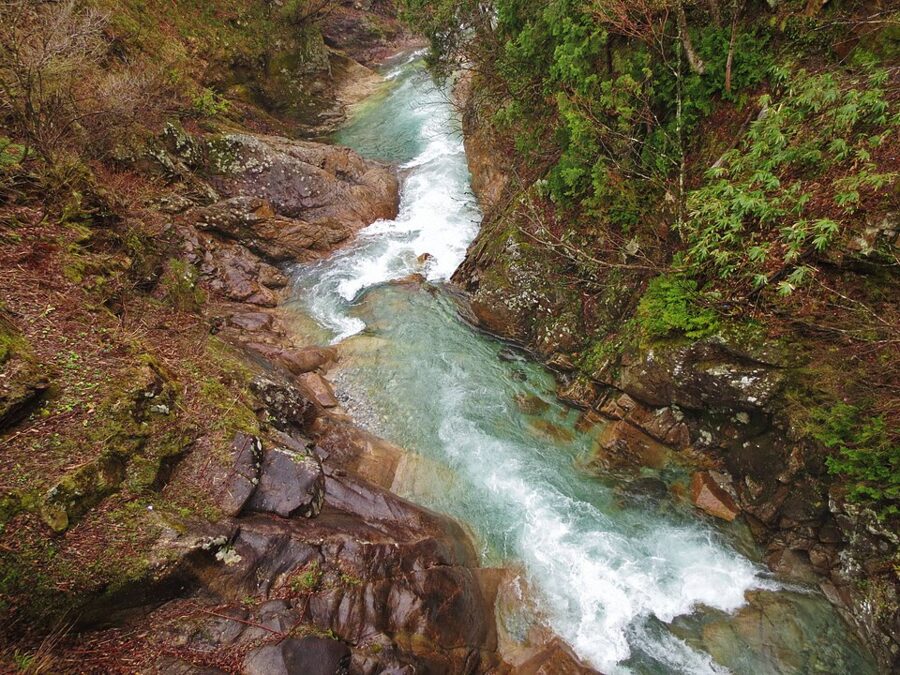

Packrafts, hydrospeed and the rest of the river
A packraft is a one-person inflatable boat light enough to carry in a rucksack, and it is what adventure racers use for the paddling legs here. Canyons runs packraft trips on the Tone from July, when the summer flow is steady enough for beginners to steer themselves; TOP runs them from 15 April to 30 November. TOP also offers stand-up paddleboarding, Canadian canoe and hydrospeed, which is the Tone taken head first on a small float with fins on your feet.
Mountain biking and paragliding are on offer in town too, but they are side dishes. The river and the gorges are why you come.

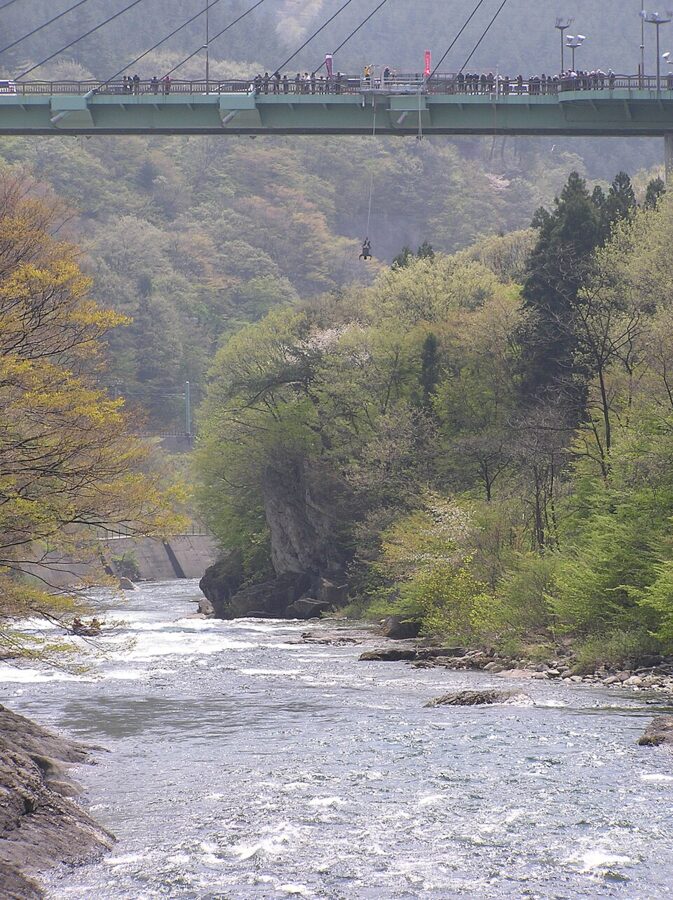
Bungee from Suwakyo Ohashi
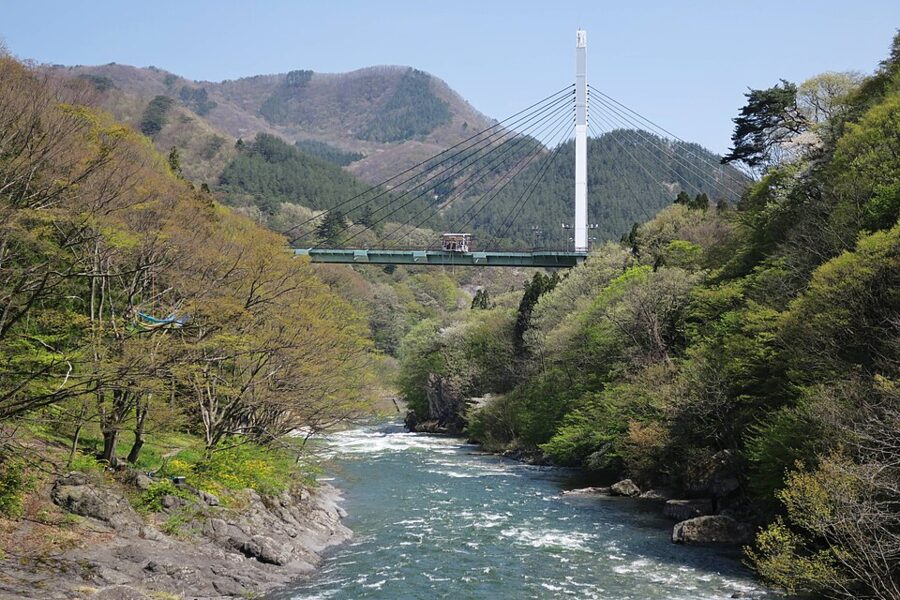
Bungy Japan has been throwing people off Suwakyo Ohashi (諏訪峡大橋) since 2007, a 42 m drop to the Tone, and the company says bridge bungee in Japan began on this bridge. More than 7,000 people jump it in a normal year. The season runs April to October; 2026’s ended on 31 October and the site reopens in spring.
The rules: 15 or older, with a guardian’s consent under 18, and between 40 and 105 kg. A first jump cost ¥12,000 in 2026, a second on the same day ¥6,000. The company’s other Gunma bridge, at Sarugakyo on the south side of town, is 62 m.


Tanigawadake, the ropeway and the walls
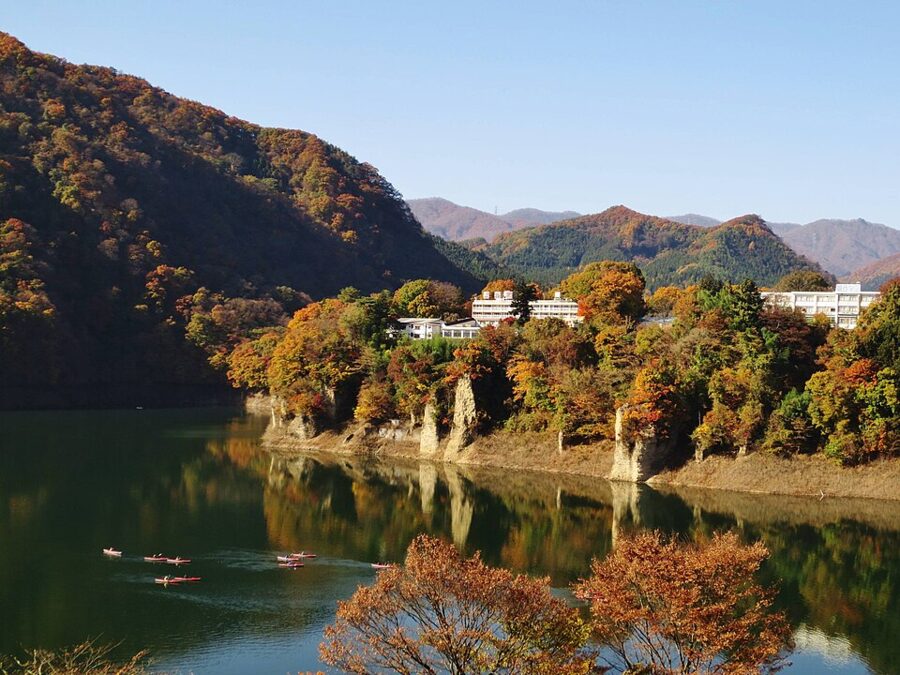
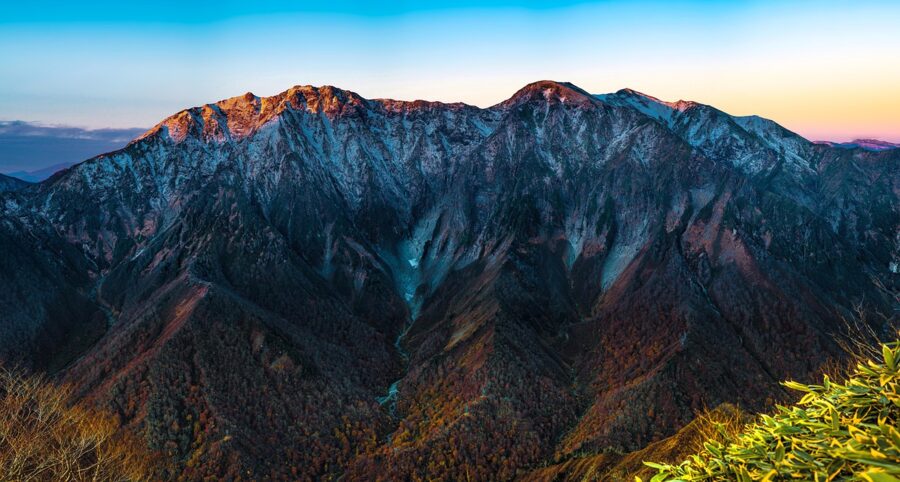
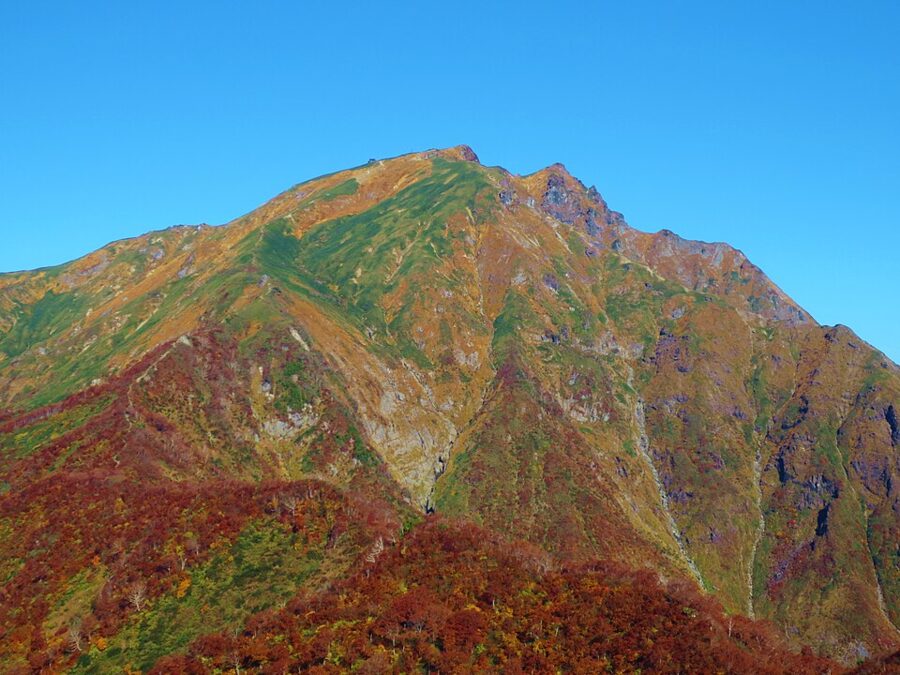
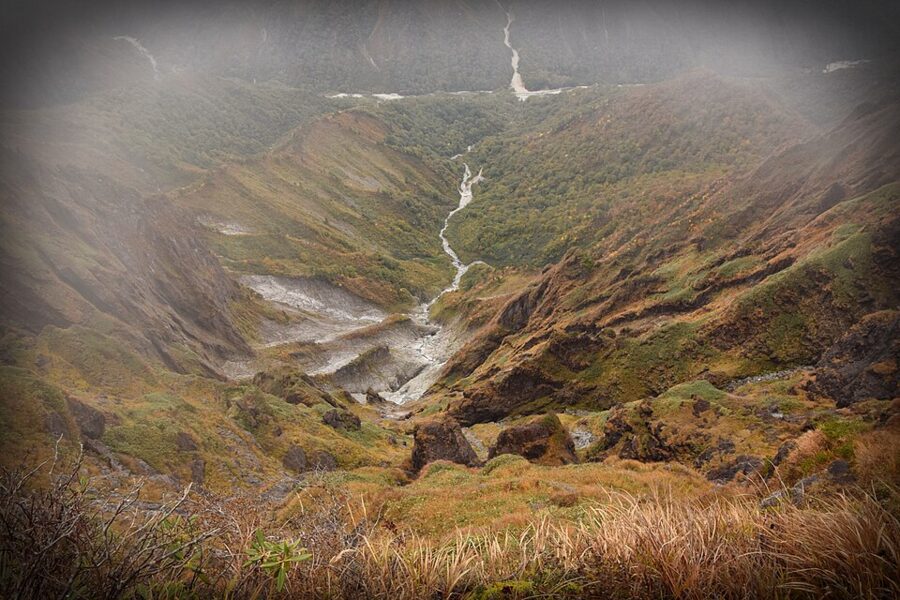
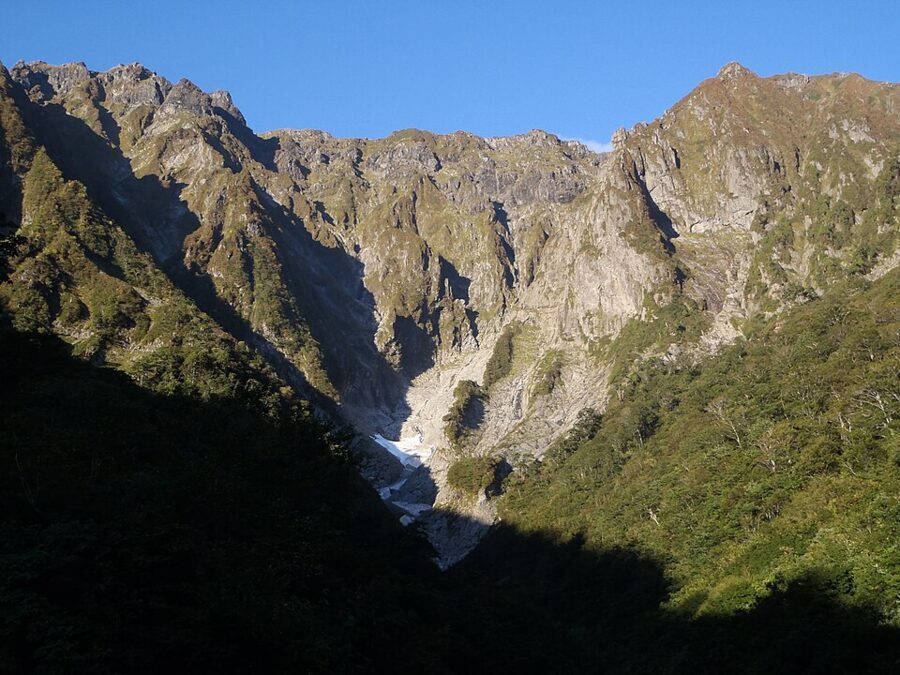
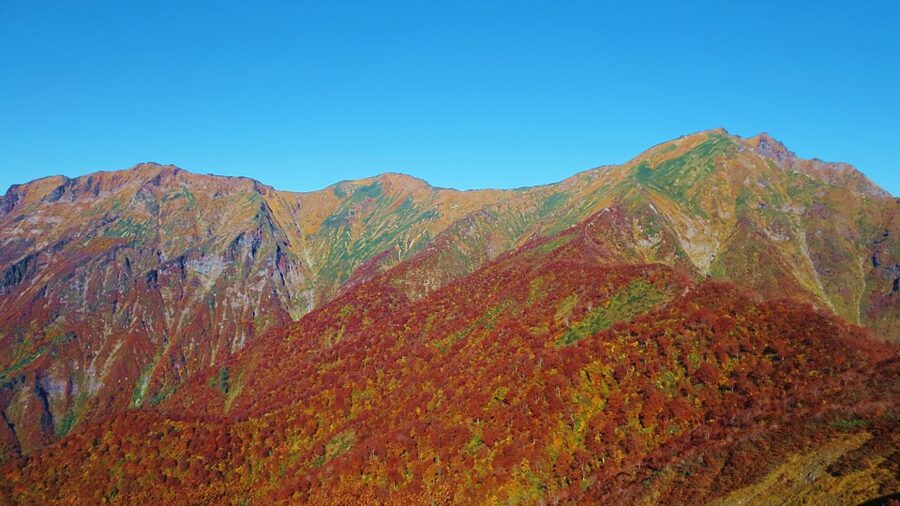
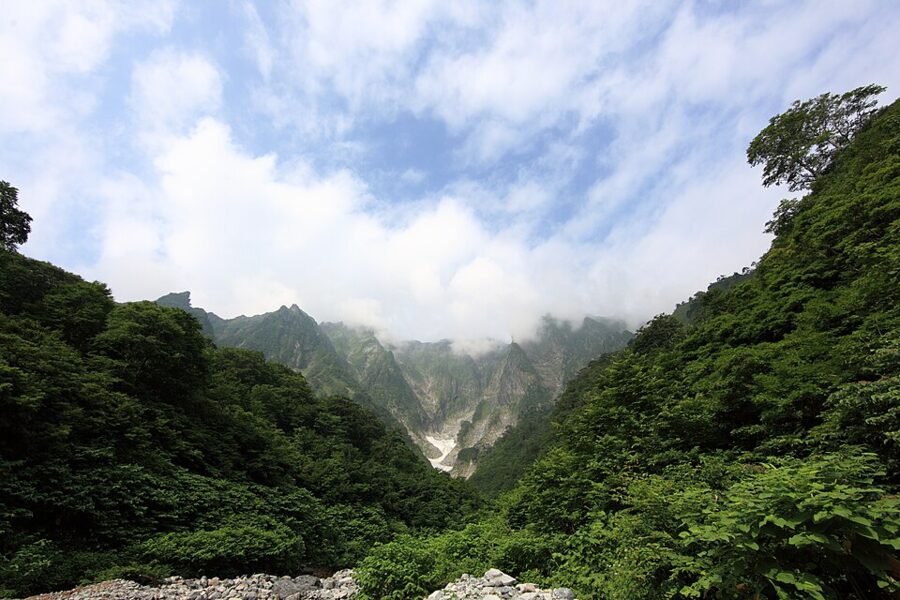
Tanigawadake (谷川岳) is two summits on the divide, Toma-no-Mimi at 1,963 m and Oki-no-Mimi, the higher, at 1,977 m. More than 40,000 people climb it a year, because the railway put its foot within a day trip of Tokyo and the ropeway takes away most of the climb. Its east face holds Ichinokurasawa, counted with Tsurugi and Hotaka as one of the three great rock walls of Japan, and the accident record kept since the railway arrived in 1931 had reached 805 dead by 2012, the worst of all Japanese mountains.
Most of those deaths were climbers on the walls. But the weather that comes over the divide from the Japan Sea catches walkers on the easy ridge too, and that is the thing to carry up with you: the mountain is low, the weather is not.
The ropeway to Tenjindaira
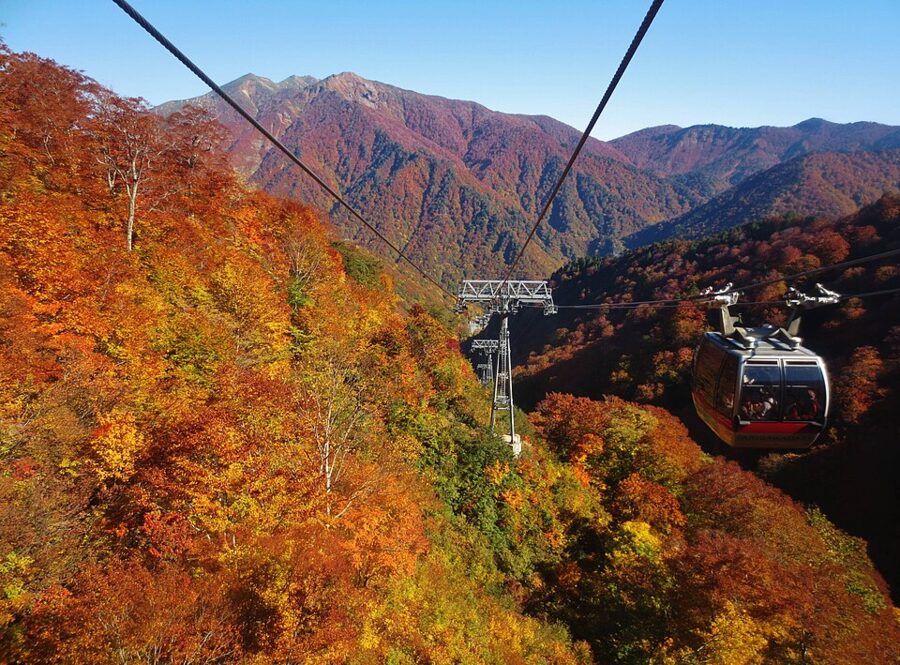
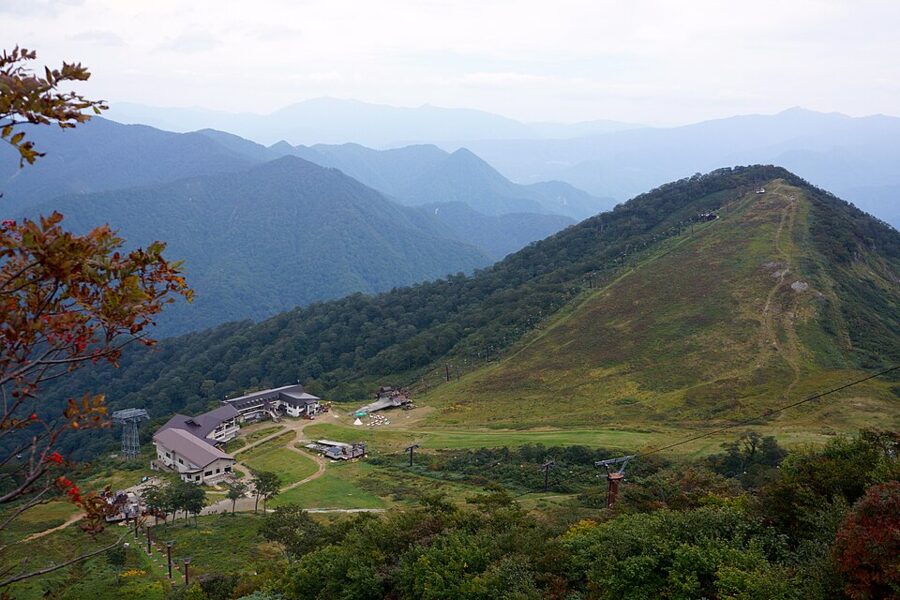
The Tanigawadake Ropeway opened in December 1960 and has been run by Hoshino Resorts since 2022, which in December 2024 renamed the whole operation Tanigawadake Joch, after the German word for a saddle; Tenjindaira sits on one. The gondolas leave about every three minutes from Doai-guchi station at 746 m and take about 15 minutes to Tenjindaira (天神平) at 1,319 m. The operator gives the line as 2,400 m long, other sources 2,300 m. A pair lift continues to the viewpoint at Tenjin pass, 1,502 m.
Fares follow a daily rate calendar: on the 2026–27 calendar a round trip costs an adult ¥2,800–3,600 and the ropeway plus lift ¥3,300–4,500. Expect it about 5°C colder at the top than in town. The summer and autumn season ended on 15 November 2026; after a maintenance closure from 16 November to 4 December, the winter season runs from 5 December to 4 April 2027, 08:30–16:30 with the last ride up at 16:00, and the lift reopens on 10 March.

From 19 December, when the ski area opens, the ropeway sells no one-way tickets up, and anyone carrying skis or a board needs a ski ticket. In the green season the multistorey car park at the base costs ¥500 a day, rising to ¥1,000 from 19 September to 3 November for the autumn colour. At night only the ground floor, about 40 spaces, is open, and in the busiest weeks (the Obon holiday and late September to early November) even that may close, so check before planning a dawn start from the car.
The Tenjin ridge: the walkers’ way up
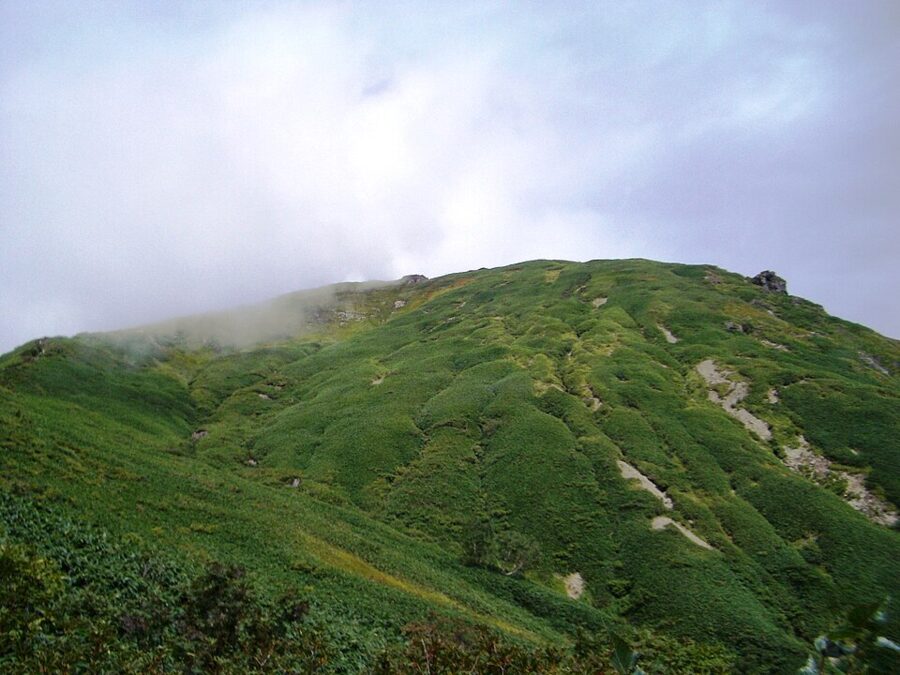
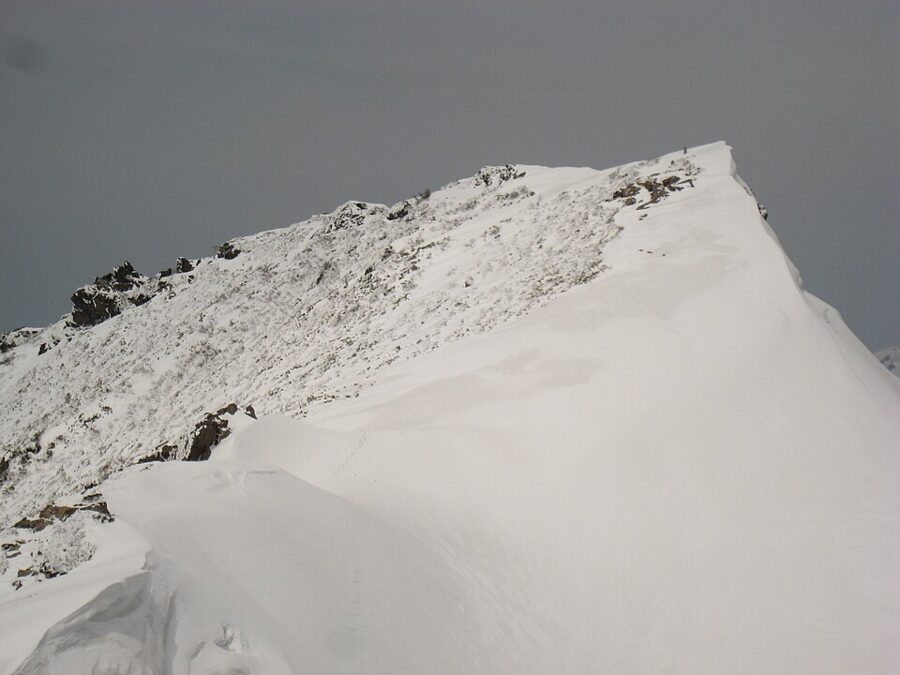
The normal route is the Tenjin ridge (天神尾根), from Tenjindaira or from the top of the lift at Tenjin pass, to Toma-no-Mimi. It is about 650 m of ascent from Tenjindaira, net, on a rocky, well-trodden path with chains at the steeper steps, and the ropeway operator allows 300 minutes for its summit course from Tenjin pass and back. It calls the route snow-free from June to November and asks for winter equipment from December to May; snow patches lie near the summit until early July.
The decision point is Tengu-no-tamariba, the rocky knoll on the ridge where the operator tells you there is one more push to go. From there the path is in the open above the trees all the way to the top. If cloud is pouring over the divide from the Niigata side, or the afternoon is already building, that is the place to turn; the summit will still be there, and the ridge in cloud is where walkers wander off onto the wrong side.



The Nishiguro ridge: the hard way
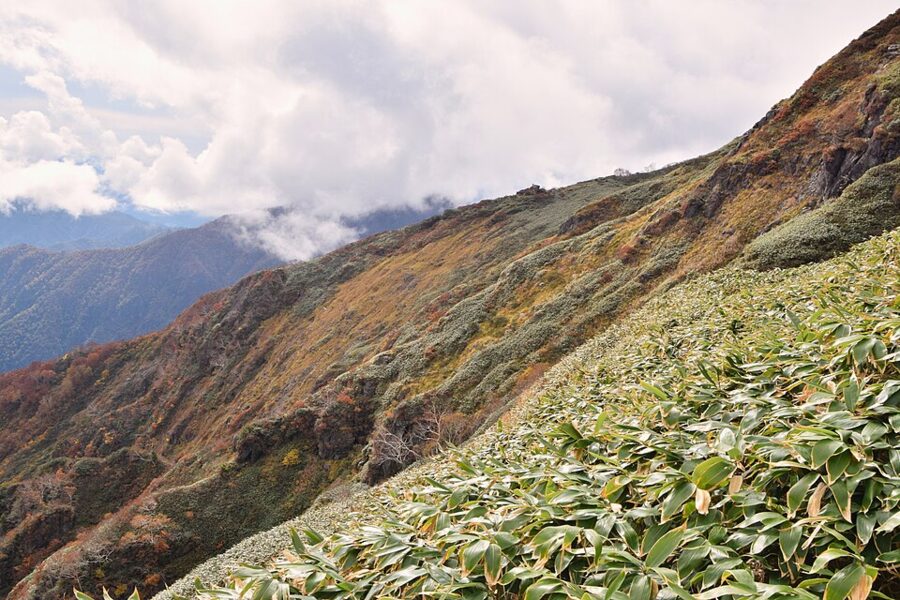
The Nishiguro ridge (西黒尾根) climbs straight from the valley near the ropeway base to Toma-no-Mimi: more than 1,200 m of ascent, steep from the first step, with slabs and chains in the upper half. It is counted among the three steepest climbs in Japan, and a sign at the bottom warns beginners off. Partway up, at the col called Rakuda-no-koru, the Ganko-shindo path joins it.
It is harder going down than up, so go up Nishiguro and down Tenjin, and catch the ropeway home. Tanigawadake is one of the best hikes in Japan done that way round, and one of the more miserable ones done the other way in the wet.


Ichinokurasawa and the ordinance
You do not need to climb anything to see why the mountain has its reputation. From the ropeway base a paved road runs 3.3 km up the Yubiso valley to the foot of Ichinokurasawa (一ノ倉沢), closed to private cars beyond the mountain guidance centre. Walk it, or hire one of the ropeway’s electric-assist bikes, which in 2026 ran from 23 May to 3 November at ¥2,000 for 90 minutes, for riders of junior-high age and over.
The walls at the end of the road are what Gunma’s Tanigawadake ordinance exists for. Since 1967 anyone entering its danger zone, the rock walls of Machigasawa, Ichinokurasawa and Yunosawa and the crags of the south face, between 1 March and 30 November must file a climbing notification (登山届) with the guidance centre at least ten days ahead, and the governor closes the zone outright in spring when avalanches are running. The ordinary walking routes, Tenjin and Nishiguro, are outside the zone. The paperwork side of hiking in Japan rarely gets more specific than this.

Other walks
From Tenjindaira the ropeway company marks an easy hour’s circuit up to Tenjin pass, where there is a small Tenmangu shrine and a cafe. A longer and older way up starts in the Tanigawa onsen valley at Tanigawa Fuji Sengen shrine, founded in 1380 by its own account, whose inner sanctuary stands just north of Oki-no-Mimi; the old shrine path from there to Tenjin pass had fallen out of use and has been cleared again in recent years. The whole border ridge is part of the Gunma Kenkyo Ridgeline Trail, a long-distance route along the prefecture’s northern edge.
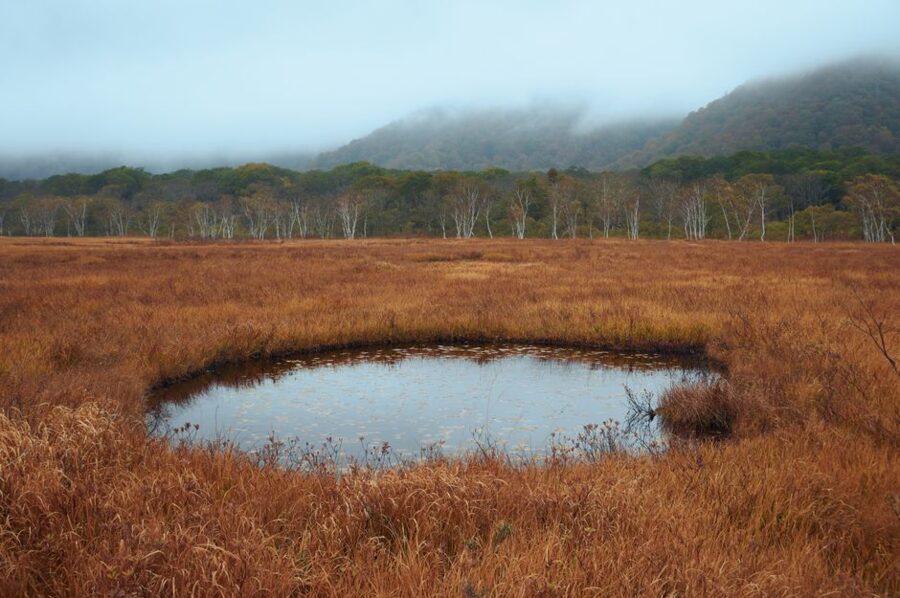
Oze, the high marsh beyond the town’s eastern edge, is a different trip: the Kan-etsu bus runs to Tokura in Katashina and a shuttle climbs to the trailhead at Hatomachi pass. It is a long day from Minakami and better given a night of its own.


The onsen villages
Minakami markets its hot springs together as the Minakami 18 Spas, and you do not need to see eighteen. After a day on the river or the ridge, these are the ones that matter.
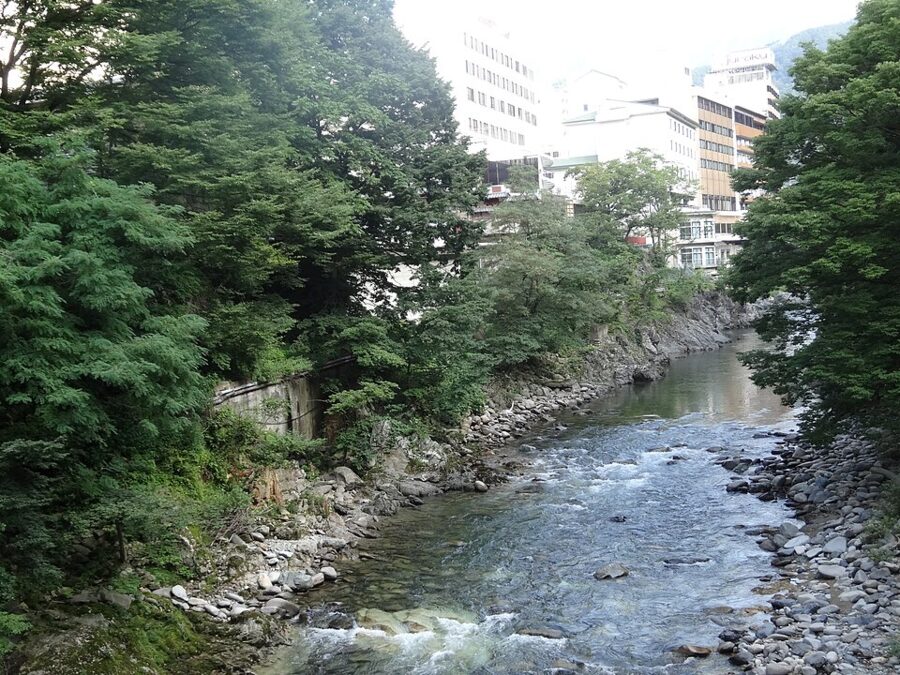
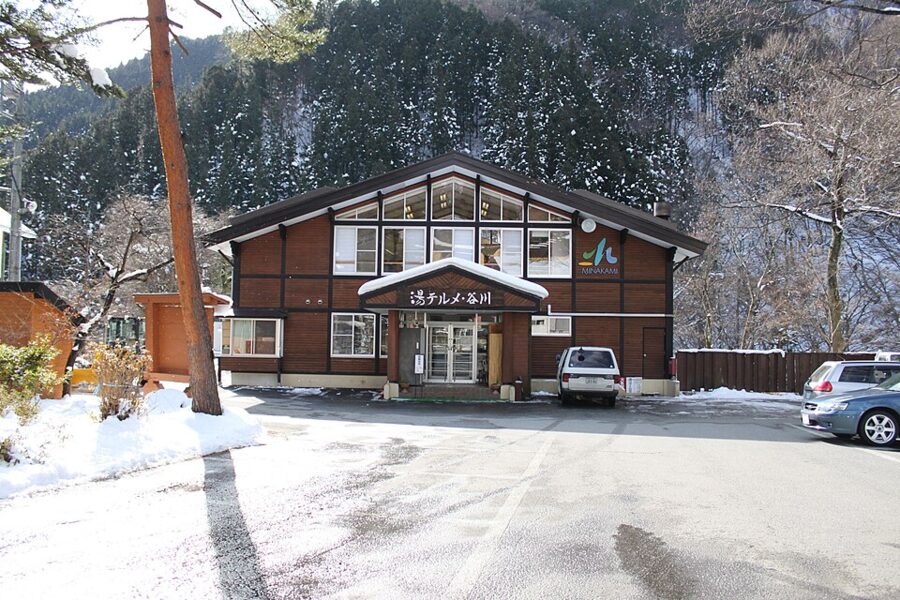
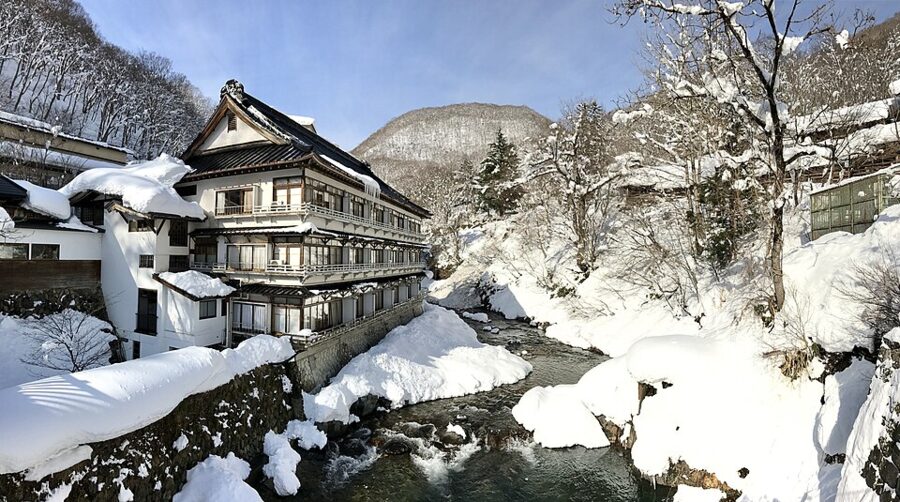
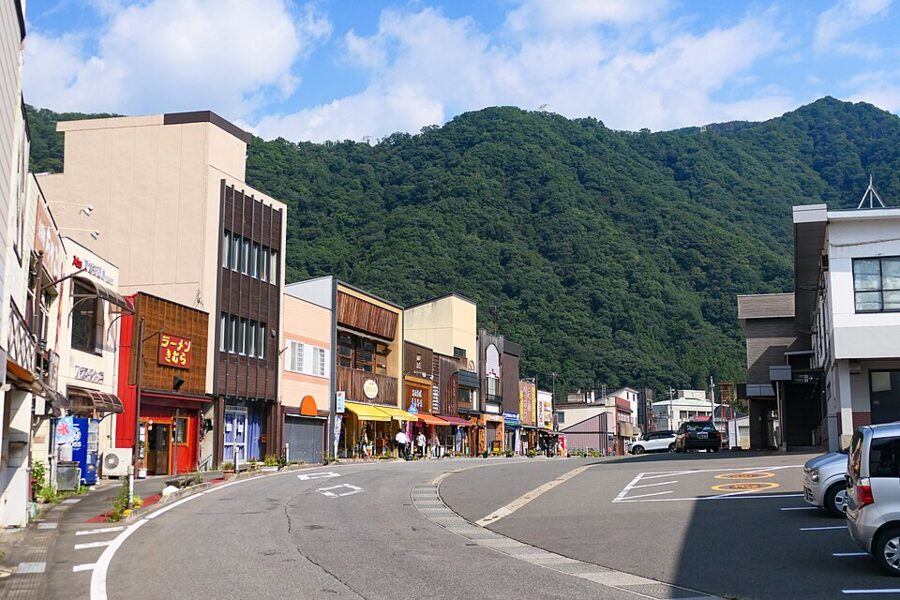
Minakami Onsen, the old Yubara village around the station, is the resort the railway built: big hotels on the riverbank, a few streets of shops, the bridges lit at night. It is where you sleep if you have no car, because every bus calls here. The town’s own day bath in the next valley, Yuterume Tanigawa, has outdoor pools looking up at the mountain.
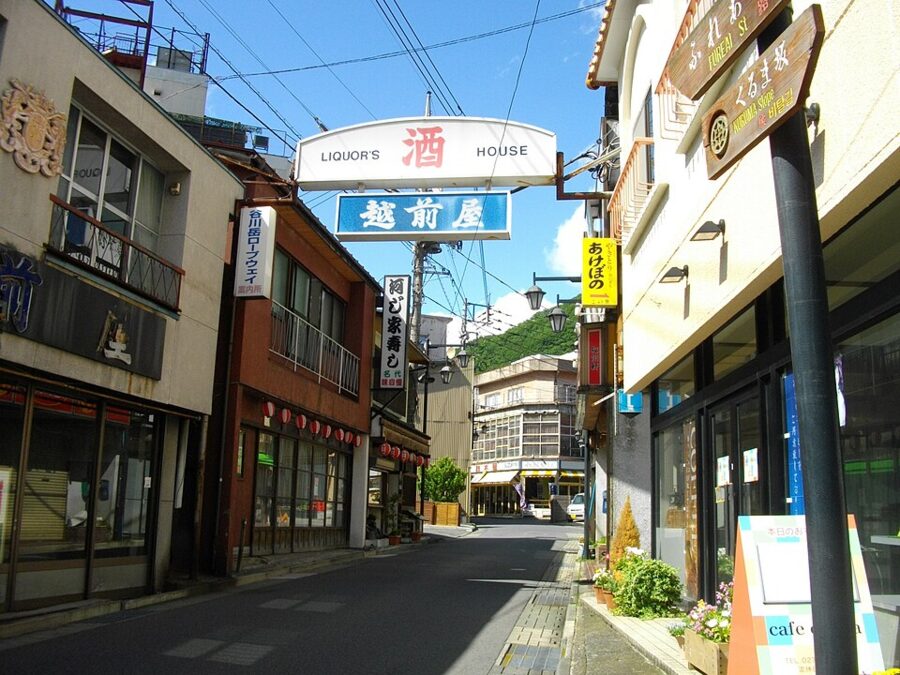
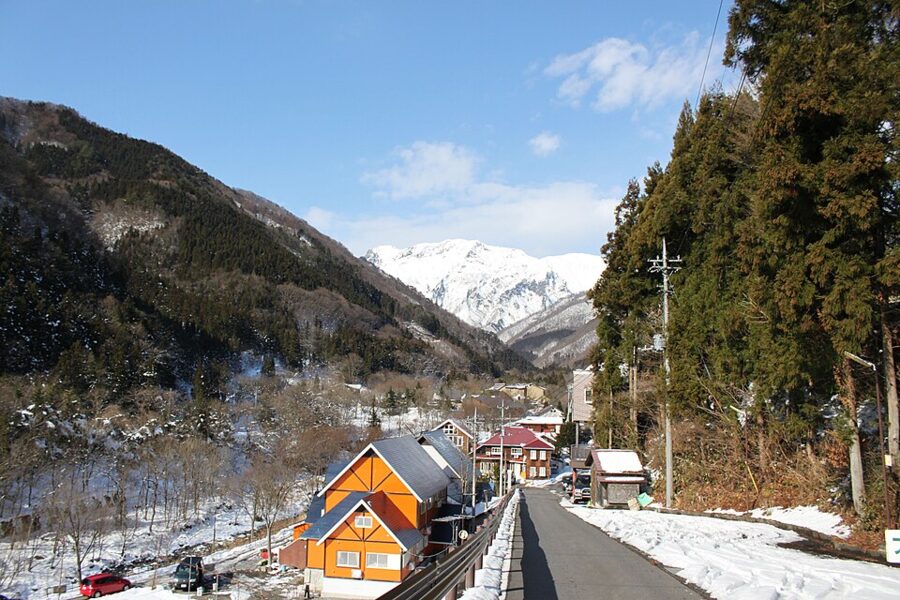
Tanigawa Onsen sits a few kilometres up the side valley toward the mountain. Dazai Osamu spent nearly a month at an inn here in 1936, and Wakayama Bokusui’s poem from his 1918 journey is carved on a stone outside the Fuji Sengen shrine. It is the quietest base for an early start on Tanigawadake if you are driving.


Takaragawa Onsen
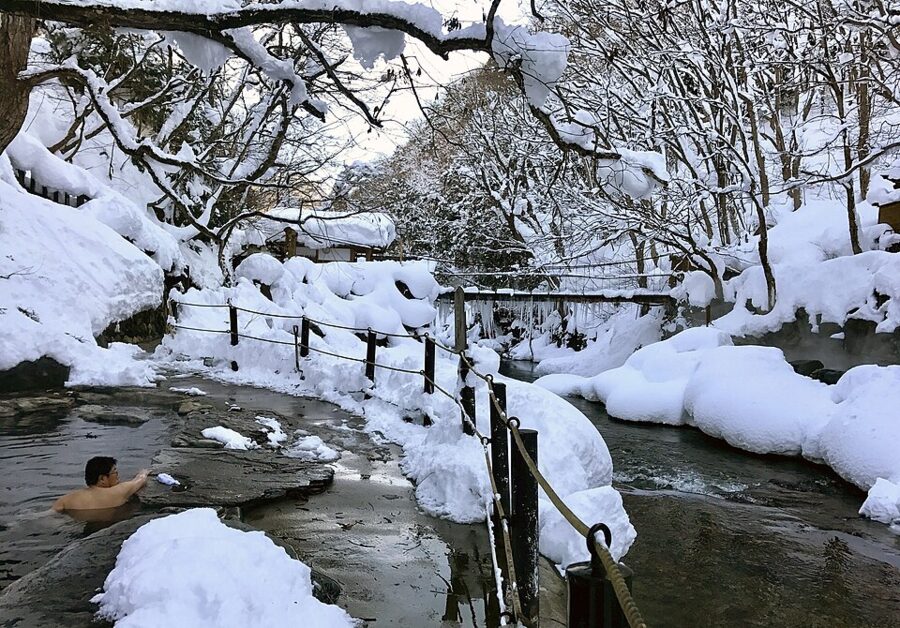
Takaragawa Onsen (宝川温泉) is the one people travel for. It is a single inn, Osenkaku, open since 1923 up a side river beyond Fujiwara Dam, and its four outdoor baths along the Takara river cover 470 tatami mats between them; three are mixed and one is for women only. Day bathing runs 10:00–16:30 every day with last entry at 16:00, and costs ¥1,500 for adults and ¥1,000 for primary-school children.
The fee includes the inn’s own bathing garment, a yuami-gi, which everyone wears in the mixed baths; you may not bring your own. Go before 15:00, as the inn asks, and eat in the day-visitors’ lodge, where the menu runs from grilled char at ¥1,200 to Minakami’s joke dish, a “dam curry” with the rice built up like a dam wall, at ¥700. Kodakara-no-yu, one of the four baths, was closed from 24 to 30 November 2026 for tree felling.


Hoshi Onsen
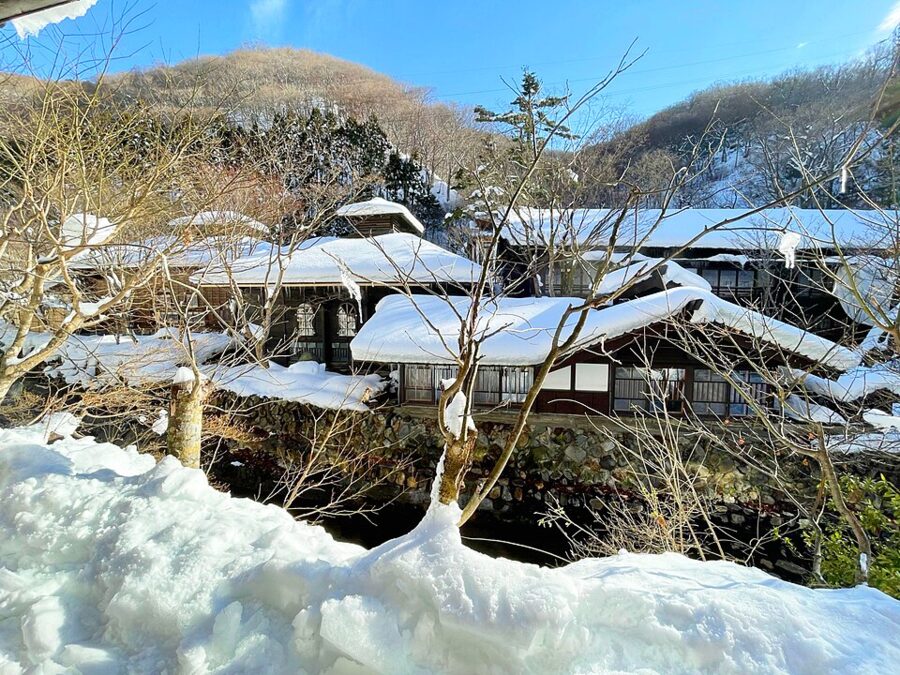
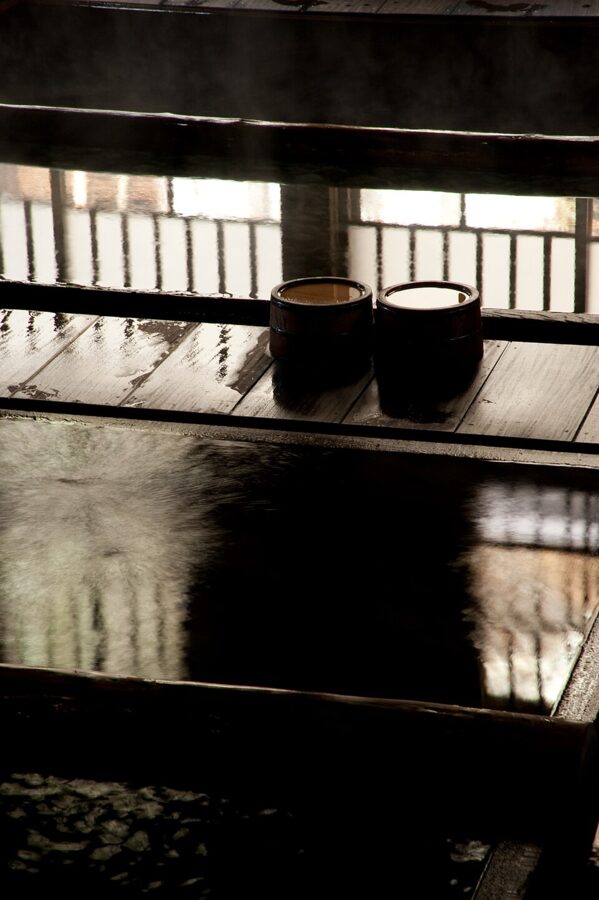
Hoshi Onsen (法師温泉) is smaller and older: one inn, Chojukan, alone in a narrow valley at the southwest end of town, open since 1875. Its main bath, Hoshi-no-yu, is a wooden hall from 1895 with arched windows, and the spring rises through the stones on the floor at about 40°C straight into the pools, with almost nothing done to it; by the inn’s account it fell as rain 50 to 60 years ago. Hoshi-no-yu is mixed except from 20:00 to 22:00, when it is for women only, and the smaller Chojuno-yu is for men until 20:00 and for women after.
Chojukan takes bookings from four months ahead. It also offers day bathing, with all the baths closed for cleaning from 10:00 to 11:00. If you are going to pay for one traditional night in Minakami, this is the one I would book.

Staying and eating cheaply
The outdoor companies have their own beds. Canyons runs a lodge and a glamping site at its Yubiso base, and its package of a half-day trip and a night with breakfast at the lodge started at ¥11,000. At Tenjindaira the ropeway’s restaurant, View Terrace Tenjin, serves a gratin baked in a bread bowl. For the rest, eat at your inn; Minakami’s evenings are short.
Winter: seven ski areas and a dangerous mountain
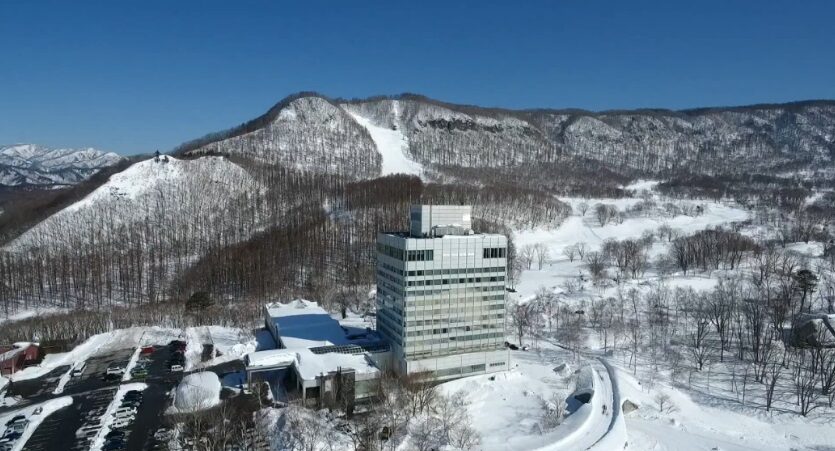
The snow that crosses the divide comes down dry on the Gunma side, and the town’s ski areas sell themselves on it and on being 90 minutes from Tokyo by road. For the 2026–27 season seven are listed and six are open:
- Mt.T, the old Tanigawadake Tenjindaira ski area: 19 December to 4 April.
- Hodaigi, one of the biggest: 12 December to 28 March.
- Okutone Snow Park: 12 December to 31 March.
- Norn Minakami: 18 December to 22 March.
- Minakami Kogen: 18 December to 4 April.
- Minakami Kogen Fujiwara: 19 December to 28 March.
- White Valley: closed for the season.
Dates depend on snow. Several of the areas run free shuttle buses from the stations, and the general guide to skiing in Japan applies here as anywhere: inside the ropes it is a ski holiday, outside them it is mountaineering.


Mt.T and the backcountry
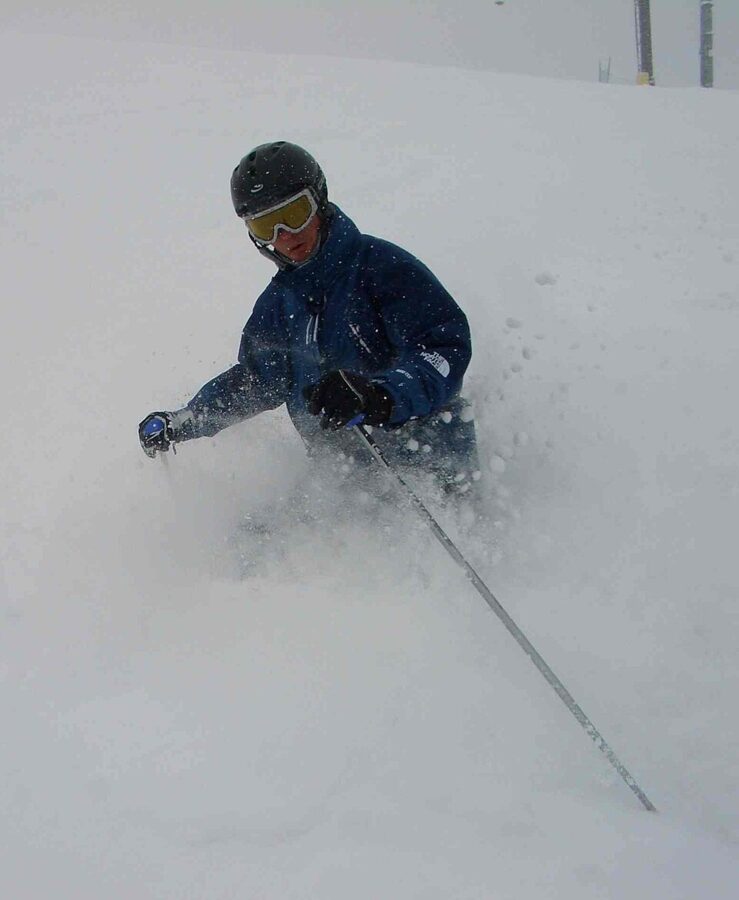
Mt.T is the reason expert skiers come. A day pass costs ¥9,000 from 19 December to 8 January and from 1 to 9 March, and ¥6,000 for the spring pass from 10 March. From 9 January to 28 February the only day ticket is the Ultimate 1Day Pass at ¥14,000, limited to 150 skiers a day and sold by reservation. Book early for midwinter weekends.
The terrain beyond the ski area is reached through designated gates, and the ski area’s rules are blunt: nothing out there is controlled, you carry a transceiver, probe and shovel, you go with people who know the ground, and a search may be billed to you. The slopes on both sides of the Tajirizawa A course are closed by the Tone-Numata forest office, which owns the land, because a slide from them would bury skiers on the run below.
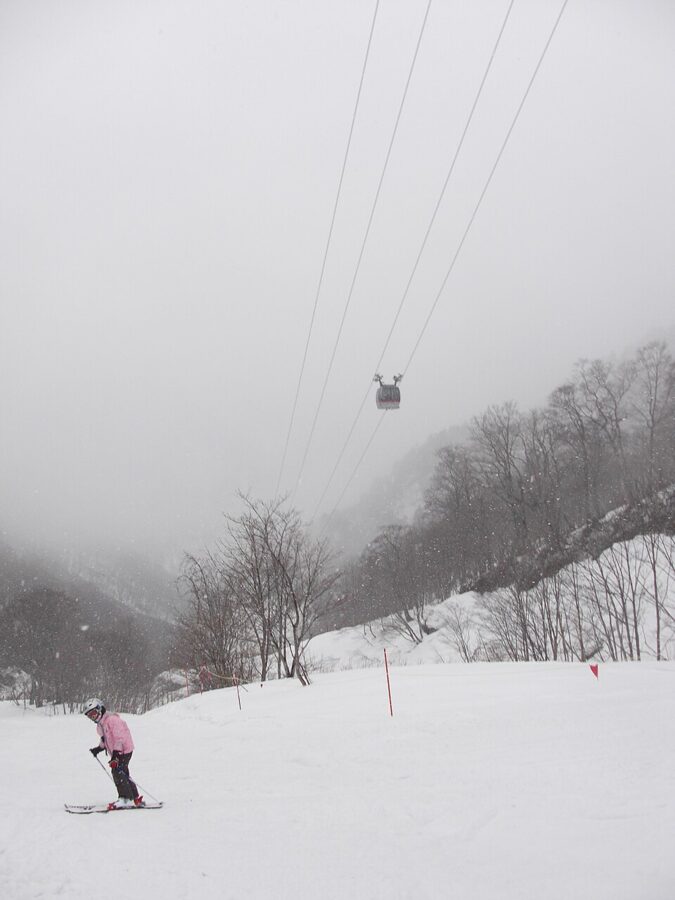

The Japan Avalanche Network publishes a bulletin for Kagura, Tanigawa and Hotaka through the winter; the 2025–26 series ended on 6 April 2026. Read it every morning before you go through a gate, file a climbing notification, and hire a guide the first time. Anyone driving needs winter tyres or chains from December to March, and the roads to the upper dams are closed until spring.
Getting there from Tokyo
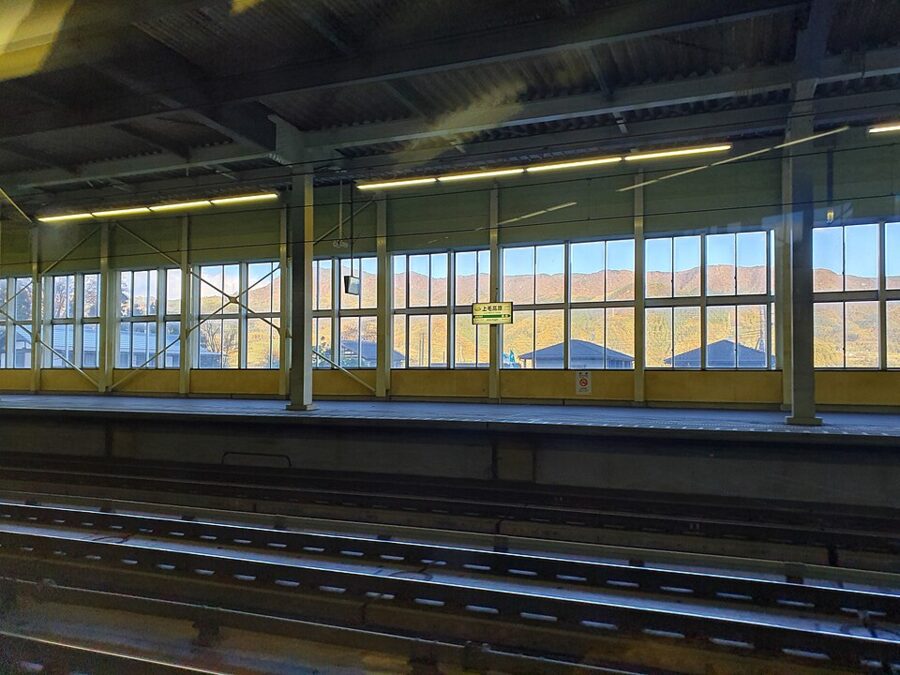
The Joetsu Shinkansen reaches Jomo-Kogen (上毛高原) in 63 minutes from Tokyo at best, 47 from Omiya. Jomo-Kogen is in the south of the municipality, a long way from the onsen and the mountain, so everything from there is a bus or a pickup. Kan-etsu Kotsu buses run from the station through Minakami Onsen to the ropeway; the 08:00 from Jomo-Kogen reached the ropeway at about 08:45 on the April 2026 timetable, and the fare on the 2025 table was about ¥1,600.
From 5 December to 4 April an express bus leaves Jomo-Kogen at 07:58 and reaches the ropeway at 08:33, for ¥2,000. In winter Seibu’s Naeba White Snow Shuttle also runs daily from Ikebukuro to Naeba through Sarugakyo Onsen, from 19 December to 22 March.
The Joetsu Line and the mole station
The slow way is the JR Joetsu Line from Takasaki to Minakami station (水上駅), which sits in the middle of Minakami Onsen. North of Minakami the line goes through the mountains to Niigata, and the service is thin: on the recent timetable, six down trains a weekday, the first after 08:00, with a gap of nearly four hours in places. Check the times before you plan a day around them.
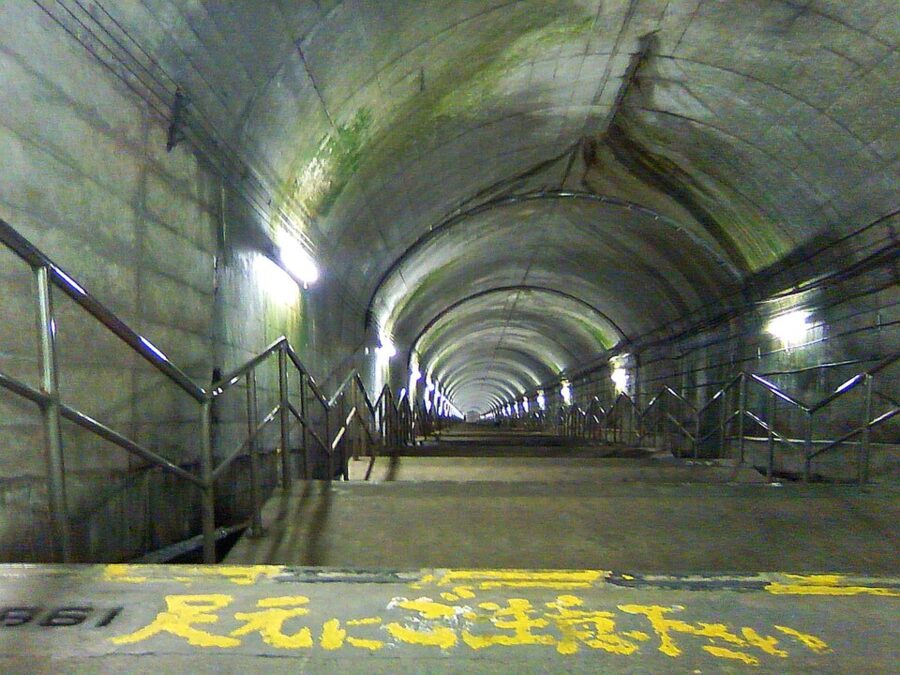
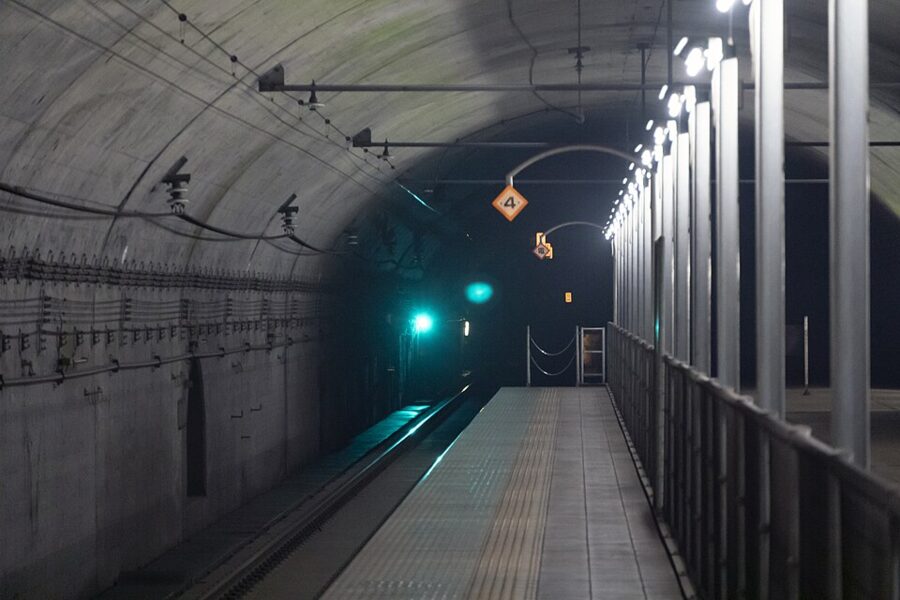
Two stops north is Doai (土合駅), the station for Tanigawadake. Its down platform has been inside the Shin-Shimizu tunnel since 1967, and getting out means a climb of 486 steps in all, 462 of them in one straight flight, 82 m of height over 338 m, about ten minutes. Railway fans call it Japan’s mole station. From the station building it is about 20 minutes, 1.5 km, to the ropeway along a road with a narrow pavement.


By car, the Kan-etsu Expressway runs from Nerima in northern Tokyo to the Tsukiyono exit in about 90 minutes and the Minakami exit in about 100 without traffic. On a summer weekend there is traffic, and the rafting companies count a late arrival as a cancellation.
River safety, mountain safety and bears
On 5 May 2023 a commercial raft flipped on the Tone below Suwakyo Ohashi and a 19-year-old student drowned. A log hidden about 70 cm under the surface had acted as a strainer, letting water through and holding him under; afterwards the town’s outdoor operators worked together to clear underwater snags from the river. Strainers are the hazard a raft guide fears most, and the reason the swimming briefing matters.
The town has regulated the business since 2012. Under its Outdoor Sports Promotion Ordinance, every operator must register with the town and every licensed guide too, each activity has a safety standard reviewed every three years, injuries must be reported to the mayor, and a review committee can inspect. Choose an operator that is registered, ask how many guides are on the water with each group, and listen to the swimming briefing as if you will need it.
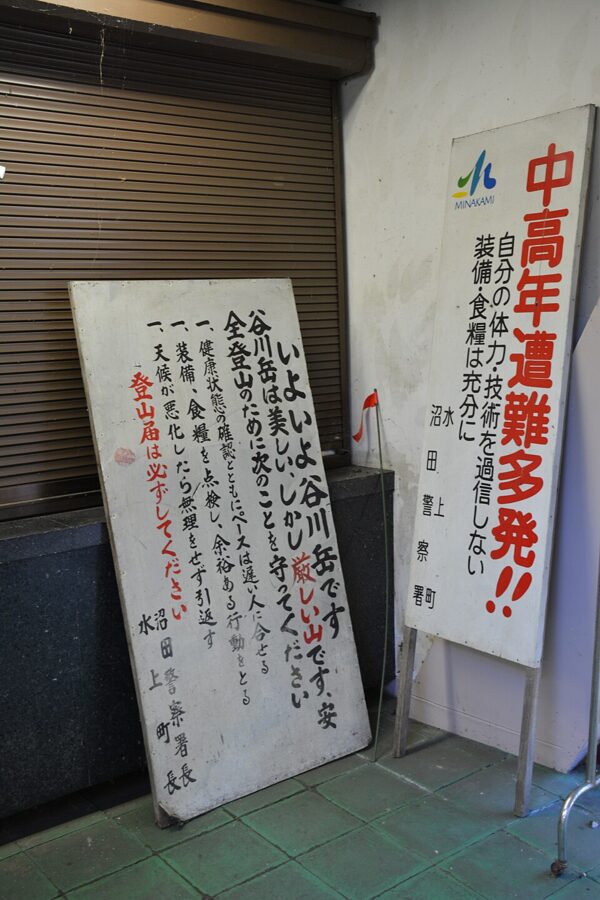

On the mountain the numbers are current, not historical. Gunma police counted 139 mountain accidents in the prefecture in 2025, involving 151 people, 14 of whom died, and 41 of the accidents were in the Tanigawa range, more than in any other mountain area of Gunma. July was the worst month. File a climbing notification for every route, which the prefecture takes online, and treat the forecast for the divide as the forecast for your day.
Tanigawadake is bear country, and the ropeway’s own advice to walkers is to carry a bell or something else that makes noise. Asiatic black bears live throughout these forests; what to do on meeting one is the same here as for bears in Japan generally, and autumn, when they feed hard before winter, is the season to be loudest.

Back at the put-in on a May morning, the guides are still reading the water against the rocks under the bridge. Now you know what they are deciding and why: spring for the big river if everyone in the boat is 13 or older and happy to swim in snowmelt, summer for children, canyoning for the thrill once the level drops, and a booking two weeks ahead for any weekend. Take the 07:58 out of Jomo-Kogen in winter, or the first bus in summer, and leave the afternoon for Hoshi-no-yu.