
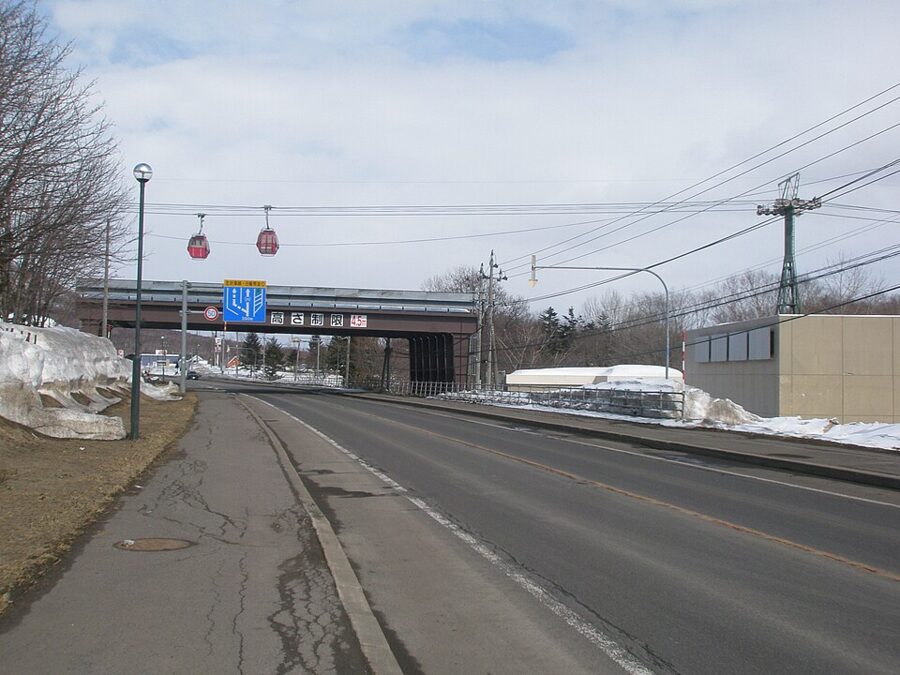

The first gondola of the day leaves from beside the hotels, swings out over National Route 230 and the early traffic heading for Lake Toya, and drops you on East Mountain. From there the whole of Rusutsu’s best tree skiing is one run and one more gondola away, on Isola, and the only question that matters before 09:00 is whether the wind has let that gondola run.
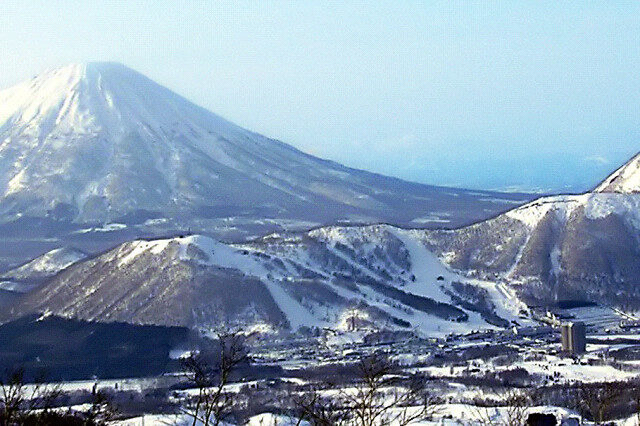
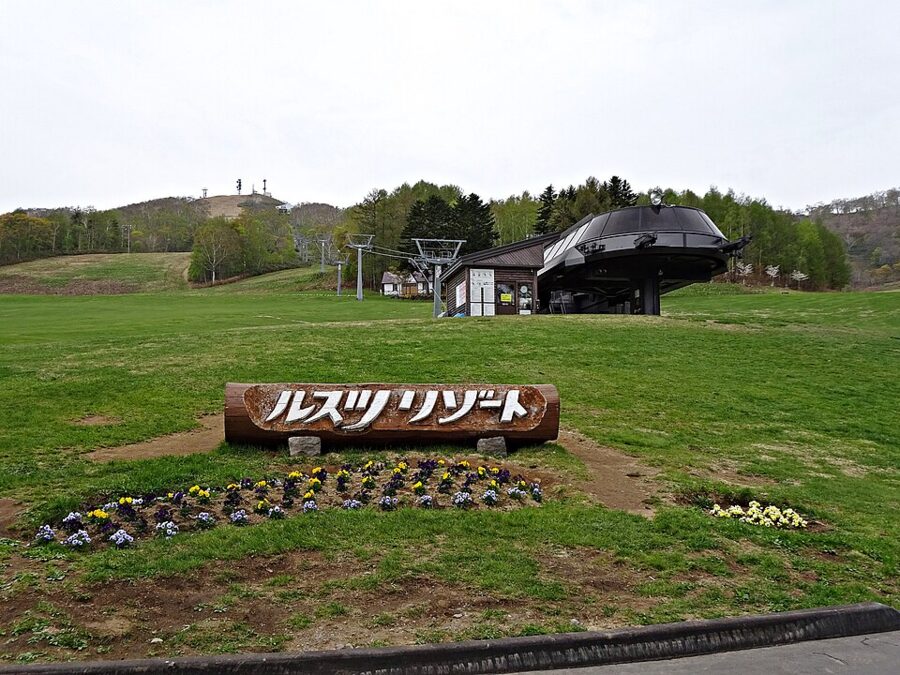
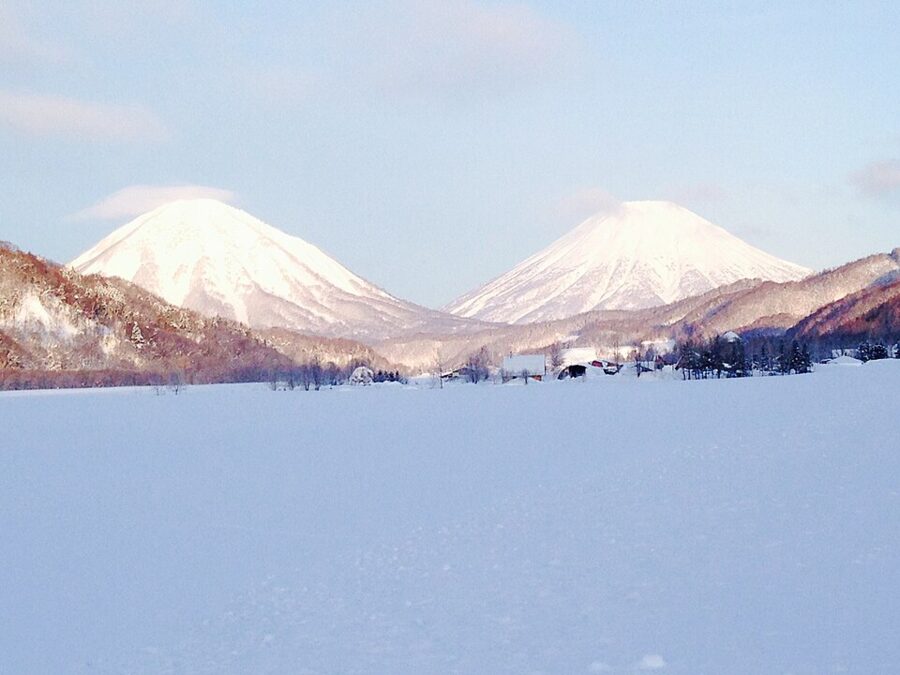
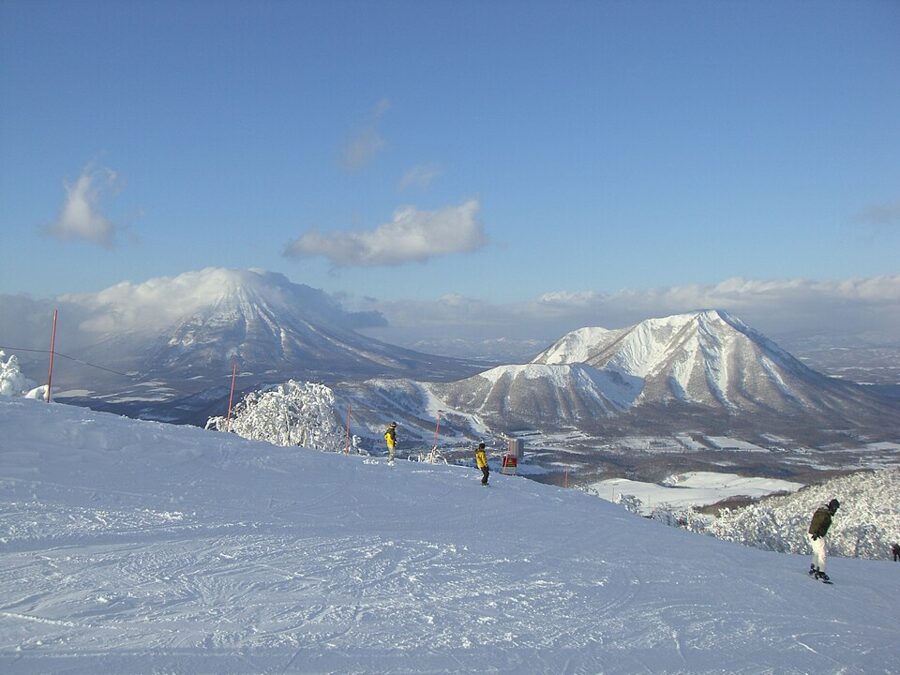
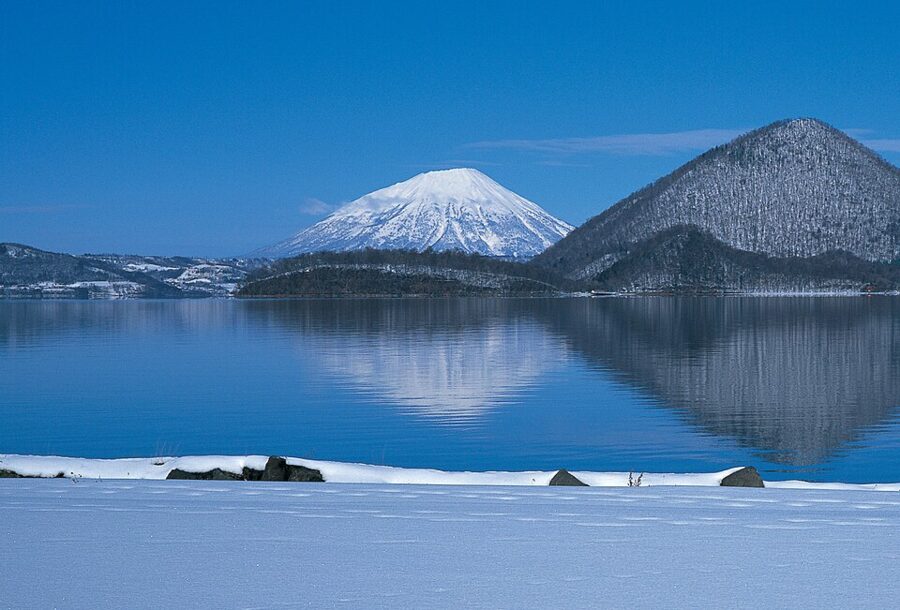
Rusutsu (留寿都) is a single company’s ski resort spread over three hills in the village of the same name, about half an hour’s drive from Niseko next door, with Mount Yotei across the valley filling the view from almost every chair. It gets the same storms as Niseko and a fraction of the crowd, and it has no ski town, which is either its best feature or its worst depending on what you want from an evening.
The numbers first. Four gondolas and fourteen lifts serve 37 marked runs. The top of the lift system is at about 994 m and the lowest point about 400 m, a vertical of about 594 m, small by Alpine standards but spread over three separate peaks, so a day here feels longer than the drop suggests. The longest run, Isola Grand, is 3,500 m, and the steepest, Super East, reaches 40°.

This winter’s adult day ticket is ¥16,700 at the window in the regular season, and the resort sells its day tickets cheaper through its app.

Contents12 sections
- One company, three hills and no town
- The snow, and what the weather stations say
- West Mountain: the hotel hill and the night skiing
- East Mountain: the gondola over the road
- Isola: the reason to come
- Trees, ungroomed runs and the boundary
- Tickets and the Epic Pass
- Ski school and rental
- Where to stay and eat
- Getting there from New Chitose, Sapporo and Niseko
- The season, month by month
- Wind, cold and the days the lifts stop
One company, three hills and no town
The resort began in 1972 as Daiwa Rusutsu, a ski area with five lifts on Sorioiyama (橇負山), the hill now called West Mountain. Its owner went bankrupt in 1981 and the village, which depended on it for winter work, found a buyer in the Kamori family’s Noboribetsu cable-car business. The new company, Kamori Kanko, reopened it that November and then kept building: East Mountain in 1987, Isola in 1988, the Heavenly area on Isola’s far side in 1996, the monorail, built in 1997 and running from 1998.

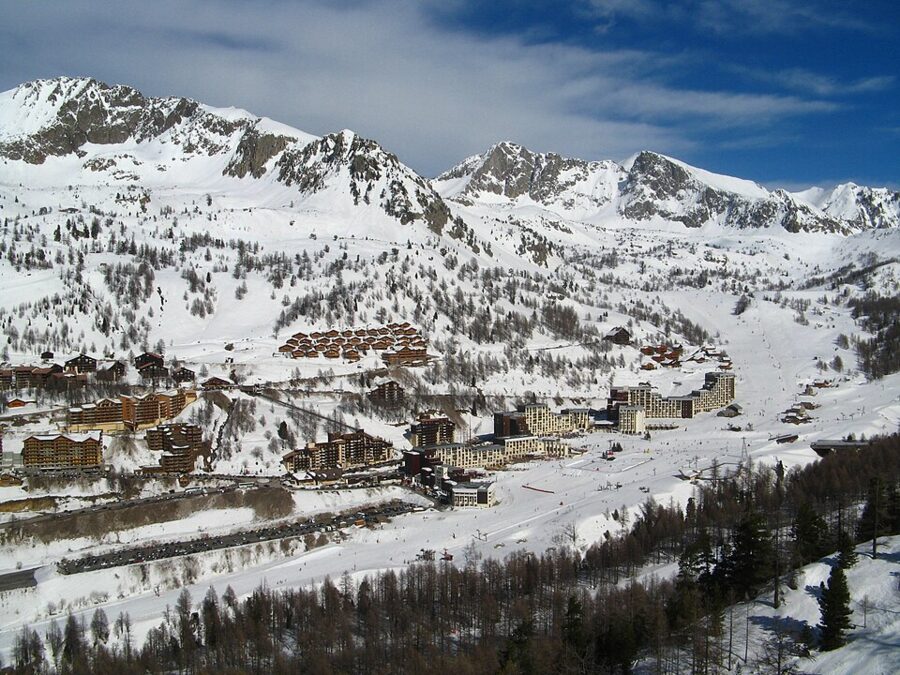
Isola takes its name from Isola 2000 in the French Alps, with which Rusutsu signed a sister agreement in 1989. The tall tower hotel of 1993 became The Westin Rusutsu Resort in 2015, and a condominium hotel, The Vale Rusutsu, opened in December 2020. Kamori Kanko still runs the lot, along with Sapporo Teine, Tokachi Sahoro and the Nakayama Toge ski area on the pass road from Sapporo, which is why its season pass, the K-Winter Pass, covers all four.

The difference from Niseko is structural. Niseko is one mountain, Annupuri, carved up among several resorts and a village of restaurants, bars and rental apartments at Hirafu; Rusutsu is three hills, one ticket office and two big hotel complexes at the bottom. There is nothing like Hirafu’s evening street. What you get instead is a resort where the lifts, the trail grooming, the ski school, the buses and most of the beds answer to one operator, and where the lift queue on a weekday is usually a few people long.
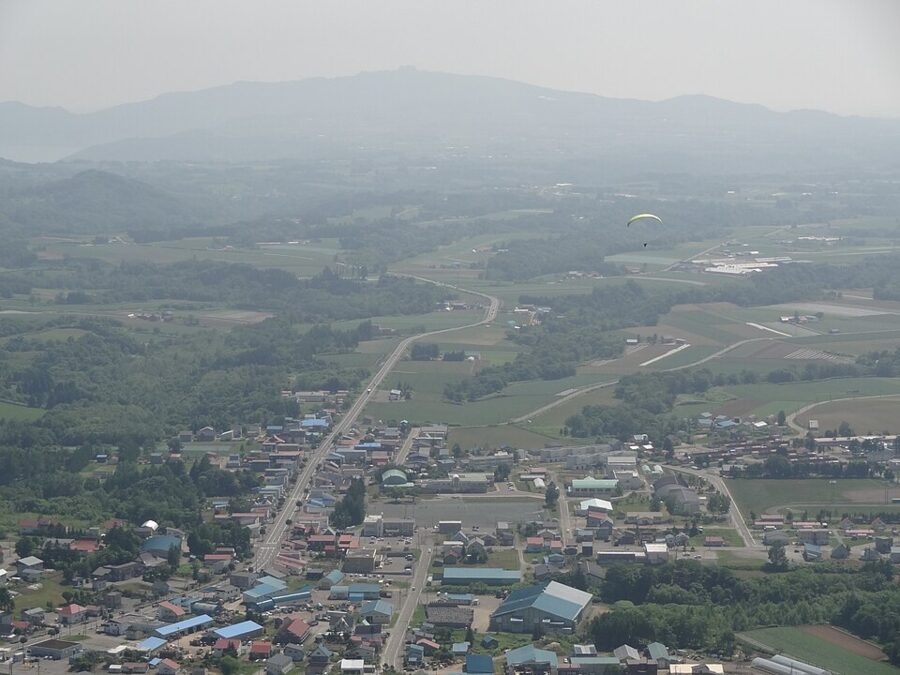
The resort sits in the south of the Shiribeshi district, below Shiribetsudake (尻別岳, 1,107 m), the cone that rises behind West Mountain. The village takes its name from the Ainu ru-sutsu, the road at the foot of the mountain, and it grows potatoes, asparagus and daikon on the flat ground below the lifts.

Rusutsu is a partner resort on the Epic Pass, not one of Vail Resorts’ own, which matters when you read the small print. It has won Japan’s best ski resort at the World Ski Awards six times, most recently in 2025, a record it mentions on almost every page of its own site.

The snow, and what the weather stations say
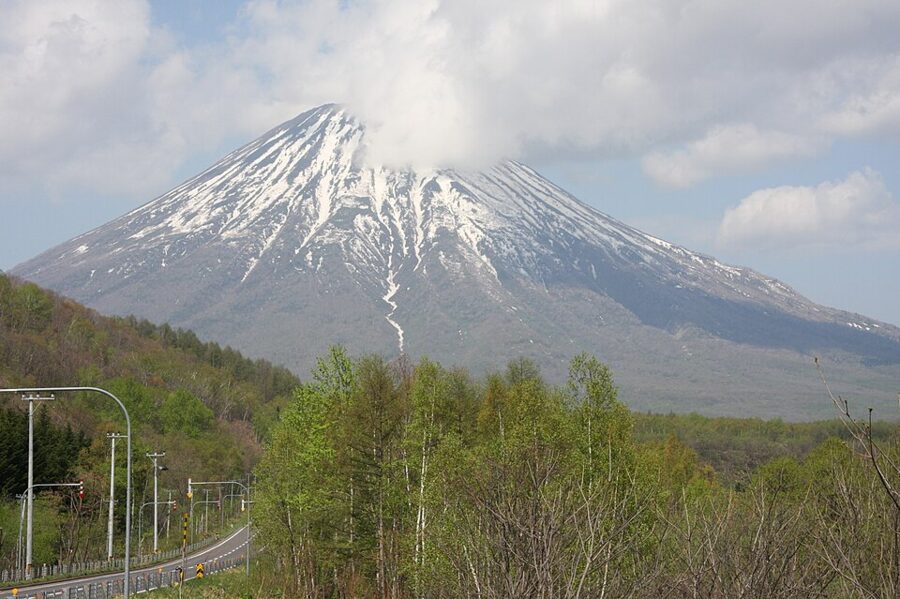
Rusutsu sits southeast of Mount Yotei, and the resort’s own explanation of its snow is that Yotei breaks the worst of the northwest winter wind while the cold air still carries dry snow over the top. Being closer to the Pacific than Niseko, it also claims more clear days. The weather records back up the first claim more than the second.

There is no Japan Meteorological Agency station in Rusutsu itself. The nearest, at Kimobetsu, sits down Route 230 in the next valley, and its 1991–2020 averages are instructive: 954 cm of snowfall a year, a deepest snowpack of 145 cm, and a January average of −7.2°C with an average daily low of −14.1°C. Kutchan, the station for the Niseko side, records slightly less snow, 921 cm, but in a January average of −5.4°C.

The telling number is the water. In January Kimobetsu gets 238 cm of snowfall from 86 mm of precipitation; Kutchan gets 253 cm from 185 mm. Roughly the same depth of snow from half the water is the measured version of what skiers say about Rusutsu’s powder: it is colder and lighter than Niseko’s on the same storm. Both stations are in valleys, well below the lifts, so treat them as a guide to the pattern rather than the resort’s own totals.
The sunny-day claim is harder to find in the data. Kimobetsu records 46 hours of January sunshine and Kutchan 47, about the same, so plan for Hokkaido’s usual January of short grey days and count any blue morning after a storm as a gift.
West Mountain: the hotel hill and the night skiing
West Mountain is the original ski area, the smallest of the three and the one outside the hotel doors. The West Gondola, a four-seat car 1,104 m long, runs to the top, and two quads and a pair lift cover the rest. It is the mountain for a first morning, for children in ski school and for the floodlit evening session, and most visitors with a car or a Niseko bus pass straight through it on the way to Isola.
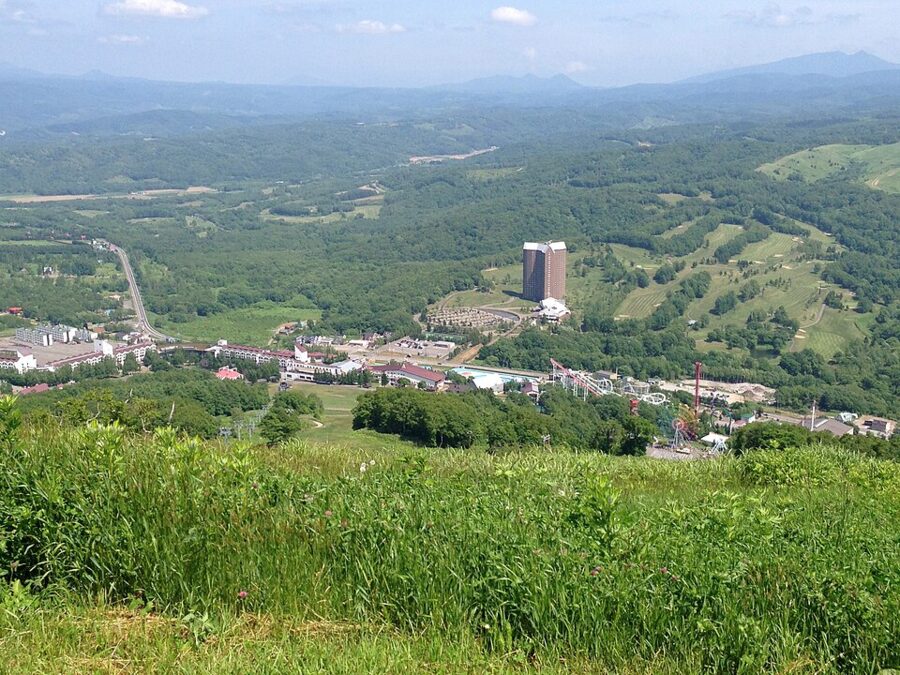

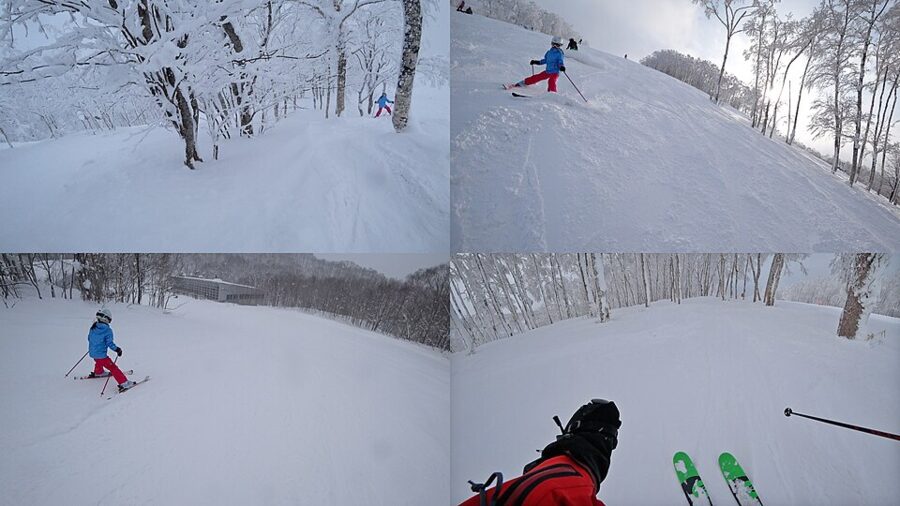
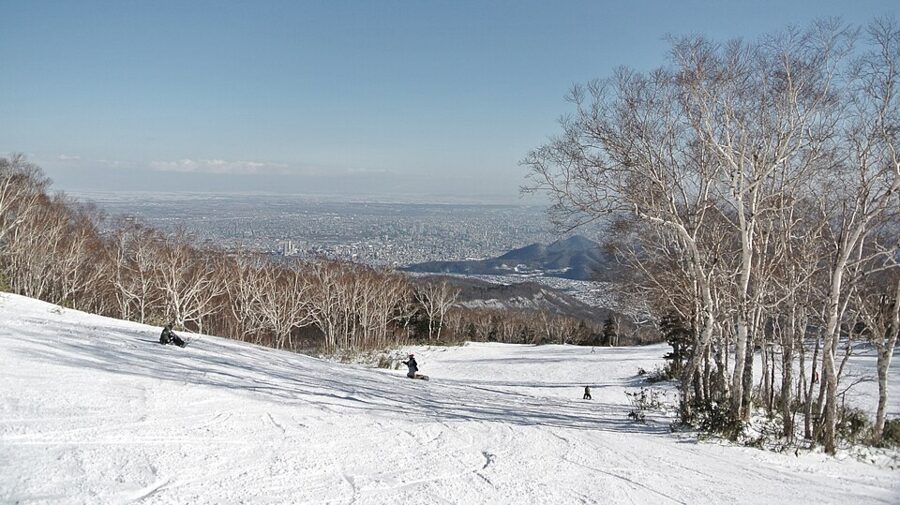
That is a slight mistake on a storm day. The upper slopes on the Shiribetsu side hold some of the resort’s best short powder: Tiger, 300 m at an average of 22° and up to 29°, is usually left ungroomed after snowfall and builds even moguls when it is not. Sky, just below the summit, is 500 m of ungroomed snow at up to 27°, with deep bumps below the West No. 2 Quad. Natural, the 750 m forest run, is cut through the trees with the undergrowth and low branches cleared, the resort’s way of saying that you can turn among trees without catching a ski in bamboo.
For cruising, Eva is the main run, 650 m with a stepped pitch that suits an intermediate learning steeper snow, and Dynamic is a wide groomed sheet for speed. Giant, 1,200 m, runs straight from the summit towards the amusement park at the bottom, and the joke the resort itself makes about it is that the Ferris wheel comes at you as you ski. Beginners have Family Course in front of the hotel, White Lover and the 2,000 m Rainbow, a gentle traverse from the top that crosses seven other runs.
Night skiing is on West Mountain only, on Family, White Lover, Bambi, Eva, Rainbow, Dynamic and Sky. It runs from about mid-December 2026 to 30 March 2027, 16:00–20:00, with the last lift at 19:45, so both ways of putting it are right: the slopes are lit until 20:00, but you need to be on the chair by 19:45. A night ticket costs ¥4,000 for an adult. The West ticket counter, in front of the Highland Lodge, stays open until 19:30 while night skiing is running.
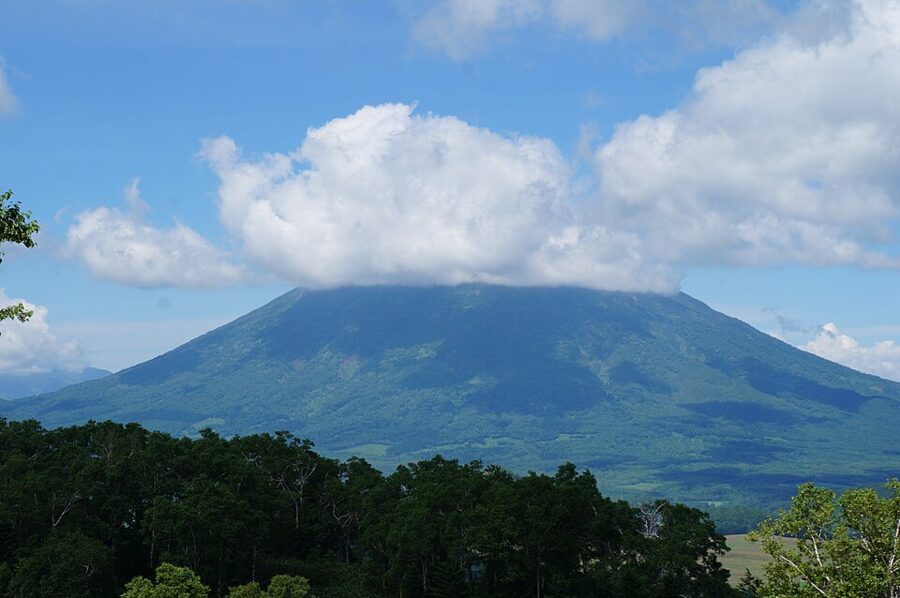
In summer the West Gondola runs as the Yotei Gondola to the Yotei Panorama Terrace on the summit, and the view the terrace sells, Yotei square in the frame with Lake Toya to the south, is the same one you ride past every winter morning without stopping.

East Mountain: the gondola over the road
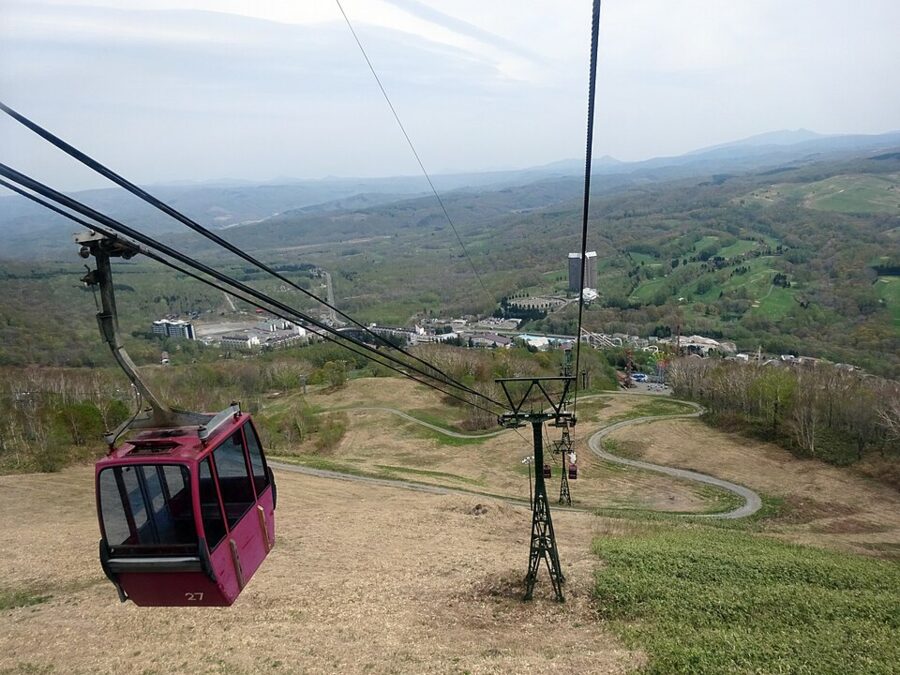
East Mountain is the hub. East Gondola No. 1, a six-seat car 1,654 m long, crosses National Route 230 from the hotel side, and East Gondola No. 2, 2,071 m, carries on to the top. The East Quad, 1,381 m, gives fast laps on the upper mountain without going back to the base. Ride the gondola on a point ticket and it costs nothing, because it counts as a transfer, as do the Tower Pair and the two Across pair lifts that link the mountains.
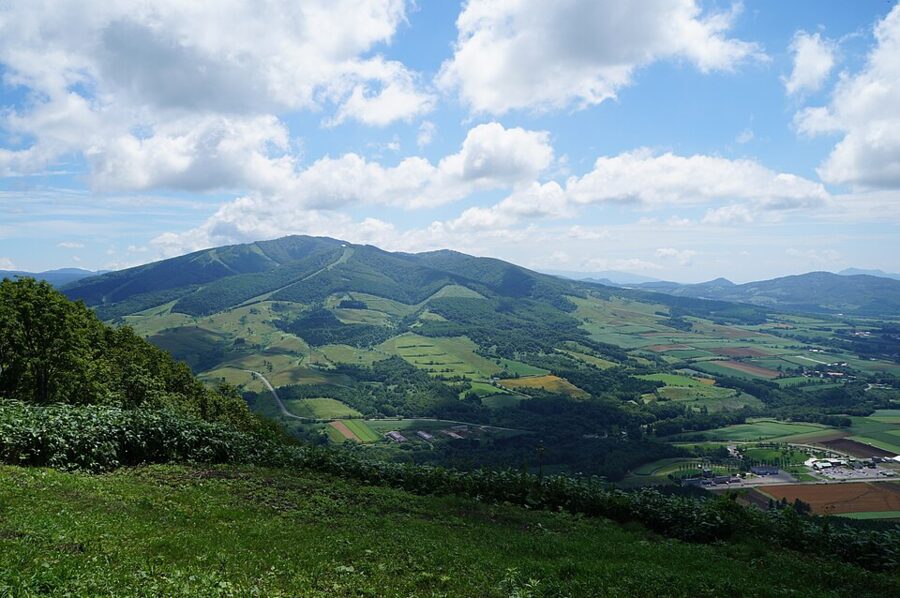

The long runs here are for intermediates and legs. East Vivaldi runs 2,300 m from the summit, steep at the top and then a rhythmic, easing cruise; East Tignes follows the ridge for 2,500 m with the view along it, then flattens out into Freedom Park, the resort’s main terrain park with an easy lane and an expert lane of jumps and rails. Fuboru, 1,200 m, is a gentle detour through the trees off Tignes that works as a warm-up before Isola.
The other end of the scale is Super East, 500 m straight off the summit at an average of 32° and a maximum of 40°, the steepest pitch on the resort and ungroomed. After a big fall it is a fine, short powder run. The rest of the time it is a field of large, hard bumps, and a fall near the top slides further than you would like.
Two short ungroomed shortcuts drop off the side of East Mountain towards Isola Base Station: Across A, 300 m at up to 33°, which links the middle of East Tignes to Furikozawa, and Across B, 200 m, which cuts the corner off the connecting route from Fuboru. The resort’s own description of Across B notes that the powder along its edges is often left alone, which is true of a lot of Rusutsu.
Easy Trail, reached by the East No. 1 Pair Lift, is the gentlest run on the resort, 750 m at an average of 7°, and it is laid out so that a child who has just learned to stop cannot wander off onto anything harder. The East Center Station at the base was rebuilt in 2025 with the Lone Pine restaurant, a shop and a paid lounge, the K-Lounge.
Isola: the reason to come
Isola is the biggest of the three and the one that people mean when they talk about Rusutsu. You reach it from East Mountain down Furikozawa, a 2,100 m valley run at an average of 7° that every skier heading for Isola has to use, and then the Isola Gondola, a six-seat car 2,858 m long, the longest lift on the resort, from Isola Base Station to the summit.

The chairlifts are the other thing that makes Isola work in a Hokkaido January. Isola’s four quads are all hooded, as is the West No. 2 Quad, and on a day of −15°C and wind the bubble is the difference between a full day and an early lunch. Isola No. 1 Quad, 1,732 m, is the main lap lift from the base; Steamboat cafeteria sits at the bottom of it and has been feeding cold skiers since 1995.
Isola Grand is the run to do first, 3,500 m from the ridge at the top through the forest to the bottom, at an average of 12° and never more than 20°. Steamboat B, 2,100 m, is the main intermediate cruise, wide and even. Steamboat A, 2,200 m, follows the ridge from the Isola No. 2 Quad to the cafeteria, narrower and much quieter.
Four runs drop from Isola Grand to Furikozawa, labelled A to D. Isola A is 1,000 m of ungroomed snow at an average of 24°, Isola B, 800 m, is ungroomed and holds wind-drifted snow on one edge or the other depending on the day, and Isola C and D are groomed. The view from the top of Isola D, where the run splits off Isola Grand, is straight at Shiribetsudake.

Rusutsu No. 1, which branches off Steamboat A, is the hardest run at the resort, 380 m at an average of 22° and up to 35°, covered in deep moguls from top to bottom. It is short. It does not feel short.
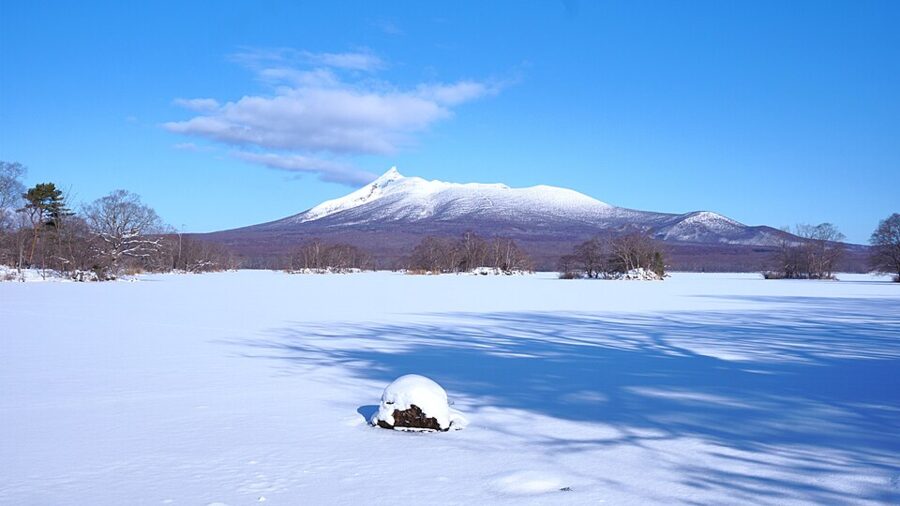
The Heavenly area, on the far side of Isola, was added in 1996, and it is where the resort’s reputation for powder comes from. Heavenly Canyon follows a stream gully for 1,850 m, collects wind-blown snow and is left ungroomed; on a storm day this is where everyone who knows the resort goes first. Heavenly Spirit, 550 m, holds a pitch of up to 22° for nearly 500 m. Heavenly View, 2,700 m at an average of 9°, traces the outer edge of the resort, and on a clear day it looks over Lake Toya and the Shikotsu-Toya National Park as far as Hokkaido Komagatake.
Heavenly Ridge A, 1,250 m with steps up to 30°, is groomed hard and fast; Heavenly Ridge B, 1,000 m, is a wide forest run where the groomers deliberately leave the edges untouched, which makes it the place to try your first ungroomed snow with a groomed line beside you.

Getting back is the decision point of an Isola day. Every route home crosses Furikozawa and goes back up East Mountain on the East No. 2 Pair or the Across lifts, and the beginner routes, the Isola Summit Bypass, Isola Grand Bypass and Isola D Bypass, exist so that a tired beginner can do it without meeting a steep pitch. Leave enough time: from Isola back to the hotels is a long valley run and two more lifts, and the clock that matters at the end of the day is the one on East Mountain, not Isola.
Trees, ungroomed runs and the boundary
Rusutsu’s tree skiing is lift-served and inside the boundary. The trail map marks the ungroomed runs, the cleared forest run called Natural on West Mountain, and the Side Country Park on the edge of the forest, where natural logs make the jumps and rails, a park for experts who want powder, trees and features on the same run. Add the ungroomed edges the groomers leave on runs such as Heavenly Ridge B and Across B, and most of the powder at Rusutsu is a few turns from a lift.

The rules are set out in the resort’s terms. Do not ski outside the resort’s managed area, and do not ski runs that are closed. The Japanese version of the same terms is stricter, asking skiers to stay on designated runs even inside the boundary; the English version only names closed runs. Take the stricter one as the rule when a patroller is watching, and treat the boundary as a hard line: the terms say that anyone who leaves it and has to be rescued will be billed for the search, the staff, the snow machines and the cost of running the lifts and lights.
The safest way to find the best of it is the resort school’s own Mountain Guiding, which takes experts to the lift-served powder zones and what the school calls its secret areas, all inside the ski area. A group of up to six, skiers and snowboarders mixed, costs ¥67,000 for three hours (09:30–12:30 or 13:30–16:30), ¥81,000 for 09:00–13:00 and ¥106,000 for 09:00–16:00, per guide. Helmets are compulsory, you sign a waiver, and the school states that you must be able to ski any run on the mountain; if the guide decides you cannot, the session becomes an ordinary lesson.
Past the boundary, the resort’s winter programme lists heli-skiing on Shiribetsudake, with a two-minute flight from the heliport to the summit and up to six runs a day with a trained guide. That is the only way the resort offers onto the open slopes of the mountain behind it.
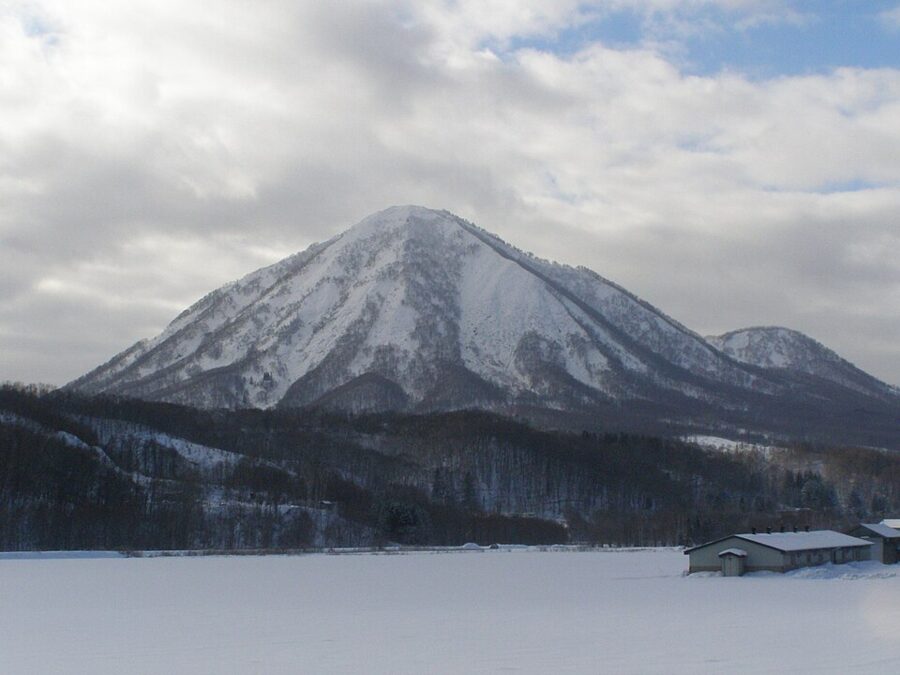
For anything beyond the boundary on your own, the region is covered by the Japan Avalanche Network’s avalanche bulletin for Niseko, Yotei and Yoichi, issued through the season; the last of last winter went out on 1 April 2026. Read it the night before, carry a beacon, shovel and probe, and go with a partner who has used theirs. Niseko’s gate system, the Niseko Rules, belongs to Niseko; at Rusutsu the rule is the boundary itself.
One practical detail from the lift gates: the IC ticket is read through your pocket, and the resort asks you not to keep it with coins, a phone or an avalanche beacon. Put the card in a pocket of its own and the beacon somewhere else, or you will stand at the gate patting yourself down while the queue builds.
Tickets and the Epic Pass
The 2026–27 lift prices are the resort’s own, and the one rule that saves the most money is simple: buy online. Online sales go through the Rusutsu app and need a credit card and a photo of an ID that shows your age; you collect an IC card from a pickup box by scanning the QR code, or load a ticket onto a card you already have. There is no deposit on the card. The ¥16,700 window price is the highest walk-up ticket at any big resort for skiing in Japan this winter, so the app pays for itself on the first morning.
In the regular season, 19 December 2026 to 14 March 2027, an adult one-day ticket costs ¥16,700 at the window and ¥13,200 online. Seniors (65 and over) and teenagers (13–18) pay ¥12,500 or ¥9,800 online, children aged 4–12 ¥8,300 or ¥6,400, and children of three and under ride free. A five-hour ticket, running continuously from the first gate, is ¥14,500 or ¥11,600 online.
Multi-day tickets are sold only at the window: ¥26,000 for two days, ¥39,000 for three, ¥52,000 for four and ¥65,000 for five, which works out at ¥13,000 a day, about what one day costs online. For six days or more you have to ask the resort’s reservation centre. The night ticket is ¥4,000 for an adult, ¥2,700 for seniors and teenagers and ¥1,400 for a child.
The 25-hour ticket is the one to understand if you ski in short sessions. It costs ¥39,000, or ¥36,000 online, and works as 25 one-hour blocks: the first gate takes an hour off, you can ride as often as you like for that hour, and the next gate after it takes another. The hours carry across days for the whole season, but one card is one person; you cannot split it with a partner.
Owners of a 25-hour ticket can top it up with five more hours for ¥7,300. Point tickets, at ¥800 a point, cost one point for a pair lift or the West No. 1 Quad, two for a quad and three for a gondola.
The shoulder seasons are much cheaper. Early season, from the planned opening on 28 November to 11 December 2026, is ¥7,900 a day at the window only, rising to ¥10,500 from 12 to 18 December. Spring season, 15 to 31 March 2027, is ¥10,500, online or at the window. Unused five-hour and point tickets bought this season expire on 31 March 2027, and nothing carries over to next winter.
The Epic Pass, the Epic Local Pass and the Epic Australia Pass each give five consecutive days at Rusutsu with no blackout dates and no requirement to stay at the resort. To collect them you show the pass itself and photo ID at a Rusutsu ticket office; the My Epic app does not work here, Rusutsu does not sell Epic passes, and Epic’s buddy tickets and resort discounts do not apply because it is a partner, not a Vail Resorts resort. Five consecutive days means exactly that: plan the Rusutsu block of the trip around the pass, not the other way round.
The Mt. Isola First Track is the ticket for a storm morning. On 31 December to 3 January and every Sunday in January and February (10, 17, 24 and 31 January and 7, 14, 21 and 28 February 2027), up to 60 people meet on the Grand Floor of the Rusutsu Resort Hotel at 08:15, take a free bus to the Isola base at 08:30 and ride the gondola at 08:45, skiing from the summit as soon as the patrol is ready, at about 09:00. It costs ¥5,000, or ¥3,000 with a K-Winter Pass, booked by noon the day before, and it ends when the mountain opens to everyone, so you need an ordinary ticket as well.

Ski school and rental
Rusutsu’s ski and snowboard school is recognised by the Ski Association of Japan and the Japan Snowboarding Association, and runs from 28 November 2026 to 31 March 2027. Group lessons for beginners to intermediates, age seven and over, in groups of up to eight, cost ¥8,000 for two hours (10:00–12:00 or 13:30–15:30) or ¥13,000 for four. The expert lesson, up to five people, is ¥15,000 or ¥24,000.
A private lesson for one costs ¥30,000 for two hours, a private group of two to five ¥37,000, and an evening private session at 16:30 before night skiing ¥24,000 for an hour. Children aged 4–7 go to the Samurai Kids group lessons, taught by foreign instructors with Japanese-speaking staff on hand; the full-day course includes lunch and a lift ticket is extra. Book the New Year and February weeks early.
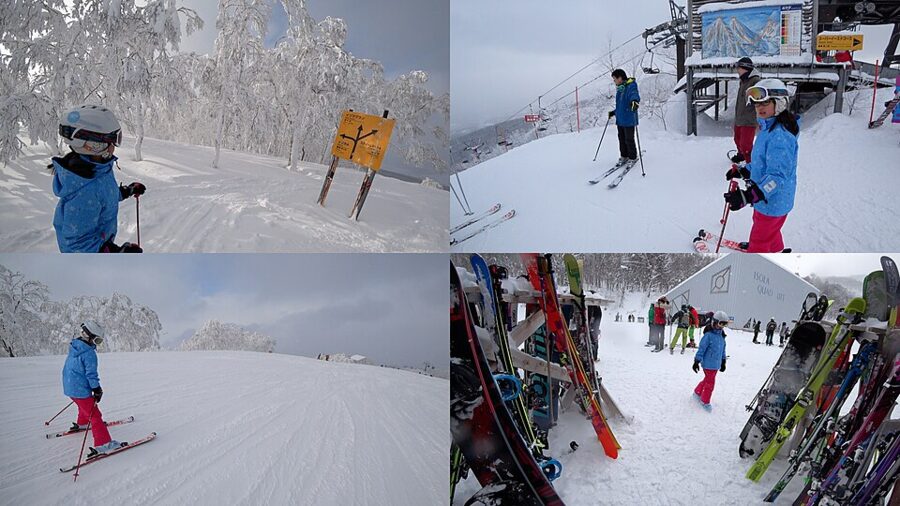

The rental stations are Salomon and Atomic. An adult standard ski set (skis, boots and poles) costs ¥10,800 for a day or ¥9,400 for five hours, a child’s ¥8,000 a day, and the expert skis at the Premium Rental Station in the North Wing and at the Westin cost ¥17,700 a day with boots and poles. Fill in the online form by 16:00 the day before and the counter skips the paperwork; it is not a reservation, and you still pay on the day.
Where to stay and eat
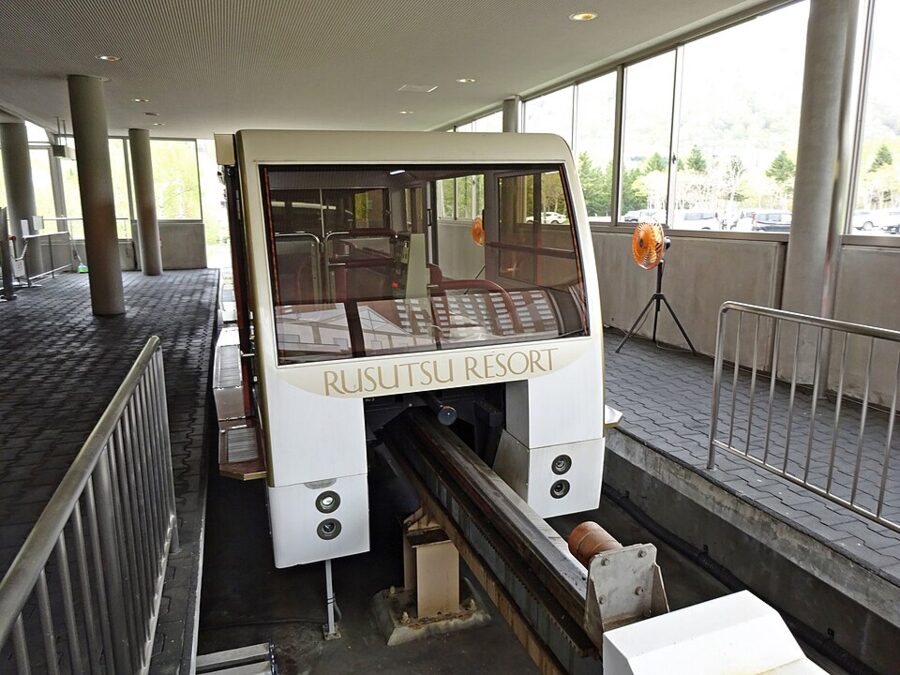
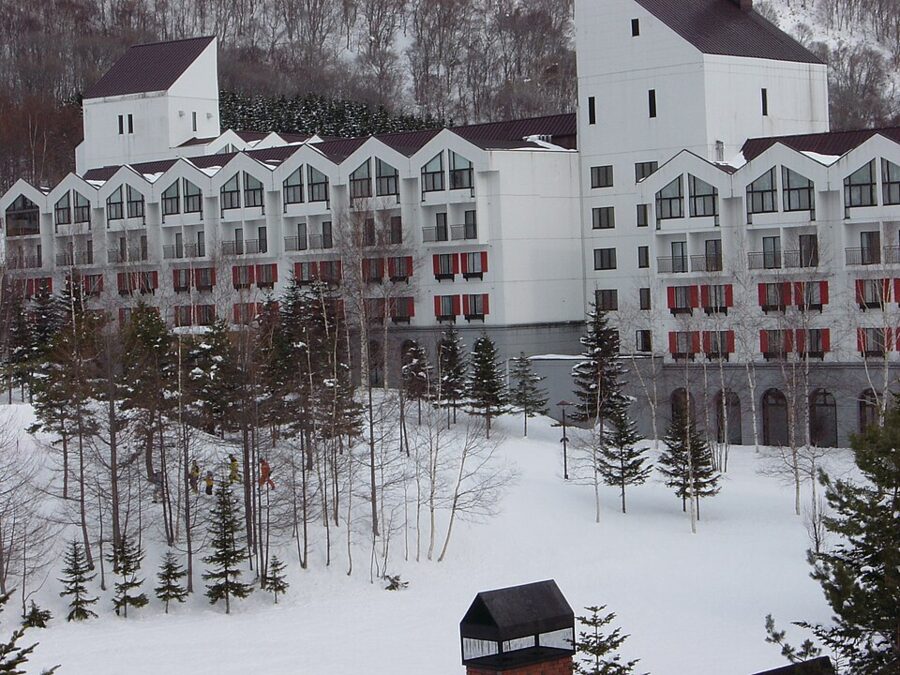
Almost everyone stays in one of three resort hotels, all on the West Mountain side of the road, joined by a monorail and the bus loop. There is no separate village of lodges, bars and rentals as there is at Niseko, and that is the trade: everything is a short walk in slippers, and nothing is open late.

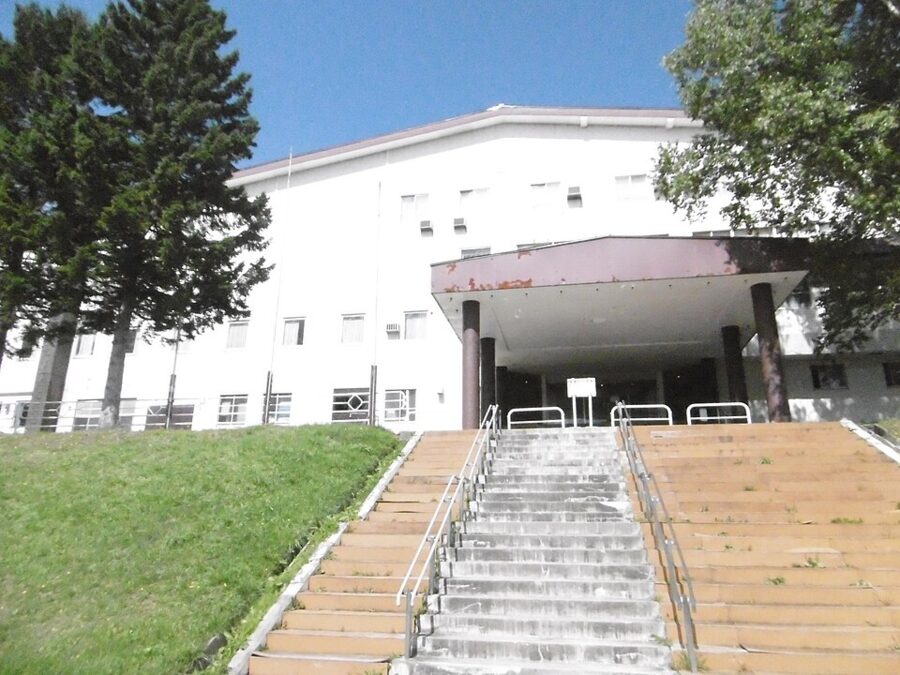
The Rusutsu Resort Hotel & Convention is the big one, the North and South Wings at the foot of West Mountain, ski-in and ski-out, with an indoor wave pool, the two-storey carousel in the North Wing’s indoor street and a range of rooms from twins to family rooms and the new wellness suites. Check-in is 15:00 and check-out 10:00. It is the obvious base for families, the ski school and the night skiing.

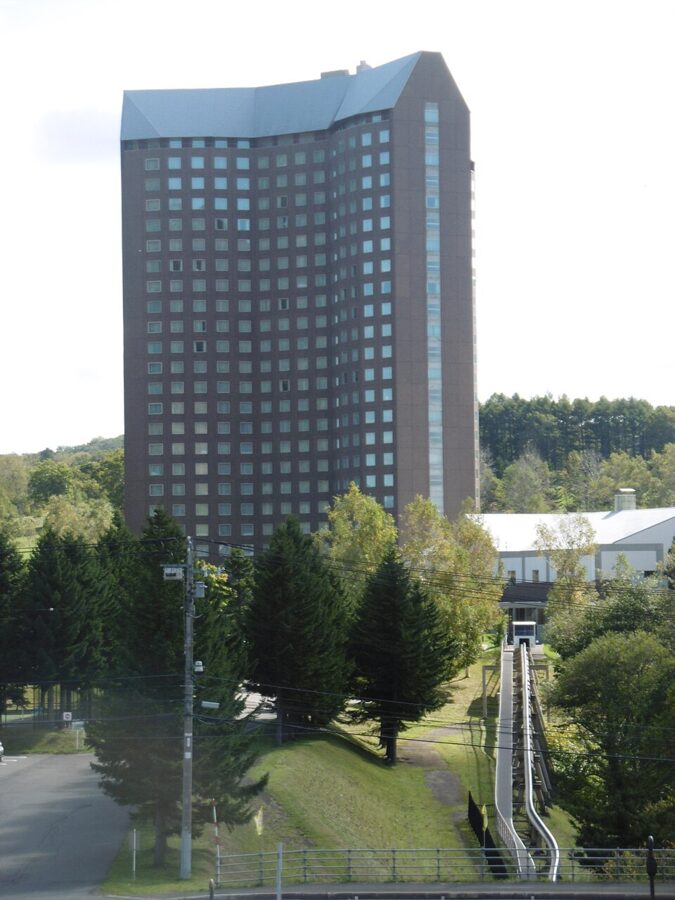
The Westin Rusutsu Resort is the tower you see from the road, with every room a two-level suite of 76 m² or more; the resort says the room renovation finishes in December 2026. A monorail runs from the Westin to the Resort Hotel, the amusement park and West Mountain. Check-out is 12:00, two hours later than at the Resort Hotel, which on a powder day is worth a lot.

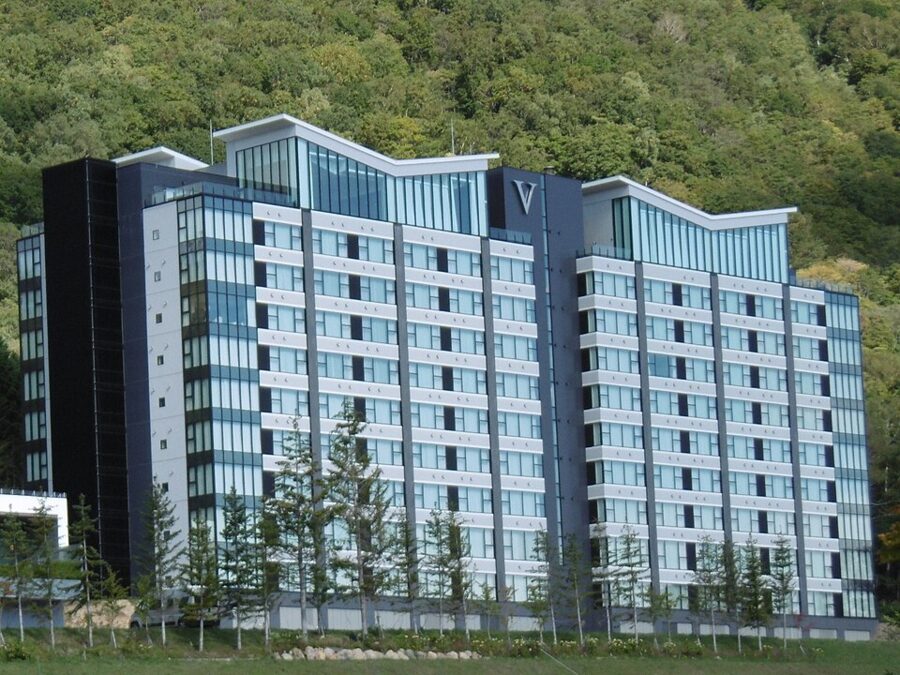
The Vale Rusutsu, opened in December 2020 and managed by Niseko Alpine Developments, is the condominium option: ten apartment types for two to eight people, with kitchens and the larger units built with two bedrooms and two bathrooms or more. It is next to West Mountain, ski-in and ski-out, and connected directly to the Kotobuki no Yu onsen. The Highland Lodge, the original 1972 hotel, now takes only groups.

There are two hot springs. Kotobuki no Yu, opened in July 2019, has an outdoor bath 20 m wide, a sauna and a cave bath; the Westin has its own onsen with an open-air bath. Both draw sodium bicarbonate water. The South Wing’s large bath is not an onsen but uses spring water from the foot of Yotei, and has a self-service sauna.
The resort lists more than 30 restaurants, from the Oktoberfest buffet to Japanese and Western set dinners, with lamb and vegetables from its own farm. On the mountain, Steamboat at the bottom of the Isola No. 1 Quad is the classic cold-day stop, Isola 2000 at Isola Base Station became a steak and seafood bar in 2024, and the Lone Pine restaurant is at the East Center Station. Many hotel restaurants take bookings only; reserve dinners when you book the room, because on a full week the walk-in options shrink to the cafeterias.
For families, the Samurai Kids Park on West Mountain has sledding, tubing and snow bikes with a moving carpet to the top, and the resort runs a nursery. There is a long list of non-ski activities, from snowmobiles and snow rafting to dog sledding and horse riding towards Toya, enough to fill a storm day when the upper lifts are shut.
Getting there from New Chitose, Sapporo and Niseko
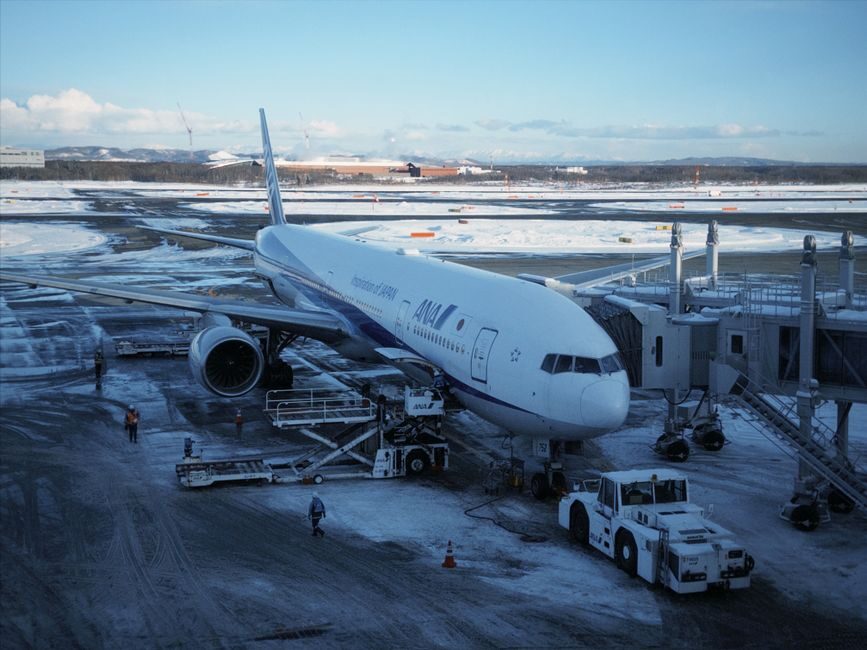
Fly to New Chitose Airport, where most trips for Hokkaido skiing begin. Rusutsu is about 90 minutes from the airport and about 90 minutes from Sapporo by car, and the road is the decision you make before you book: drive, take the resort’s own bus, or do it from Niseko in a day.
The Big Runs bus is Rusutsu’s own airport shuttle, and reservations are compulsory. This winter it runs from 28 November 2026 to 30 March 2027 to the resort and from 29 November to 31 March back, takes 120 minutes and costs ¥5,000 one way booked online by midnight seven days before the day you travel, or ¥5,500 booked any other way. Adults and children pay the same, children of four and over need their own seat, and under-fours on a lap ride free.
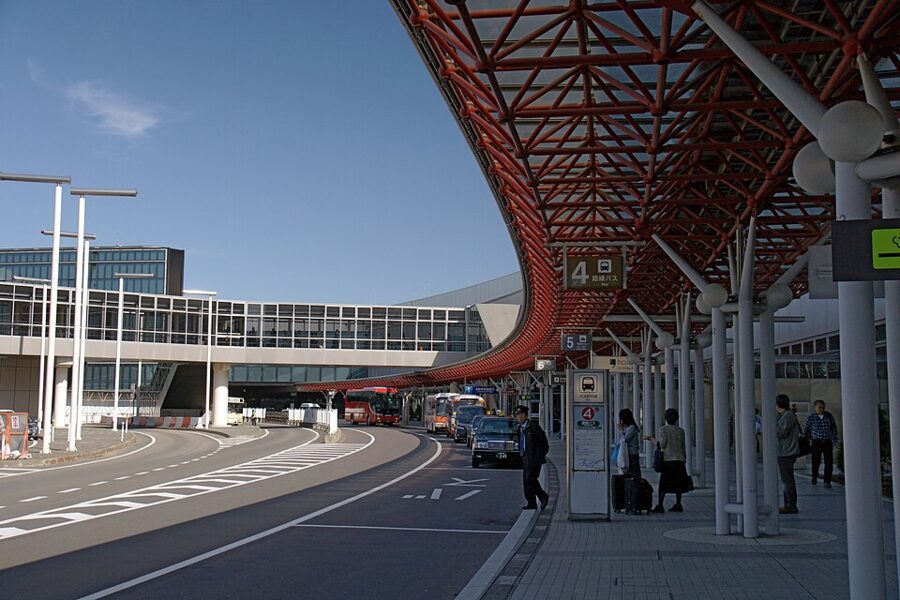

Buses leave the domestic terminal between 10:15 and 19:00 (some only from 19 December) and the international terminal from 12:20, and drop at the Rusutsu Resort Hotel, the Westin and The Vale. The resort asks you to allow at least 45 minutes from a domestic landing to the bus and 90 minutes from an international one.
The return runs leave Rusutsu between 08:40 and 17:30. Cancelling the day before costs 40% of the fare and on the day 50%, so a delayed flight is not cheap. Hokkaido Access Network’s Resort Liner covers the same road from the airport to Rusutsu and Niseko for ¥5,500–6,000 an adult, also booked ahead.
From Sapporo, the winter bus is no longer free. From 28 November 2026 the resort’s Rusutsu Express costs ¥3,000 each way, booked online by 15:00 the day before, and K-Winter Pass holders ride free. It is one bus each way: 08:00 from the Kamori Building, two minutes from the south exit of Sapporo Station, arriving at the hotels at 09:45–10:05 after a ten-minute stop on Nakayama Pass, and back from The Vale at 16:40, reaching Sapporo at 18:45. The trip takes 105 minutes.
Donan Bus runs the scheduled alternative, a reservation-only line from Sapporo over Nakayama Pass via Jozankei and Rusutsu to Lake Toya Onsen, four buses a day from stop 7 at Sapporo Station, ¥2,600 to the Rusutsu Resort Hotel stop. It is cheaper and more flexible than the Express and slower, and it is the bus if you want to combine Rusutsu with a night at Toya.
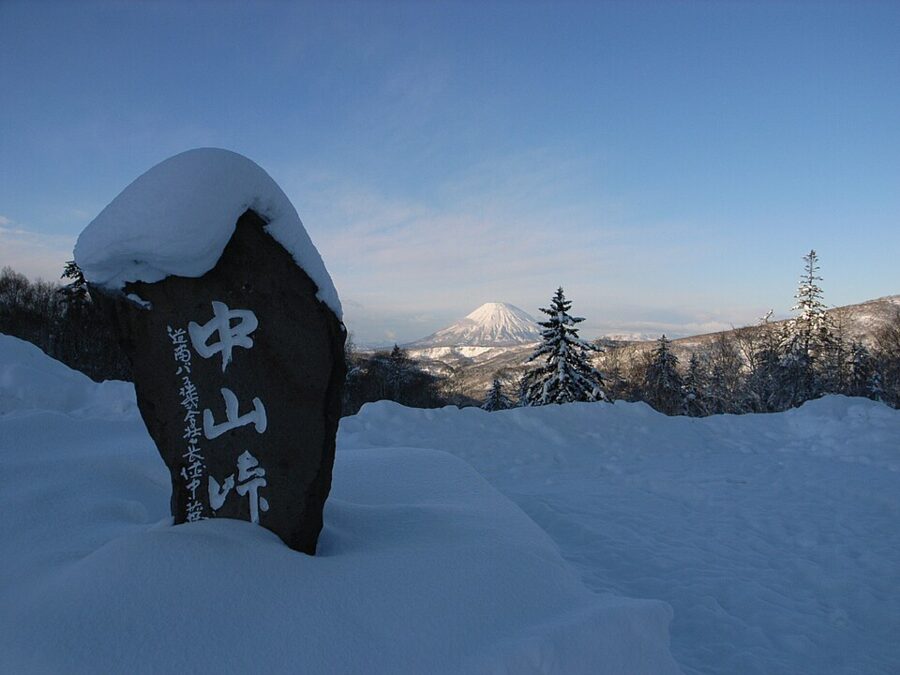

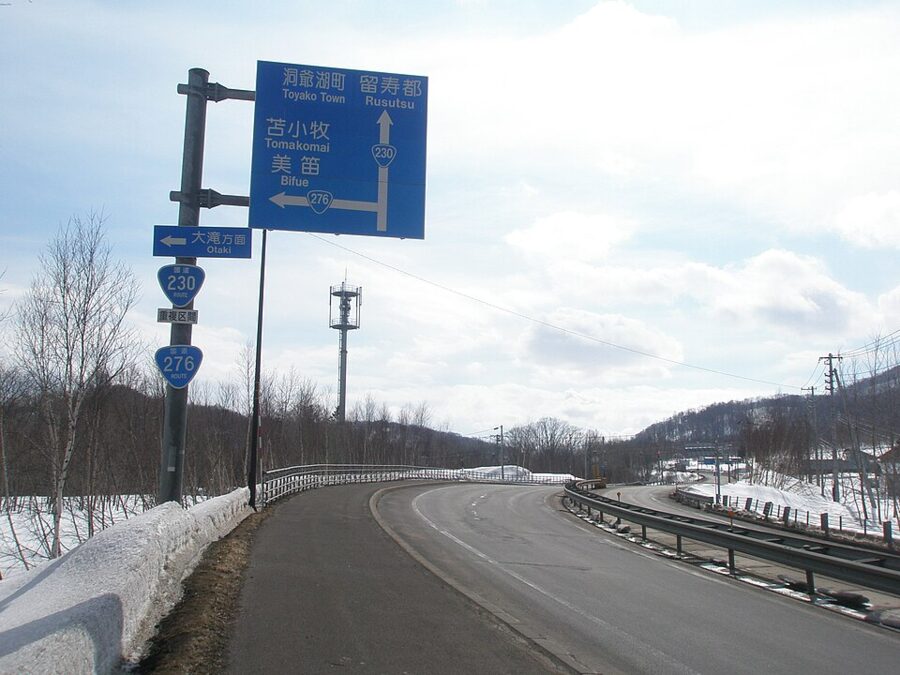
By car, the resort’s own route from New Chitose follows Routes 36 and 276, prefectural road 16 and then Route 230, about 90 minutes; from Sapporo it is Route 230 the whole way over Nakayama Pass, also about 90 minutes. Niseko is about 30 minutes by Route 66 and 230, Kutchan 35, Lake Toya Onsen 30, Noboribetsu about 75 and Hakodate about 160 by expressway. Winter parking is free for day visitors and hotel guests. The pass is the slow, exposed part of the Sapporo drive in a storm; check the road before you set off, and if it is snowing hard at the top, the bus driver who does it every day is the better choice.

From Niseko, the Rusutsu Powder Day Trip runs from 3 January to 28 February 2027: one bus leaves the Hirafu Welcome Center at 08:30, reaches East Mountain at 09:15 and comes back at 16:30, arriving at Hirafu at 17:15. It costs ¥9,900 return, return only, with 40 seats a day, booked and paid online by 15:00 the day before; lift tickets are separate. If the East Mountain lifts are not running, the bus goes to West Mountain instead. A Niseko day trip like this is the cheapest way to sample Rusutsu, and the decision point is the wind forecast the evening before: when Isola is likely to hold its gondola, stay in Niseko.
The season, month by month
The resort plans to open on 28 November 2026, and lifts run to 31 March 2027, the last day of spring season. Opening and closing depend on snow, and early season runs on part of the mountain only, which is why it costs half the regular price.
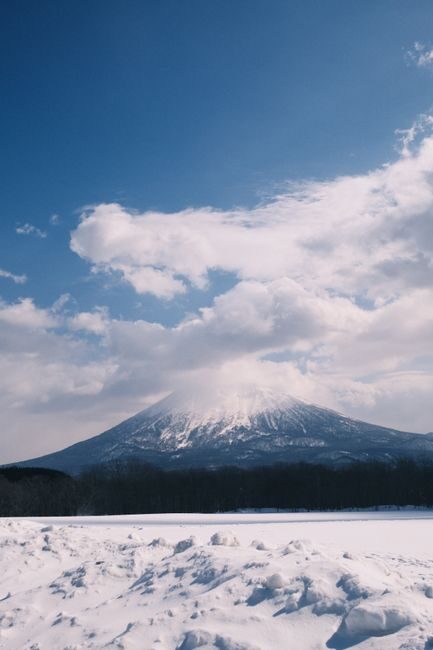
Late November and December. Thin cover at first, usually on West and East Mountain, and a cheap ticket to go with it. Kimobetsu’s averages give December 244 cm of snowfall, the biggest month of the year, and the snowpack builds quickly once it starts. Night skiing begins in mid-December, the regular season on 19 December, and the resort lights fireworks with a torchlit descent on Eva on Christmas Eve and New Year’s Eve.
January. The coldest month, with an average daily low of −14.1°C at Kimobetsu, and the driest snow. It is also the month the Isola First Track runs every Sunday. If I had one week, it would be the second half of January: storms most days, the New Year crowd gone, the snow at its lightest.
February. The deepest snowpack in Kimobetsu’s averages, 142 cm in the valley, and still 193 cm of new snow in the month. The lift queues stay short on weekdays, even with the hotels full. The Powder Day Trip from Niseko runs to the end of the month.
March. Still 143 cm of snowfall on average and a snowpack almost as deep as February’s. Spring season from 15 March brings the day ticket down to ¥10,500, the light improves, and the bright, cold days after a March storm can be the best of the year. The night skiing ends on 30 March and the lifts on 31 March.
In summer the resort becomes an amusement park, open roughly from late April to early October, with four golf courses of 72 holes in all from late April to late October, the Yotei Panorama Terrace at the top of the gondola, and the trail up Shiribetsudake, about two hours to the summit from the Rusutsu side. The trail closed for the winter on 30 October 2026 and the village plans to reopen it once the snow has gone, in late May or early June 2027.
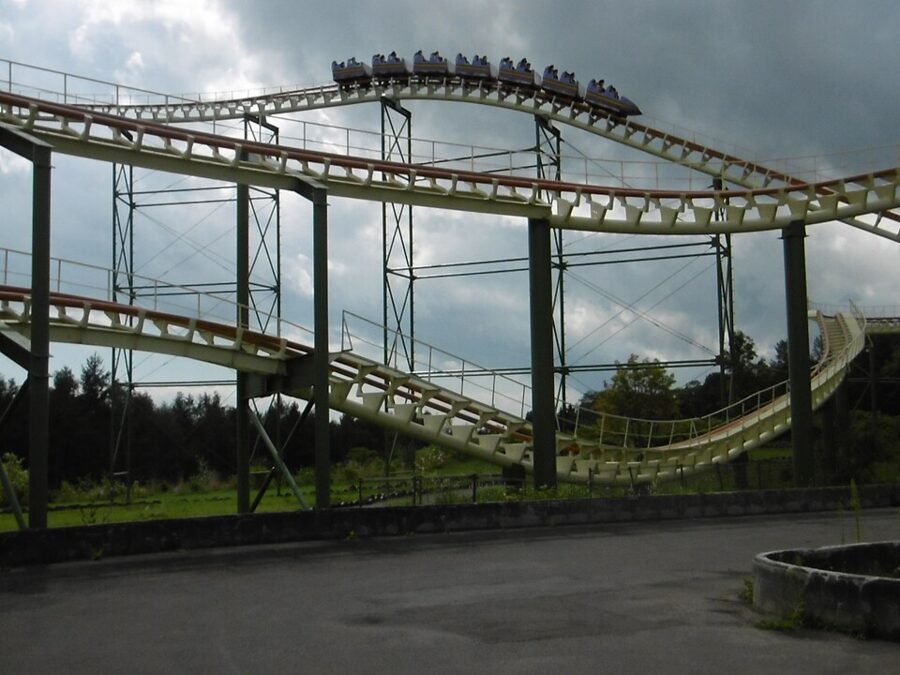

Wind, cold and the days the lifts stop
The wind is what closes Rusutsu, not the snow. The lift status page lists three ways a lift can be held: running at reduced speed, waiting to run, and standing by for inspection. The long, exposed lines on Isola and the upper East Mountain are the first to stop. On a windy morning check the status page before you commit to Furikozawa, because a closed Isola Gondola turns the trip across into a dead end, and the hooded quads lower down become the best skiing of the day.
The cold is the other hazard, and it is the ordinary Hokkaido cold: −15°C at the bottom of the lifts is normal in January and the summit is colder. Cover your face, carry a spare pair of goggles because the first pair fogs and then freezes in the trees, and take the hooded chairs when the wind picks up. In the trees, ski with someone and stay in sight of each other: the loose snow in the well around a trunk can hold a skier who falls in head first, and only a partner close by can dig them out.
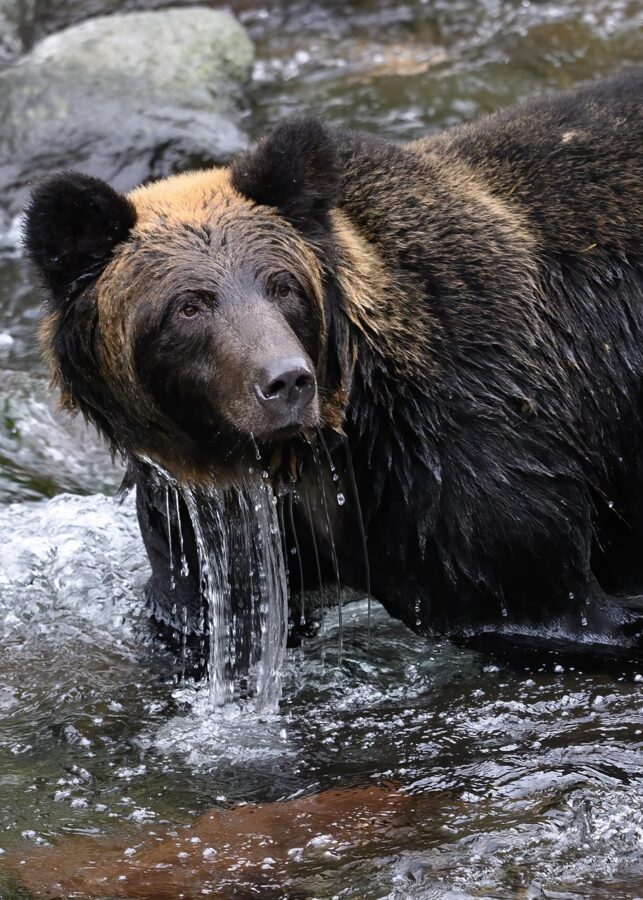
Bears are a summer and autumn matter here, not a winter one. Rusutsu village logged eight Hokkaido brown bear reports between July and October 2026, sightings and droppings on the farm roads and forest tracks around the resort, so carry a bell on the Shiribetsudake trail and the summer walks.
Back to that first gondola over Route 230. By the time it reaches East Mountain you know what to look for: the Isola Gondola turning at the far side of Furikozawa, the hooded quad behind it, and Heavenly Canyon full of last night’s snow. If the gondola is turning, go straight across and leave West Mountain for the evening. If it is not, ride the East Quad and the trees off Tignes until it is, and keep the 25-hour ticket ticking over in hours rather than days.