
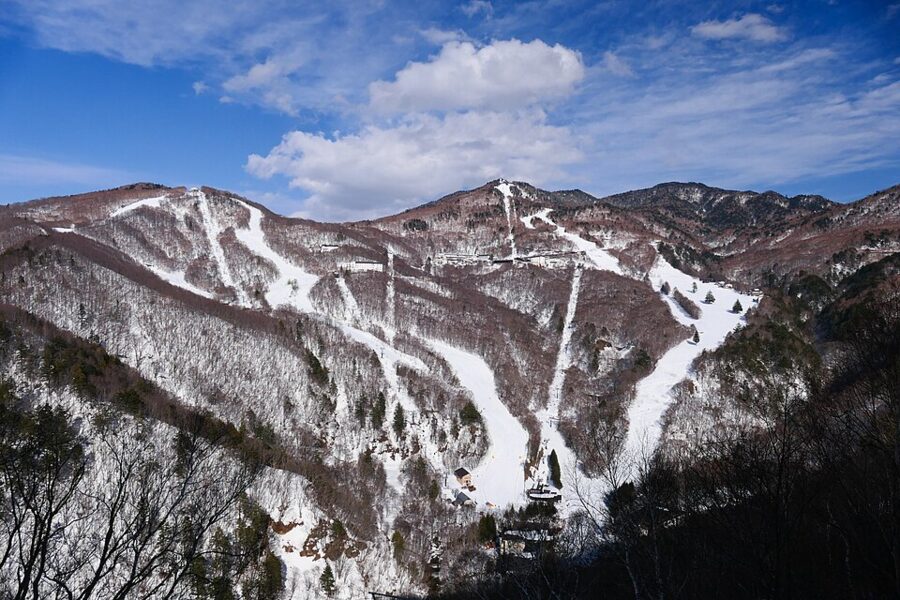

The top chair on Yokoteyama stops at 15:40. From its summit, 2,307 m and the highest lift-served snow in Japan, there is no run back to the hotels at Ichinose or Hasuike: this end of the plateau is cut off from the rest by skis, and the way home is a bus. Everything about a day at Shiga Kogen (志賀高原) comes down to knowing where you are when the lifts start closing.
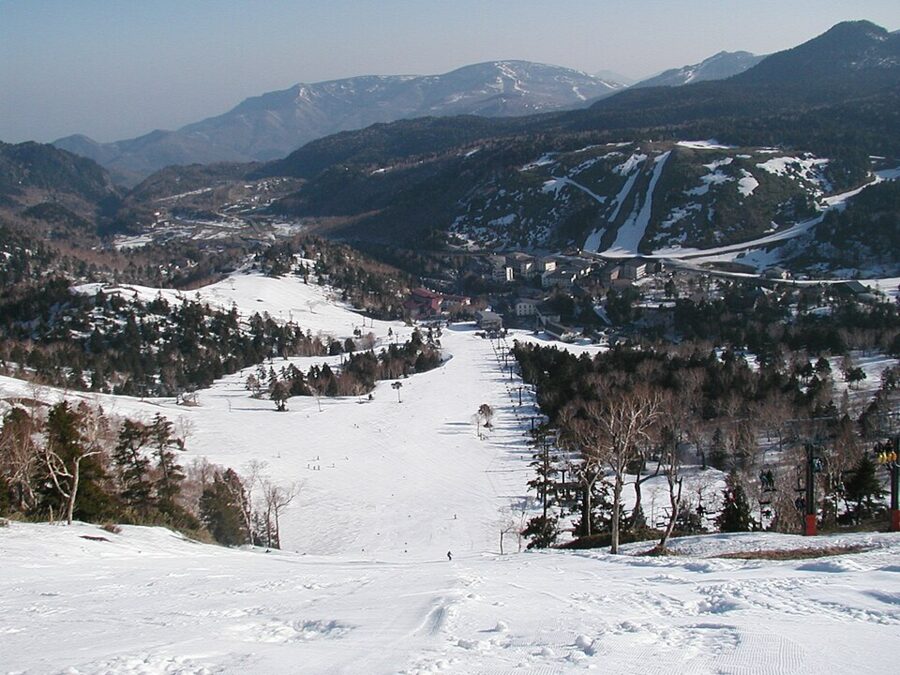
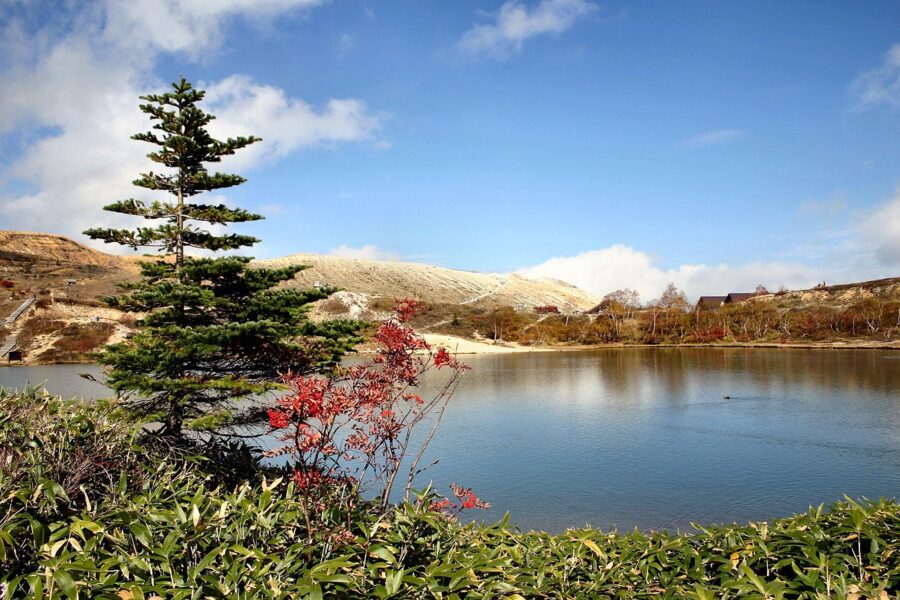
It is the biggest linked ski area in the country, eighteen ski areas spread over a volcanic plateau above Yudanaka in northern Nagano, sold on one ticket and stitched together by lifts, link runs and a free shuttle bus. Most of it is between 1,300 m and 2,300 m, which is why the snow stays drier than in the valleys and why the top end is still open in May. It is also, in summer, a national park full of ponds, marshes and easy trails, and a quiet one.
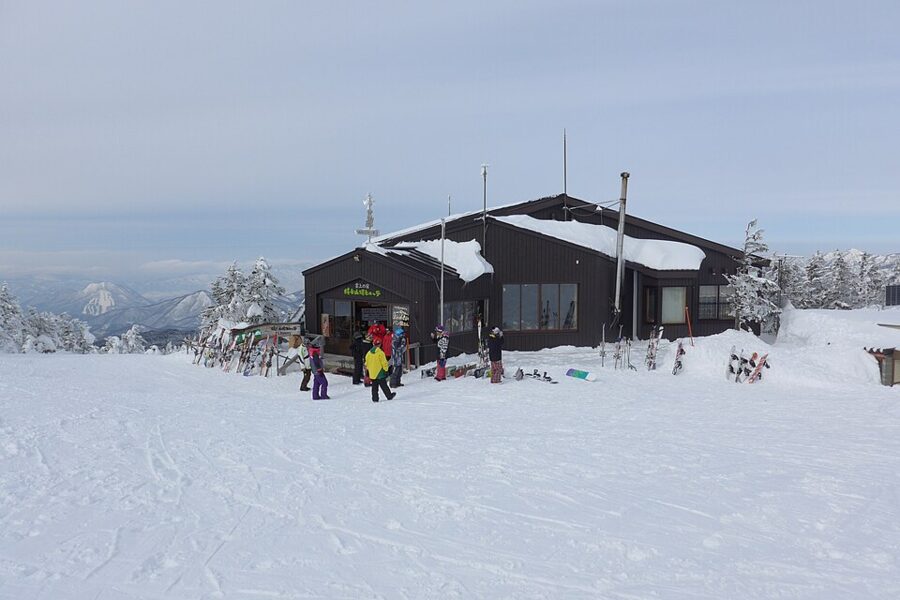

The plateau is big enough to get wrong. Eighteen areas sounds like freedom until you are at the wrong end at the wrong hour, waiting for a bus in a queue of school groups. Read it as three separate systems joined by roads, and it becomes simple.


Contents8 sections
The plateau: a drained volcanic lake at 1,300–2,300 m
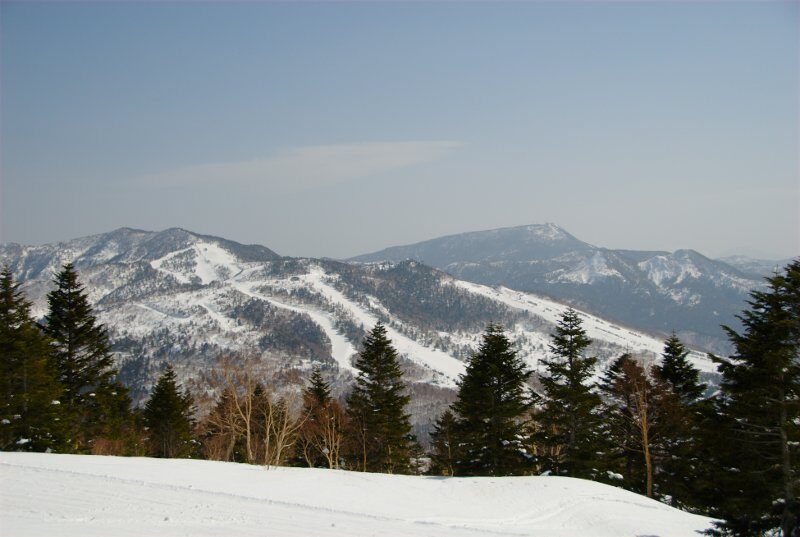
Shiga Kogen is not a single mountain. It is a high, broken tableland on the Nagano side of the Gunma border, built by the volcanoes around Shigayama (志賀山), 2,037 m. About 200,000 years ago their lava dammed the rivers and made a lake; later eruptions filled most of it in, and what was left became the marshes and the dozens of ponds that give the plateau its summer character. Shigayama is not on the list of active volcanoes, but the national volcano committee has it on its list of volcanoes to consider adding after research suggested steam eruptions as late as about 1600.
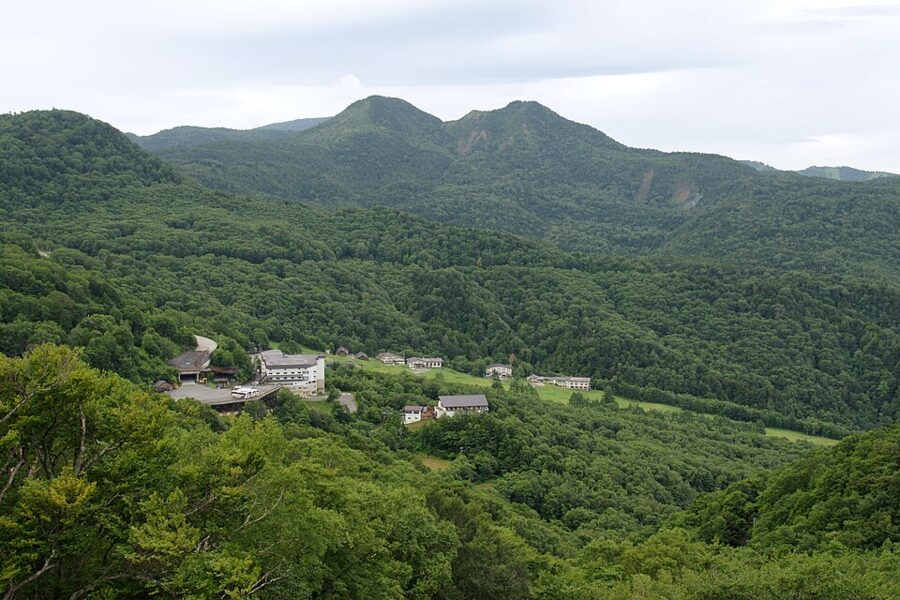

The ski area runs from about 1,325 m to the 2,307 m top of Yokoteyama (横手山), a vertical range of about 1,000 m. Around it rise Higashidateyama (東館山), 1,994 m, Yakebitaiyama (焼額山), 2,009 m, Kasagatake (笠ヶ岳), 2,076 m, and to the north-east Iwasugeyama (岩菅山), 2,295 m, with Ura-Iwasuge behind it at 2,341 m as the highest point of the whole area. In summer the tourism association says the plateau rarely reaches 30°C, and at Shibutoge, the pass on the Gunma border, a 20°C afternoon is unusual even when the Zenko-ji plain below is at 35°C.
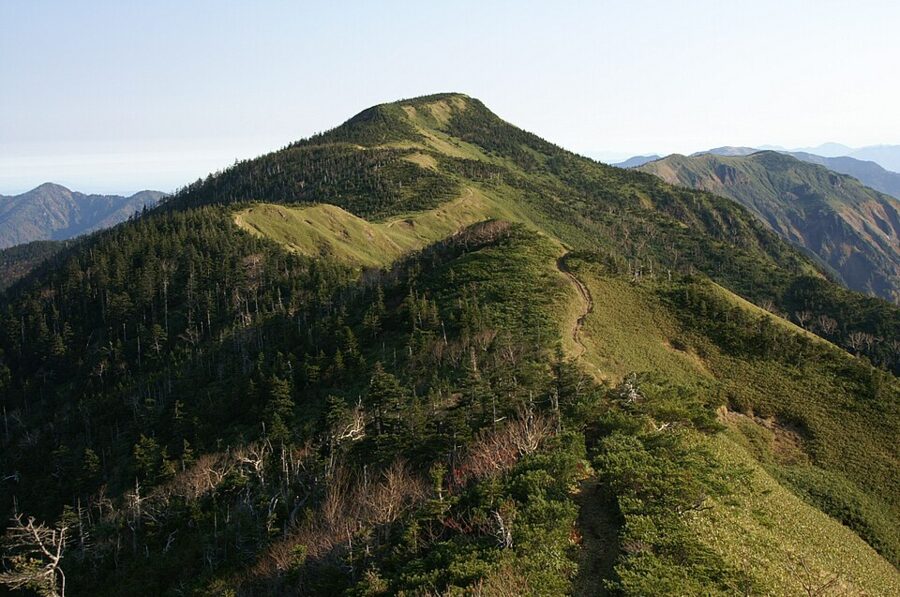

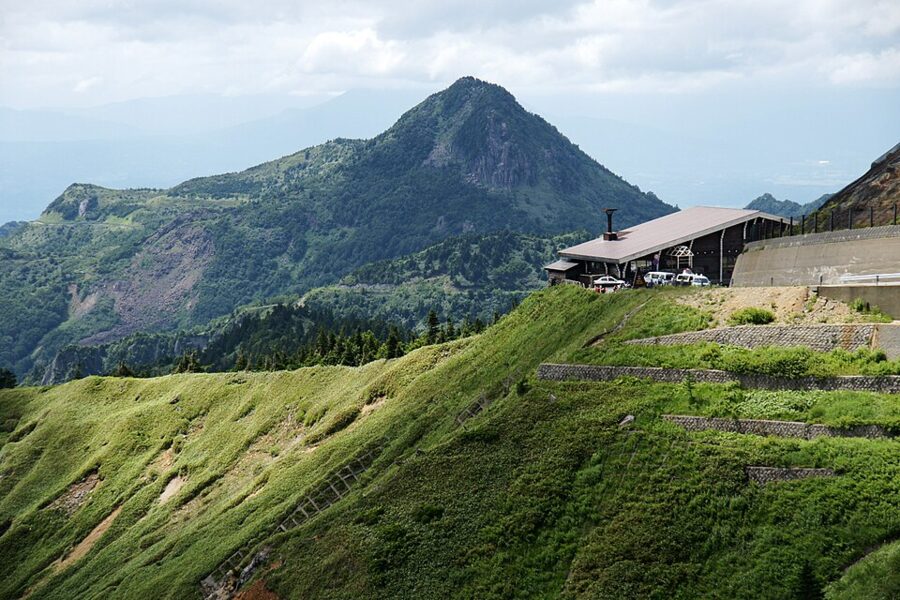

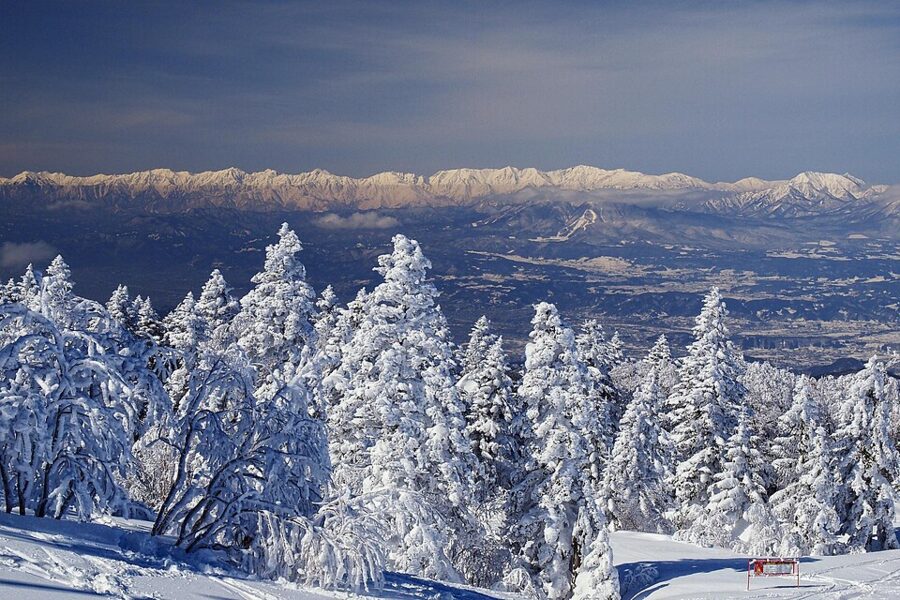
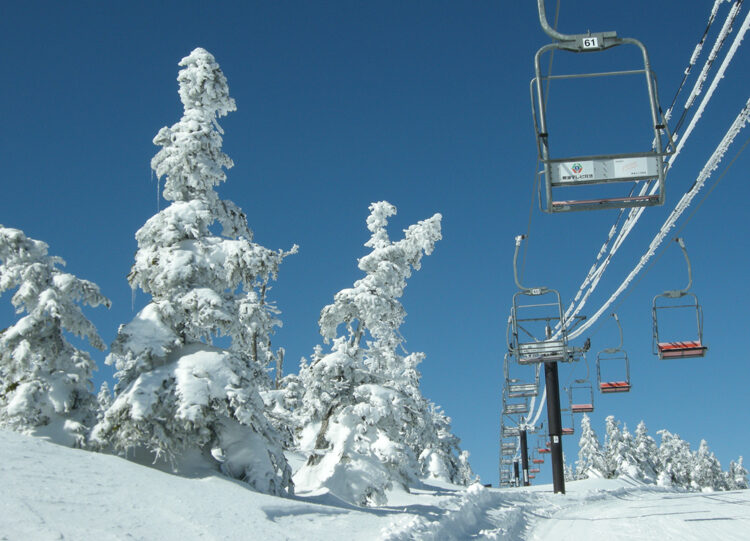
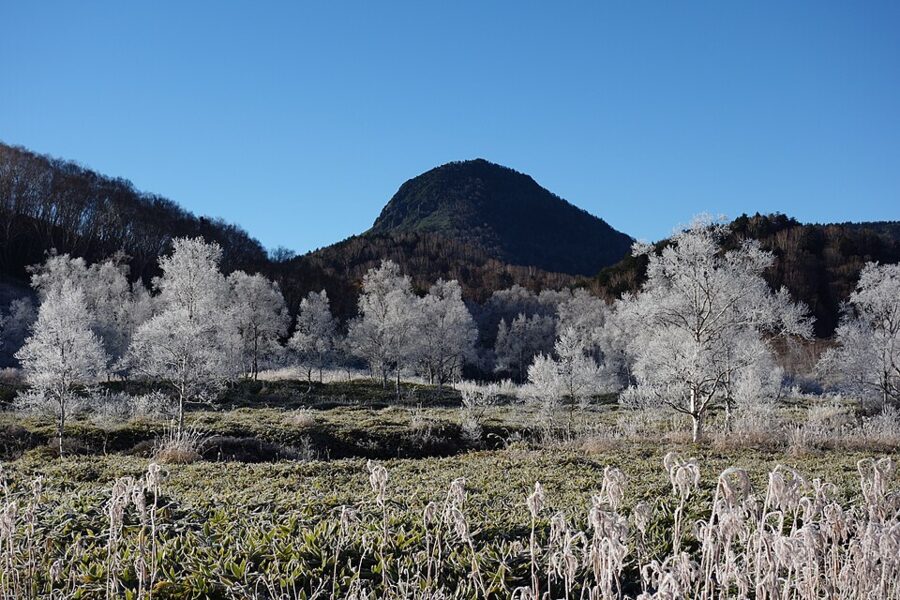
Winter is properly cold. On the top of Yokoteyama in January and early February the Yokoteyama lift company warns of night temperatures of −10°C to −20°C, and the Maries firs on the summit freeze into the rime-encrusted shapes called snow monsters. Okushiga Kogen (奥志賀高原), at the northern end, has no snowmaking at all and skis on natural snow all season.
The plateau sits at the centre of the Joshinetsu Kogen National Park, designated in 1949, and in 1980 UNESCO recognised it as a biosphere reserve; Japan calls these eco parks. The strictly protected core is around Shigayama, the Shijuhachi-ike (四十八池) marsh and Onuma-ike (大沼池), the biggest pond, and the rest of the park is managed by the Ministry of the Environment from its Joshinetsu Kogen National Park office in Nagano.
One reason the ski area has never broken up into rival resorts is who owns the ground. Most of the plateau belongs to the Wagokai, a foundation set up in 1927 by the landholders of the old village of Hirao to manage the mountain as common land, which it still does.

Nagaden, the Norwegians and the Olympics
The skiing came with the railway. The first skier in the area was a German merchant, Paul Kimmel, who skied the fields at Kanbayashi in 1913. Nagano Electric Railway (Nagaden) reached Yudanaka in 1927 and laid out a ski slope at Kanbayashi the next year. In 1929 a Norwegian party led by Lieutenant Helset climbed the old Kusatsu road onto the plateau, skied down and called it the St Moritz of the Orient, which the railway has quoted ever since.
The name came in 1930, agreed between Nagaden, the Wagokai and the village head. It is not a local place name: Shiga was the home village, in Saku, of Kozu Tohei, Nagaden’s founder, who led the development. The first ski area opened on Asahiyama the same year, and the cliff run above Hasuike that became today’s Giant followed. In 1937 the railway ministry named Shiga Kogen an international ski area.
After the war the occupying forces took the plateau as a recreation area, and in 1947 they built a lift at Maruike for their own use: the first ski lift in Japan. The ropeway from Hasuike came in 1960, the Shiga-Kusatsu road in 1965, Yakebitaiyama and its Prince Hotel in 1983, and with them the shuttle bus that still links the areas. The 1998 Winter Olympics put the alpine slalom and the snowboard giant slalom on Yakebitaiyama and the alpine giant slalom on Higashidateyama.
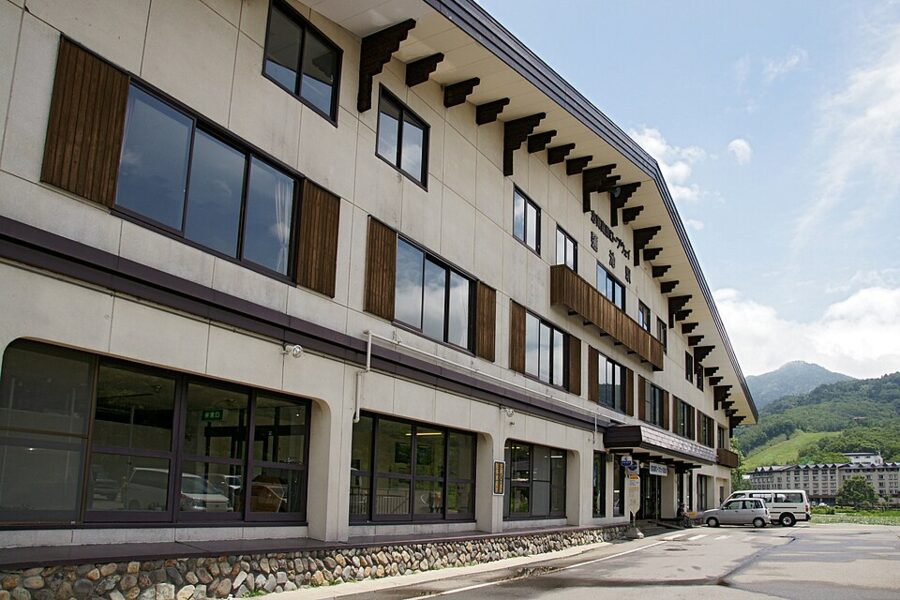

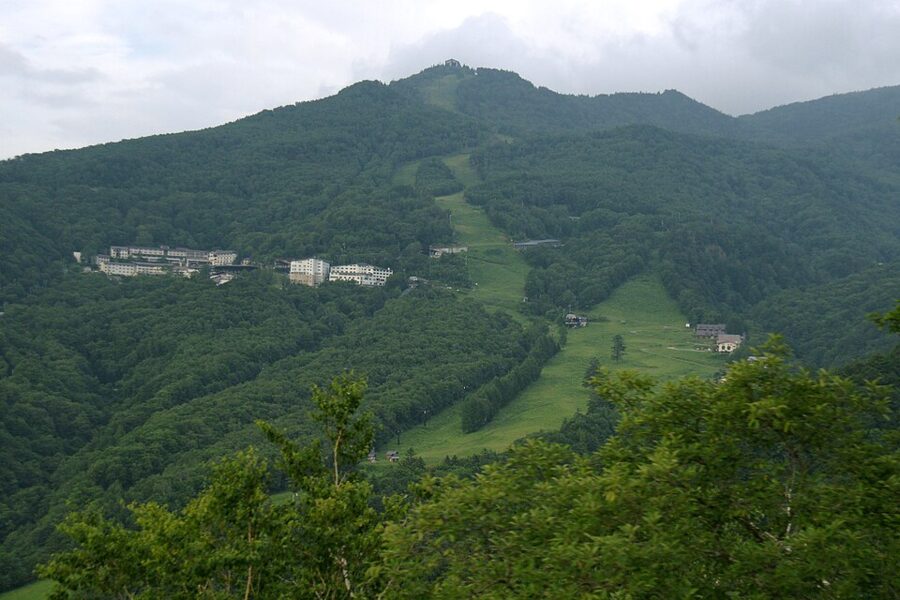

The ski areas, as skiers use them
The lift company counts eighteen ski areas with about 45 lifts and gondolas, and more than eighty courses.
On the ground they fall into three groups. The central area is thirteen small ski areas linked by runs and lifts. Yakebitaiyama and Okushiga Kogen, to the north, connect to it by a link run at Ichinose. Kumanoyu and Yokoteyama with Shibutoge, to the south, connect to nothing: the only way between them and the rest is the road.
Most of the terrain is groomed intermediate cruising. Roped-off and closed areas are out of bounds, and the ski areas’ rules say a search and rescue outside the area is billed to the person rescued. The open powder is in designated ungroomed zones on Yakebitaiyama, Okushiga, Kumanoyu and Yokoteyama, opened only on days the patrol is happy with the snow.
The front door: Sun Valley, Maruike, Hasuike and Giant
The road from Yudanaka climbs onto the plateau at Sun Valley, named in 1973 when Yamanouchi became a ski sister town of Sun Valley in Idaho. Sun Valley and Maruike are short, varied hills with a moguls run each; Maruike A is one of the hardest pitches in the central area, and Maruike is where the first ski lift in Japan was built. Hasuike, opposite, is a broad, gentle beginner hill.
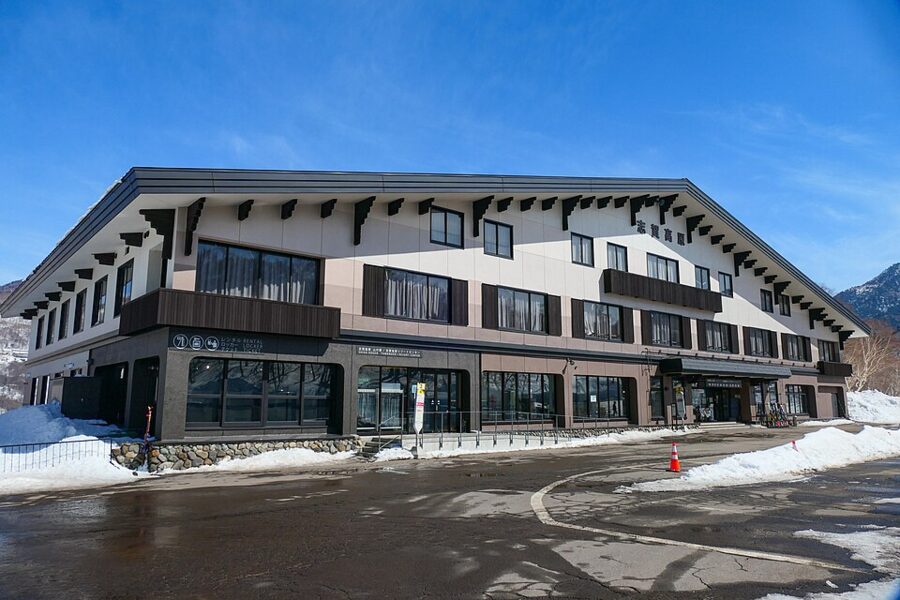
Giant is the exception. Its main face is a single 1,000 m pitch with a maximum of 34°, where national races are held, and the lift company is blunt that it is for strong skiers; the Nanamagari course takes beginners round the steep part to Bunadaira and the rest of the central area. Hasuike and Giant connect by a link run, and Yama no Eki, the old ropeway station at Hasuike, is the place to buy tickets and catch buses.

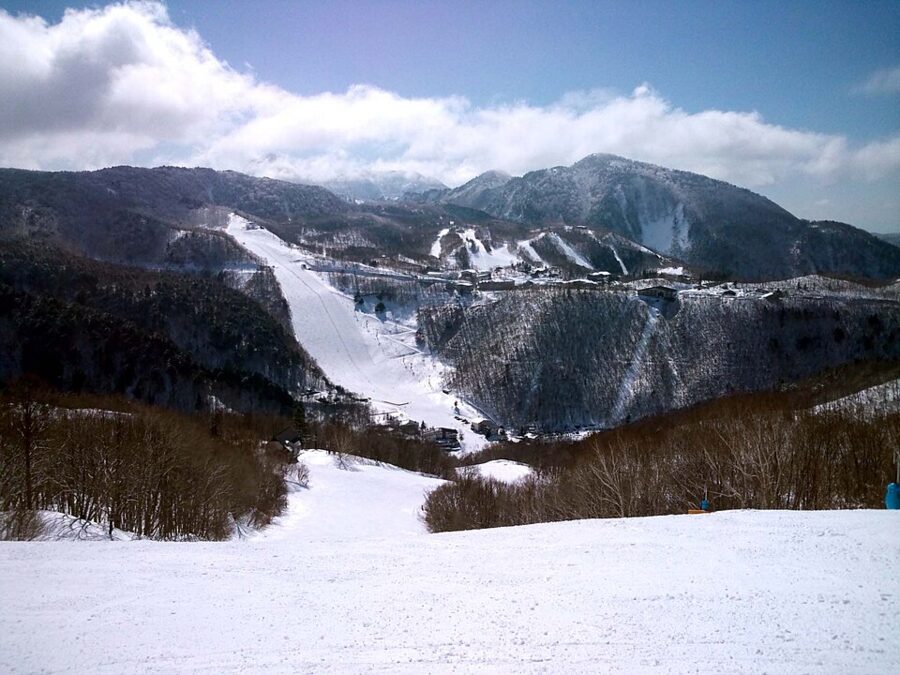

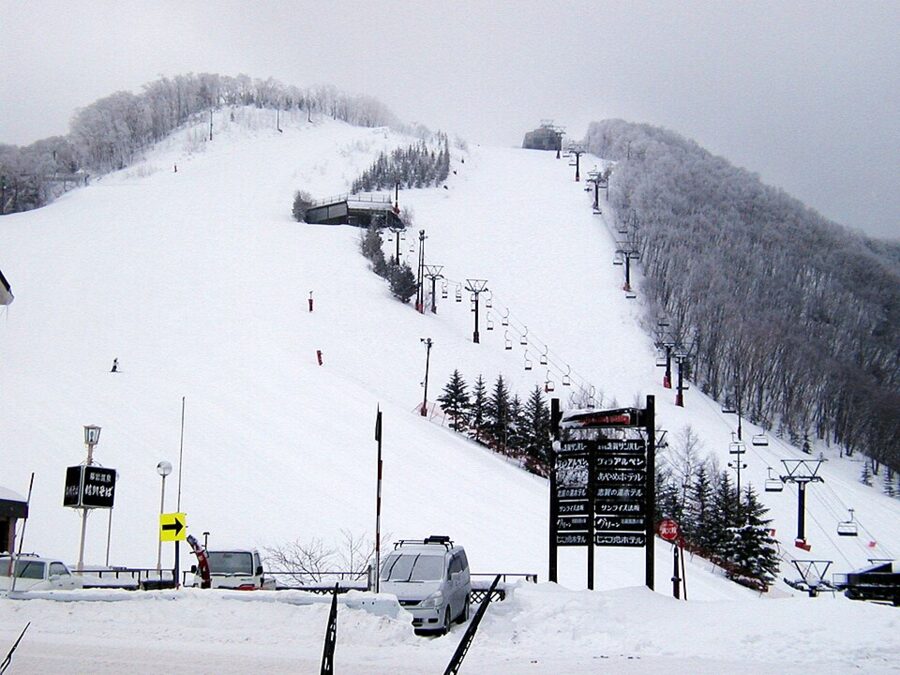

The middle: Nishidateyama, Higashidateyama, Hoppo Bunadaira and Terakoya
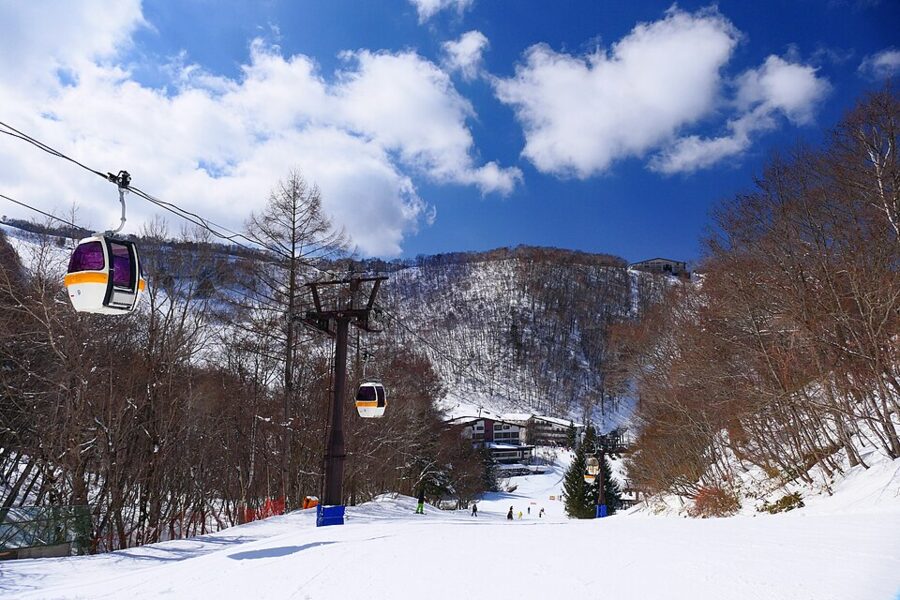
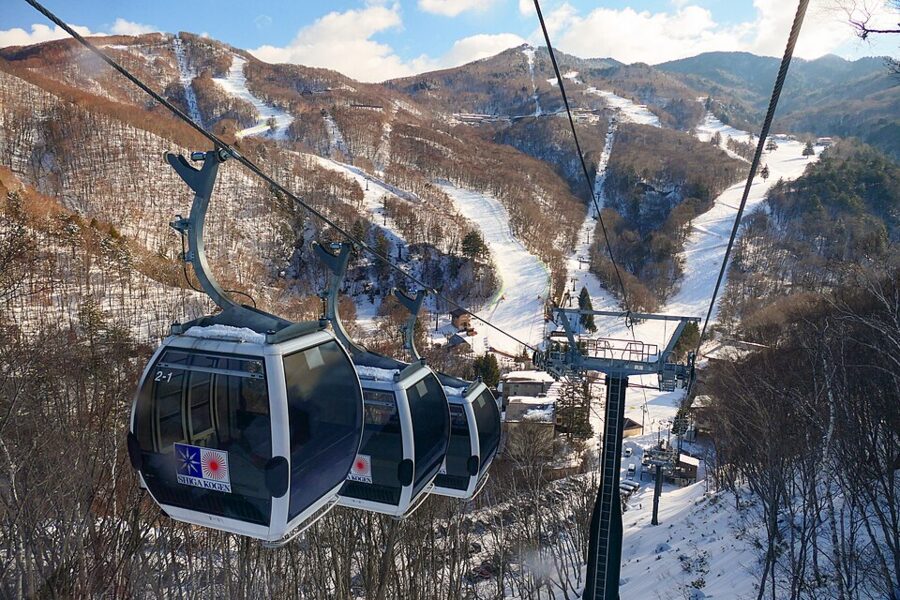
This is the heart of the central area and the part to ski on a first day. Nishidateyama has the courses used for the World Cup in 1989, with a long wooded beginner trail beside them. Higashidateyama’s gondola goes straight to the top, and its Olympic course runs down the line of the 1998 giant slalom. Hoppo Bunadaira, below, is a wide, gentle slope reached by its own gondola, which keeps beginners out of the wind on cold days.
Terakoya is the high point of the central area, its top a little over 2,000 m, and holds the best snow here. Its three short runs, Eternal, Philosophy and LIPS, are quiet even at weekends. From the top, Terakoya joins the Higashidateyama trail and runs down to Bunadaira, about 6 km and the longest run in the central area; with the lowest point of the ski area, at the foot of Bunadaira and Giant, at about 1,330 m, it is also the biggest drop you can ski in one go, about 730 m.


Ichinose and Takamagahara
Ichinose (一の瀬) is the busiest base on the plateau, with the most hotels, and its ski areas are built for families. Ichinose Family has a 1 km main slope, steep at the top and gentle at the bottom, with the long Tengu beginner trail looping round from the summit and the Perfecter course for experts. Ichinose Diamond is a wide, open bowl good for lessons, and Ichinose Yama no Kami is the gateway north: the Kamoshika course drops from it to Yakebitaiyama and the Monkey course brings you back.
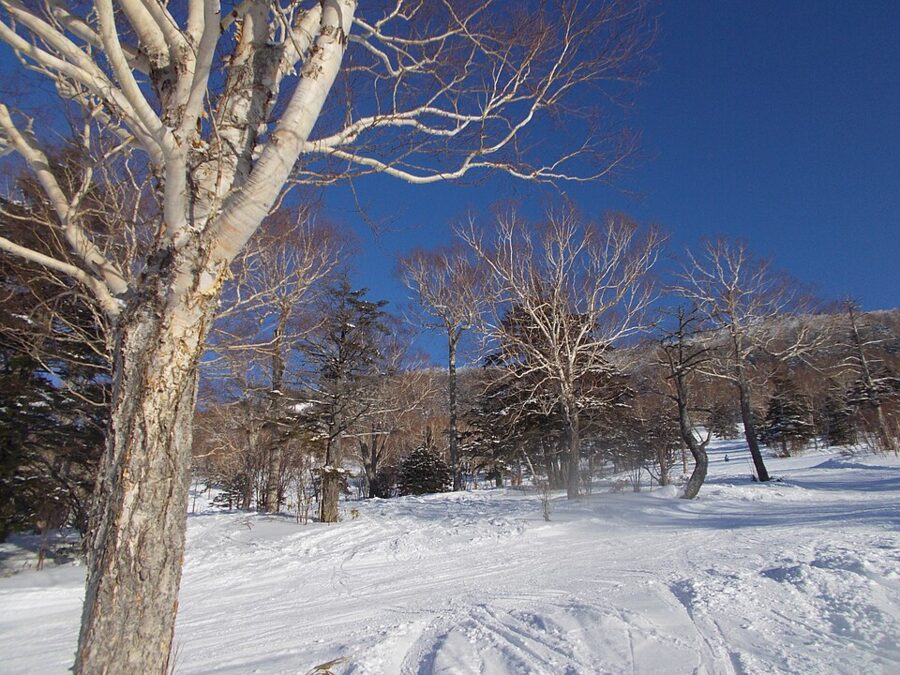
Takamagahara Mammoth, between Ichinose and Higashidateyama, has a wide beginner base and ungroomed moguls higher up; it was the first ski area in Japan with a detachable high-speed lift. Tanne no Mori Okojo, next door, is a short run through natural hemlock and birch that gives children a first taste of skiing between trees.


Yakebitaiyama and Okushiga Kogen
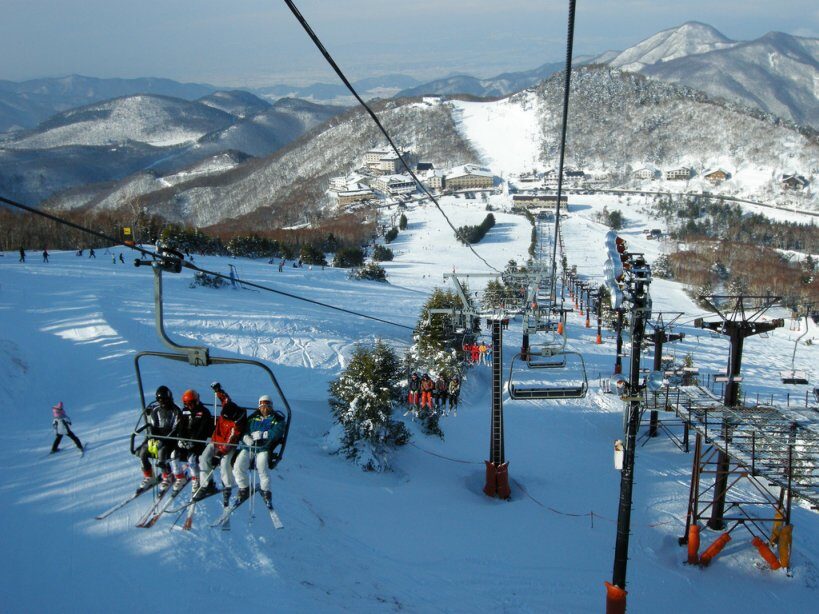
Yakebitaiyama is the modern end. Two gondolas run to the 2,009 m summit from the three buildings of the Prince Hotel, and about 80% of its runs are intermediate or harder: the Olympic course, the Giant Slalom course through the conifers and the White Birch course are the classics. Its ungroomed zones are the steepest skiing on the plateau. Yakebi Wall reaches 39°, Yakebi Valley is a gladed tree run and Yakebi Coast is an 893 m ungroomed line, each opened only on days judged safe.
Okushiga Kogen, on the far side of the same summit, is the quiet end, with no snowmaking and a reputation for the driest snow on the plateau. The Downhill runs about 2.2 km from the top with a choice of easy, intermediate and steep finishes, and Kuma-otoshi is an ungroomed steep that is powder after a storm and moguls in spring. The summit link between the two areas is flat and about 200 m long, so expect to skate or walk at 2,000 m; coming from Yakebitaiyama, take the Okushiga link off the Giant Slalom course instead.

Kumanoyu, Yokoteyama and Shibutoge
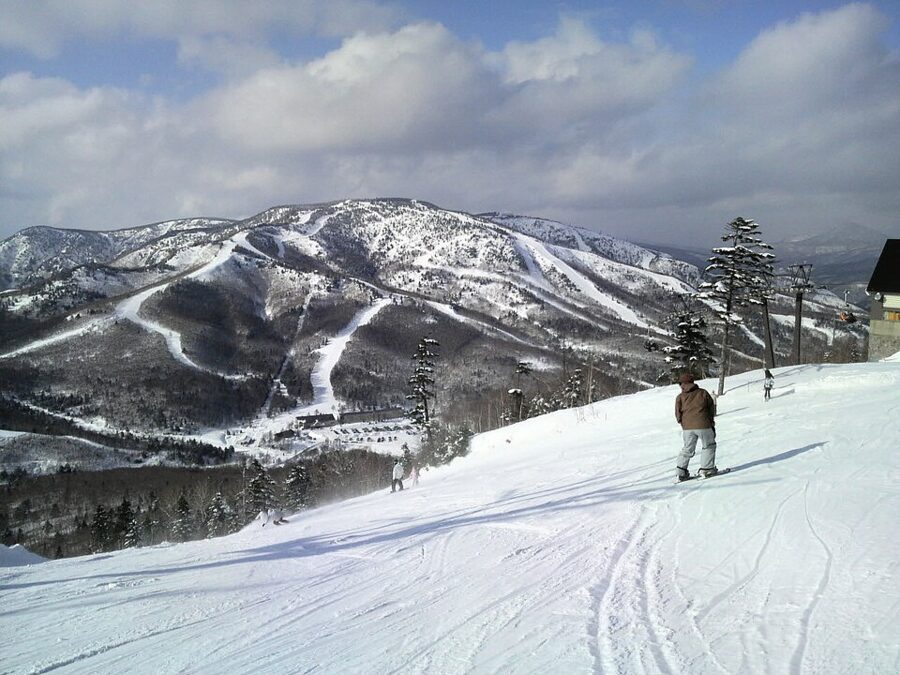
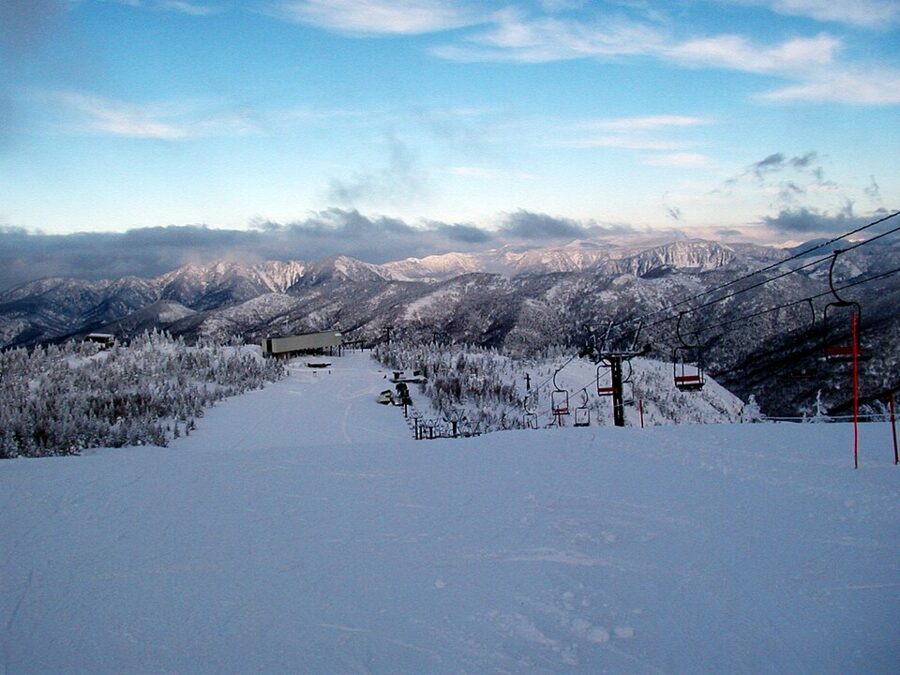
The southern group is the high end and the cold end. Kumanoyu (熊の湯) is a compact fan of runs between 1,690 m and 1,960 m, north-facing, so the snow stays dry, and every lift brings you back to the same centre house. Older Japanese skiers call it a sacred ground for skiing; its 3A course reaches 32° and the Event course is used for the ski federation’s top badge tests.
Yokoteyama rises behind it to 2,307 m, the highest ski area in Japan.
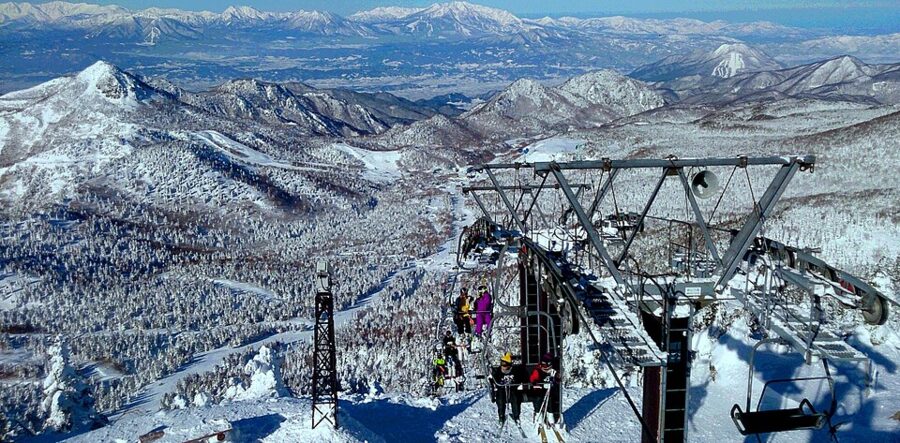
Its vertical is 602 m from the base at 1,705 m, half the terrain is easy and the main event is a 4 km run from the summit down to the No. 1 lift. The upper lifts include two old single chairs on the Queen slopes, quiet and sheltered from the wind on a cold day. The Shibutoge side, over the summit on the Gunma border, has the Weber course, wide and open, and the lift up from Shibutoge is the highest chairlift in Japan.
You can ski from Kumanoyu into Yokoteyama on a link run that ends near the Yokoteyama No. 2 lift. Going back the other way means taking skis off at the bottom of Yokoteyama and walking about 250 m along Route 292, which is no fun in ski boots.



The links: lifts, link runs and the shuttle bus
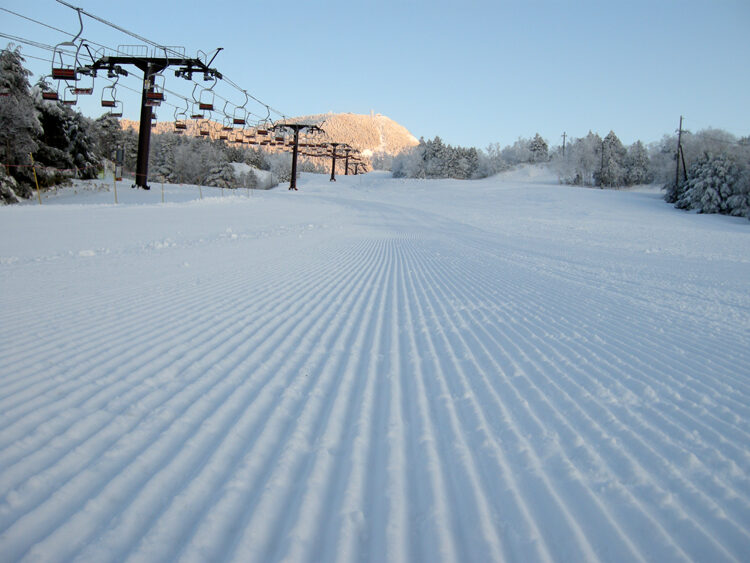
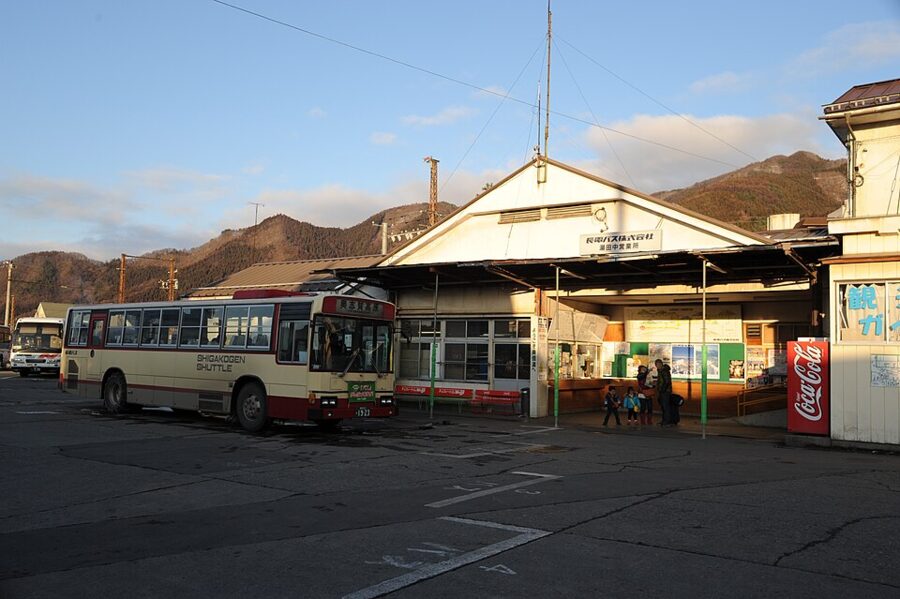
Inside the central area, and between Ichinose and Yakebitaiyama, you can ski from lift to lift once the link runs open in December. Everything else is the bus. Nagaden’s local buses run as a free ski shuttle on the plateau between 08:30 and 17:30 in the season, and you do not need to show a ticket; the hub is at Hasuike Hiroba and Yama no Eki, where the Okushiga line and the line to Hotaru Onsen and Yokoteyama divide.
Buses run roughly once an hour on each line, and changing at Hasuike adds time, so a trip from Okushiga to Yokoteyama can take well over an hour. Check the last bus back to your base before you go to the far end. Within the plateau there are no taxis waiting, though an Uber ride-share service operates and taxis can be called up from Yudanaka.

Tickets and passes for 2026–27
The all-mountain ticket covers every lift and gondola in all eighteen areas. For the 2026–27 season, from 5 December 2026 to 5 May 2027, the lift association’s price list gives a day ticket at ¥9,500 for adults (19–59), ¥8,000 for seniors (60 and over), ¥6,500 for students aged 13–18 and ¥4,000 for children up to 12. Two days are ¥18,500, three ¥27,500, five ¥45,500 and ten ¥90,500 for an adult.
The best thing about the multi-day tickets is that the days do not have to be consecutive: you can sit out a storm day, or a day at the monkeys, without wasting one. The early-season and spring tickets are the exception. Between 5 and 18 December 2026 and from 1 April 2027 they are cheaper, ¥7,500 for an adult day, but multi-day versions run on consecutive days only.
A 4-hour ticket costs ¥7,500. One preschool child skis free with each paying adult, and on the third Sunday of each month in the season (20 December, 17 January, 21 February, 21 March and 18 April) children up to 12 get a free day ticket at any ticket counter. The ticket is a Key Ticket with no deposit; keep it and you can reload it online and go straight to the lift gate next time.

If you will only ski the south end, buy local. The Yokoteyama lift company sells a Yokoteyama and Shibutoge day ticket at ¥7,000 for adults in the high season (19 December to 31 March) and ¥6,000 outside it, and a joint Yokoteyama and Kumanoyu ticket, the Sky Bear, at ¥8,500.
Shiga Kogen joined the Ikon Pass in 2025–26. The Ikon Pass page says the pass works as an all-mountain ticket and scans straight at the gate, with no reservation; how many days you get depends on which Ikon Pass you bought. The 25% friends and family discount ticket is not sold at Shiga Kogen.
Night skiing, rental, schools and children
Night skiing runs on scheduled nights only and needs its own ticket. In 2026–27 the night skiing page lists Kumanoyu 18:30–21:00 at ¥3,200, Yakebitaiyama 18:00–20:00 on the 800 m East course at ¥3,000, Ichinose Family 18:30–21:00 at ¥3,000, Ichinose Diamond and Takamagahara 18:30–21:00 at ¥2,500 and Sun Valley 19:00–20:30 at ¥2,500. Check the calendar on the day.
Rental is easy at every base. The rental shops listed by the lift association include Alpina Sports in Yama no Eki, Snow Can at Takamagahara, Ichinose Diamond and Kumanoyu for Yokoteyama, HEAD Sports Station Chalet Shiga and NORD at Ichinose, the Prince Hotel at Yakebitaiyama and the Okushiga Center House; most open from about 08:00 to 17:00. There is no convenience store on the plateau, so bring anything you forgot from Nagano.
The plateau’s ski schools are certified by the national ski federation (SAJ) or the professional instructors’ association (SIA). At Okushiga, the Sugiyama Ski and Snow Sports School, founded in 1965, runs kids’ lessons for ages 4–12 from 19 December 2026 to 31 March 2027: ¥6,500 for a half day and ¥9,500 for a full day, lift ticket included. Yakebitaiyama has a free kids’ snow park behind the Prince Hotel West building from 19 December to 22 March, and Takamagahara has a childcare room that must be booked about a week ahead.
Spring and the high snow
Shiga Kogen’s height pays off from March, and for spring skiing in Japan on Honshu it is the obvious choice. The central ski areas close at the end of March, the higher ones a few weeks later, and the season ends where it began, on Yokoteyama. In 2026, the most recent spring, the spring skiing notices show Terakoya and Takamagahara closing on 19 April, Ichinose Family on 26 April, Yakebitaiyama on 1 May, Okushiga on 3 May and Kumanoyu on 6 May; Yokoteyama and Shibutoge were set to run into mid-May.
The all-mountain ticket stops being valid after the season ends on 5 May 2027, so late-spring skiing is on the area tickets. Yokoteyama’s spring day ticket is ¥6,000. From mid-March it also opens its No. 2 Sky Lift for early-morning skiing on weekends and holidays, 06:00–08:00, for ¥3,000, and the corduroy at 06:00 is the best snow of the day.
In January and early February the lift company runs a snow monster night tour from Restaurant Akari: a heated snowcat climbs the ski area after dark to the floodlit snow monsters on the summit. Meet at 16:00 dressed for −15°C; it is cancelled in storms.

Route 292 and Shibutoge
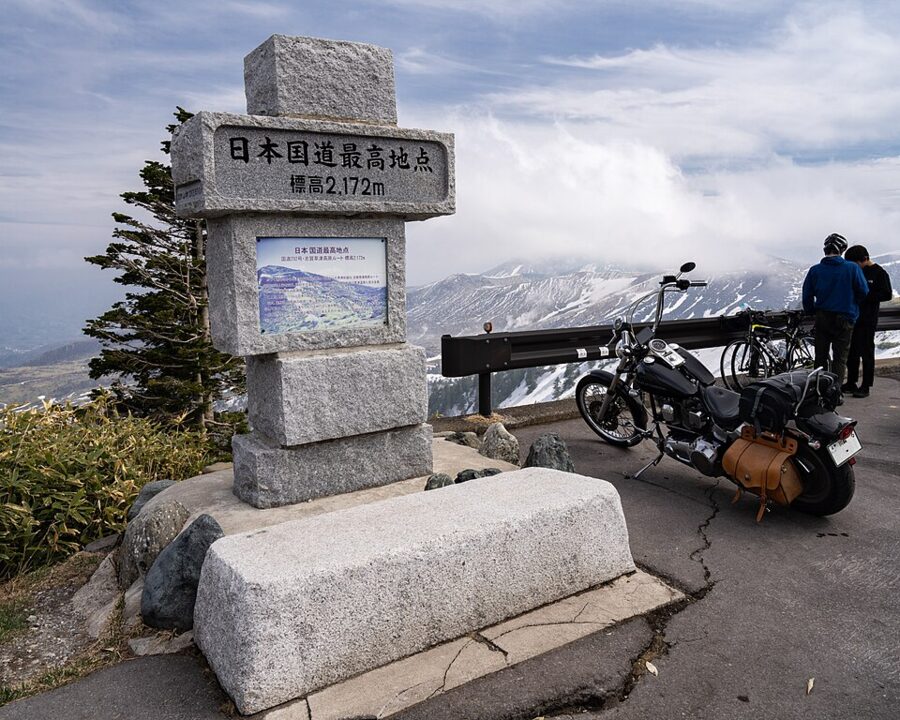
Route 292, the Shiga-Kusatsu road, crosses the plateau, climbs past Yokoteyama and goes over Shibutoge (渋峠), 2,172 m, the highest point on any national road in Japan, before dropping to Kusatsu in Gunma. In winter it is a ski run. For 2026–27 the section from the Hisaka gate near Kumanoyu over the pass to Kusatsu is closed from 13:00 on 11 November 2026 to 10:00 on 21 April 2027, according to the tourism association’s road notice, and it can close outside those dates in bad weather.
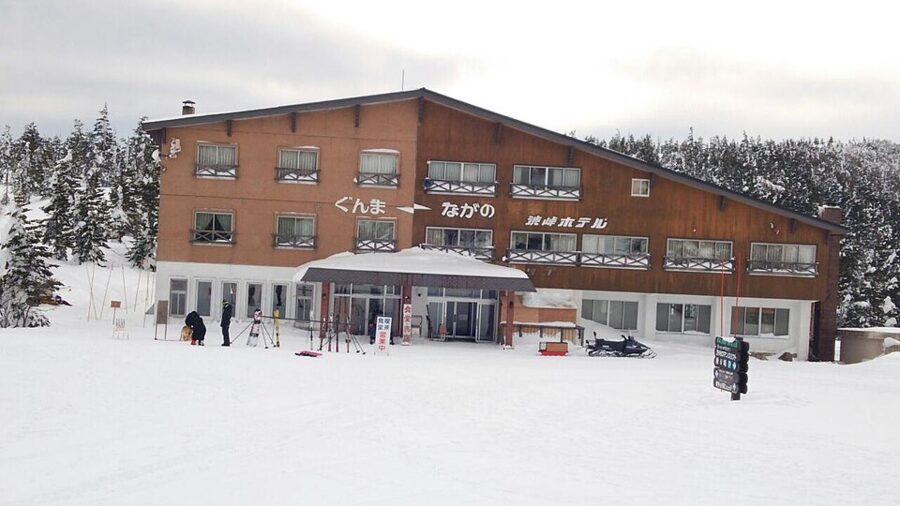
The sign by the Shibutoge Hotel says 2,172 m, but the true high point is a few hundred metres down the Gunma side, where a stone marker went up in 2004. The hotel itself stands across the prefectural border, with the line painted through it. The Shibutoge car park opens only in spring, once the road does.


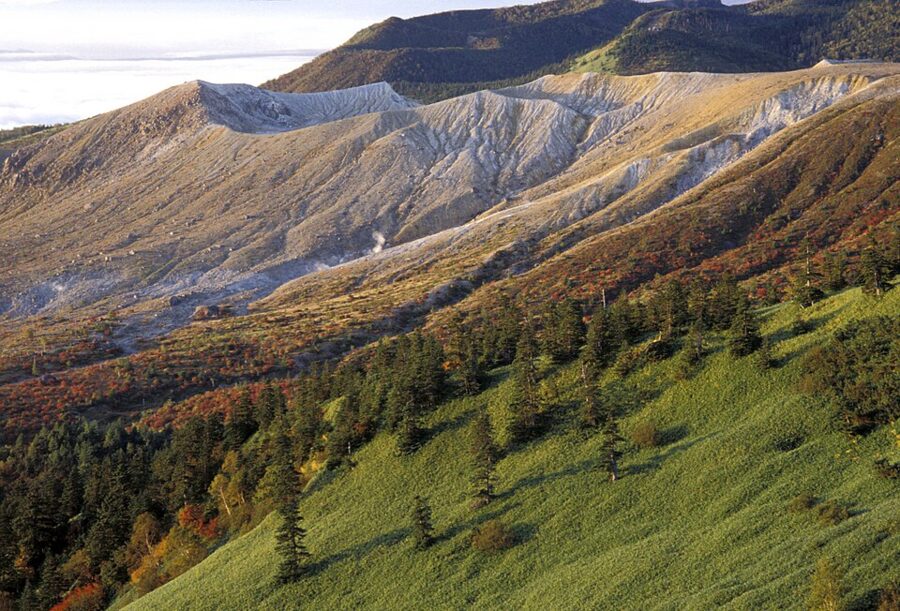
Beyond the pass is Kusatsu-Shirane, the volcano above Kusatsu Onsen and one of the volcanoes in Japan under constant watch. The Japan Meteorological Agency raised the Yugama crater area to Level 2 on 4 August 2025 and brought it back to Level 1 on 15 May 2026; Motoshirane, the cone that erupted beside a ski run in 2018, has been at Level 1 since April 2019. When the level rises, the road through the summit area is the first thing to close.
Where to stay and eat
The tourism association counts about eighty places to stay on the plateau, and where you sleep decides how much time you spend on buses. Ichinose is the middle of everything, with the most hotels and restaurants, a ski-out to the central area and a link run to Yakebitaiyama. The Hasuike, Maruike, Sun Valley and Giant cluster is close enough to walk between areas and sits on the express bus route. Hoppo Onsen and Takamagahara are hotels on the slopes themselves.
At Yakebitaiyama, the three buildings of the Shiga Kogen Prince Hotel are ski-in, ski-out on both gondolas. Okushiga Kogen is quiet and a little grand: the Okushiga Kogen Hotel opened with the ski area in 1969, and the Hotel Grand Phoenix Okushiga is where the Emperor has stayed almost every year. Both are a long bus ride from the south end.
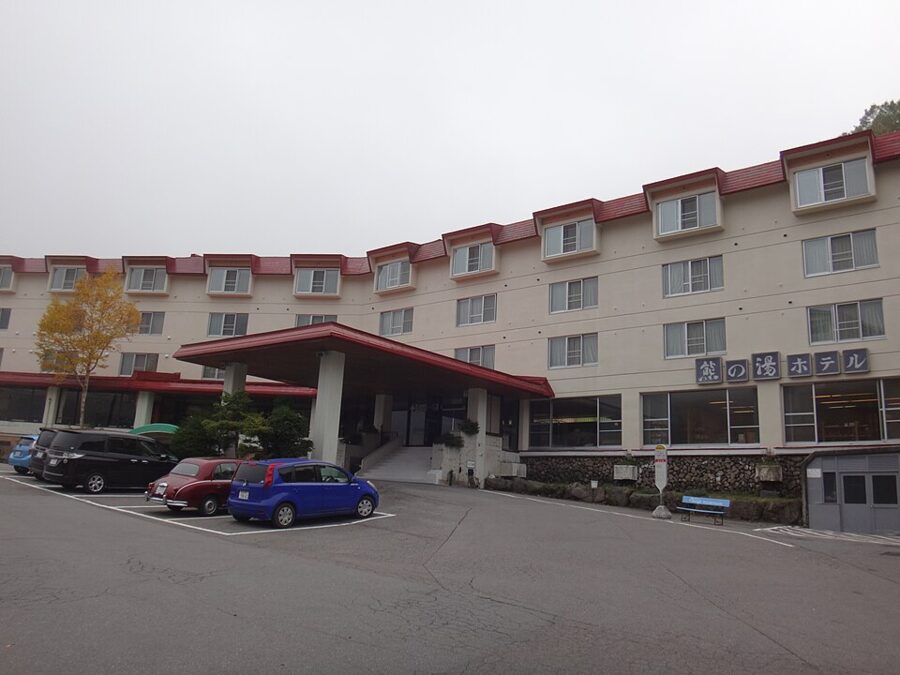

For Yokoteyama, stay at the south end. Kumanoyu has one of the oldest inns on the plateau, open since 1909, with a strong, green-tinted sulphur spring. Hotaru Onsen beside it is named for the Genji fireflies in the stream, at about 1,600 m the highest-living population in Japan. Hotel and Onsen 2307 and the Shibutoge Hotel are on the Yokoteyama lift company’s own list of hotels, and on the summit the hut bakes bread at 2,307 m.
Eating is mostly in hotels and at the ski area restaurants, and most outside restaurants close in the evening; out of season there is almost nothing open after 17:00. There is no supermarket or convenience store on the plateau, and the only cash machine is at the post office near Hasuike, open on weekdays 09:00–17:30 and Saturday mornings. The local dish worth trying is takenoko-jiru (bamboo shoot soup), made with the slender mountain bamboo shoots of June and tinned mackerel.
Yudanaka and Shibu below
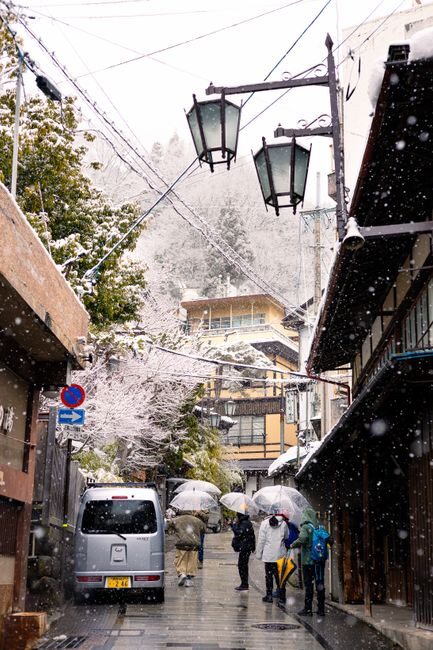
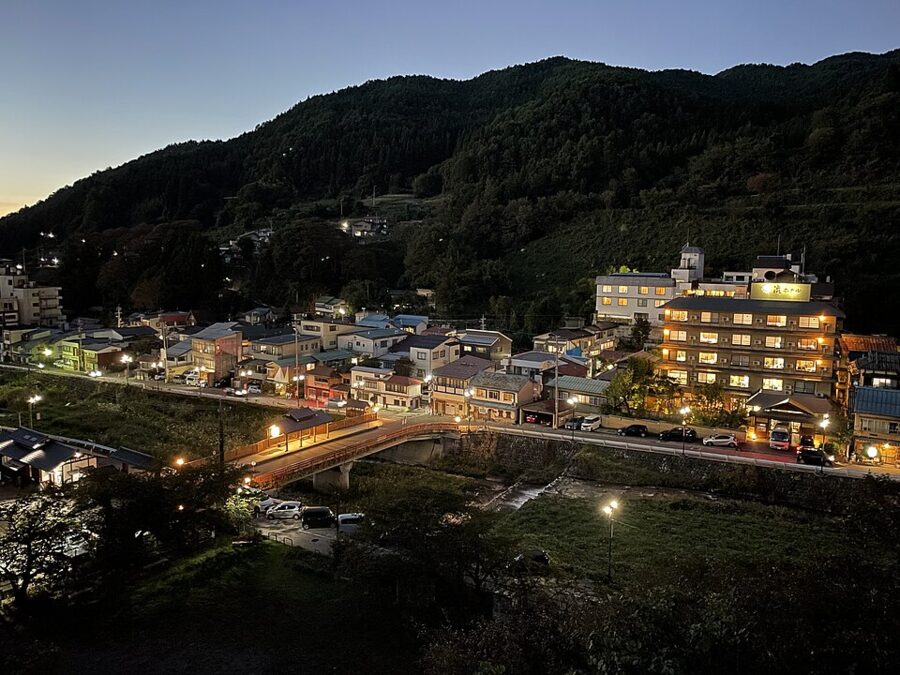
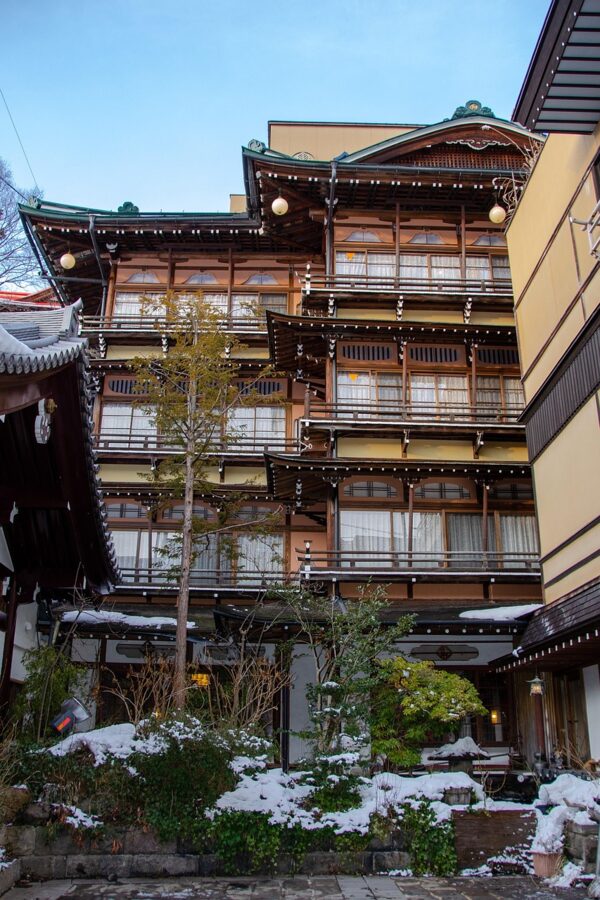
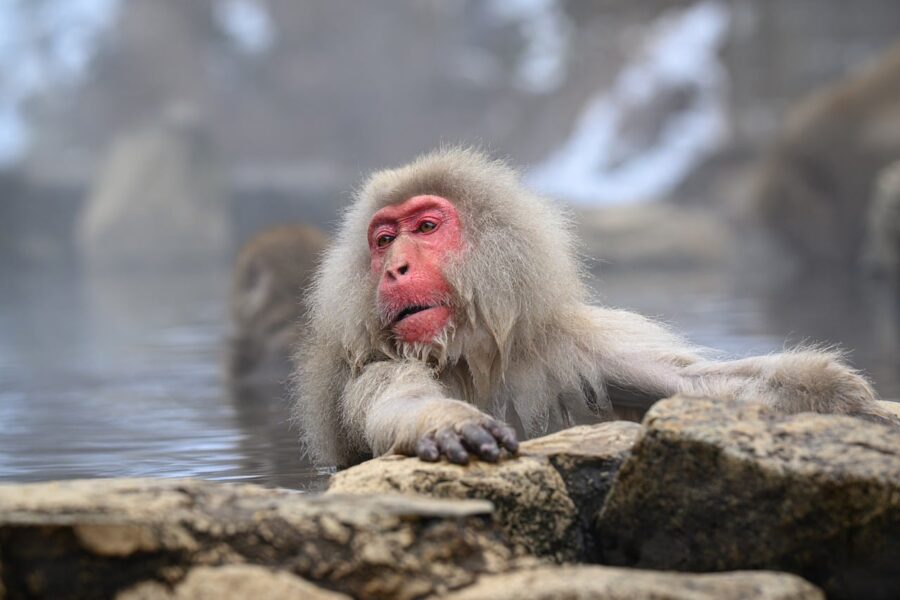
The cheaper and livelier base is down the hill, in the hot spring towns of Yudanaka and Shibu, where Nagaden’s railway ends. You get proper streets, public baths and restaurants that stay open, and pay for it with about 40 minutes on the bus each way. The snow monkeys at Jigokudani are a short ride from Yudanaka, and most people spend a rest day there.
Yudanaka has a day-use bath at the station and footbaths outside it; Shibu, next door, is the old inn street, and the bus to the plateau runs through it. Both suit a skier who wants a night out more than a ski-in door. Across the valley, Nozawa Onsen is the other big base, close on the map but not by road in winter; the high road towards it from Okushiga, Route 502, is closed from 4 November 2026 to late May 2027.

Getting there from Nagano
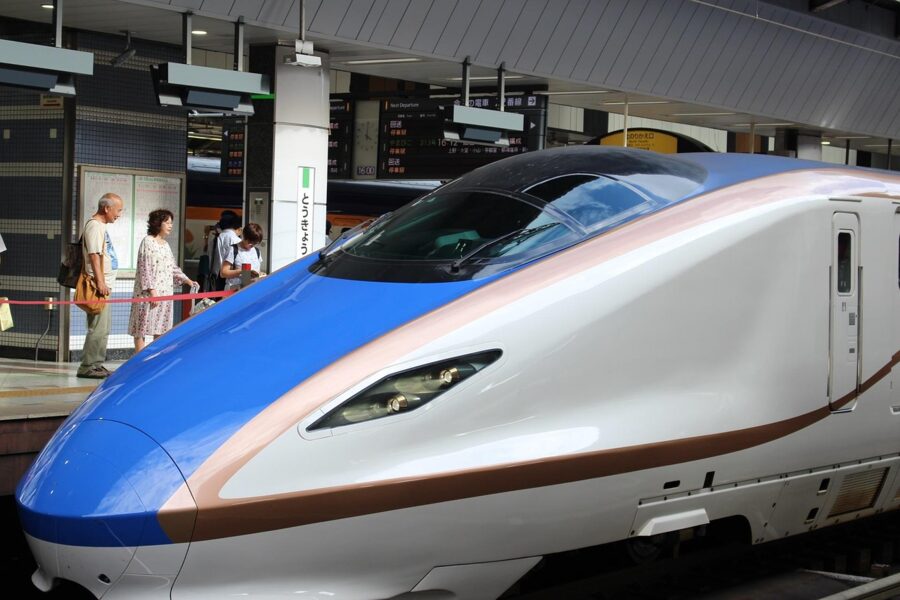
Everything starts at Nagano, about 90 minutes from Tokyo on the Hokuriku Shinkansen and also the railhead for Hakuba, on the far side of the city. From there the Nagaden express bus, route Ex23, goes straight to the plateau from stop 23 at the station’s East Exit. In the winter timetable, from 5 December 2026 to 5 April 2027, it leaves daily at 09:10, 10:30, 11:15, 13:20, 14:30 and 17:05, reaching Sun Valley in about 70 minutes, Ichinose in about 90 and the Okushiga Kogen Hotel in a little under two hours.
The fare to the plateau stops is ¥3,000. The bus is not reservable: queue at the stop, and buy the ticket beforehand at the Nagaden Bus counter by the escalator at the East Exit or from the machine at Yama no Eki. An extra 08:15 runs on Saturdays from 19 December to 20 March as far as Yama no Eki, and one Ex22 a day, at 13:10, goes via Kidoike and Kumanoyu to Hotaru Onsen for Yokoteyama.
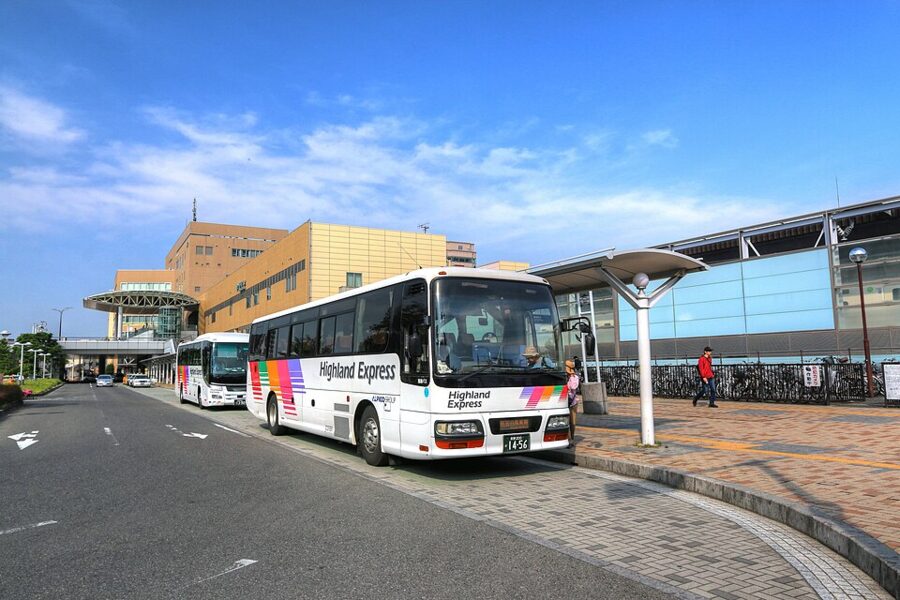

Coming back, the express timetable shows buses leaving the Okushiga Kogen Hotel at 07:45, 09:40, 11:40, 13:55, 14:45, 16:00 and 17:20, with the last from Yama no Eki at 18:00, into Nagano at 19:19. Allow 20 minutes for the shinkansen. For a Friday night arrival, the reservable Weekend Shiga bus leaves Nagano at 21:00 on Fridays from 8 January to 19 March 2027.
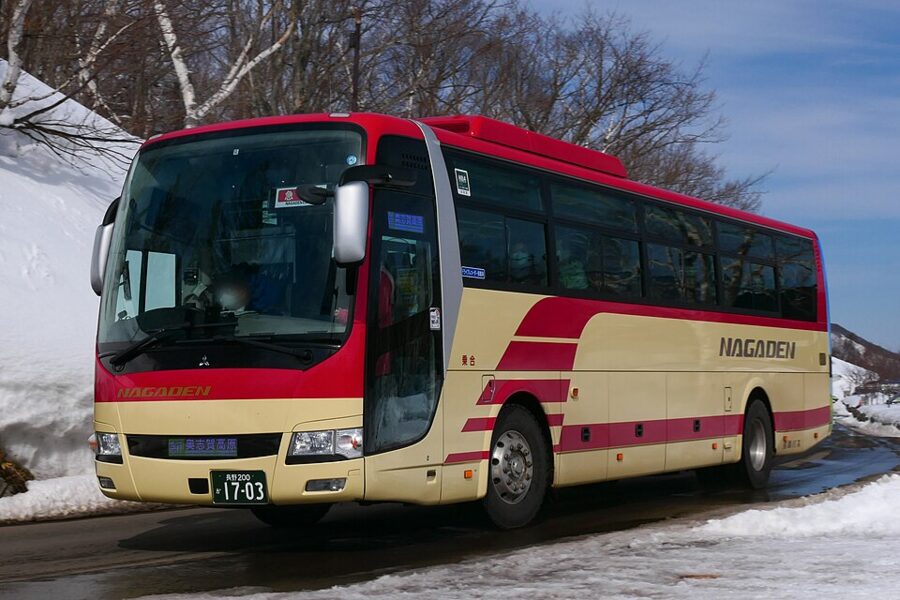

The snow monkeys complicate this for 2026–27. Nagaden has given the Snow Monkey Park its own express from Nagano, route Ex24, and the Ex23 no longer stops there in winter, so you cannot ride one bus from the monkeys to the slopes. Instead take the local bus up from the Snow Monkey Park stop, which the Yudanaka buses pass on their way to the plateau.
By train and local bus from Yudanaka
The alternative is the Nagaden train from Nagano to Yudanaka and a local bus up. The tourism association’s winter access page lists buses from Yudanaka station through Shibu and Snow Monkey Park to the plateau, roughly hourly; the 07:40, for example, reaches Sun Valley at 08:17 and Yama no Eki at 08:21. The K line carries on to Hotaru Onsen and Yokoteyama, the S line to Okushiga. The last bus up from Yudanaka leaves at about 18:30.
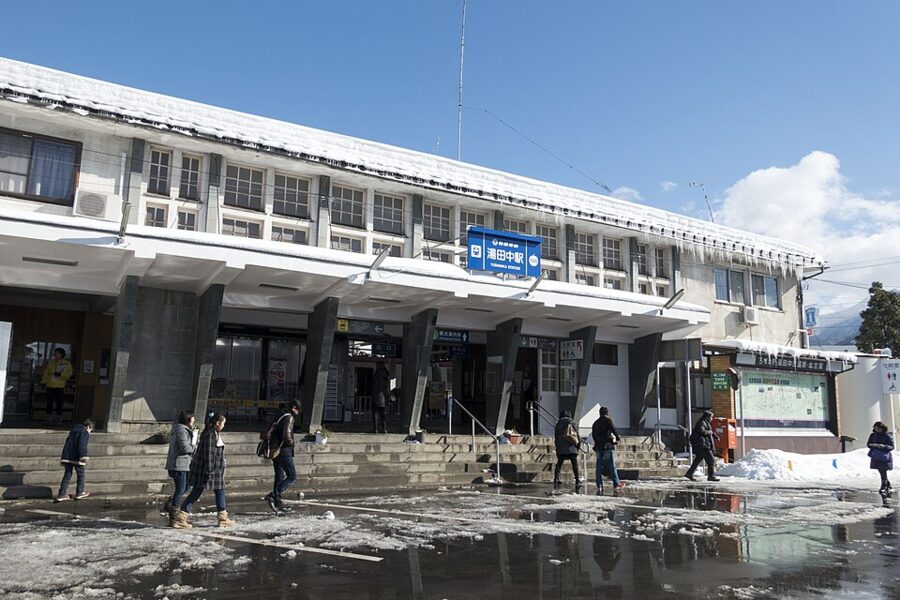
For Yokoteyama, the Yokoteyama lift company runs a free shuttle from Yudanaka station to Restaurant Akari, once a day at 09:00 and back at 16:00, about 40 minutes each way. It is for Yokoteyama skiers and guests of partner hotels, and you must book by 16:00 the day before.
Driving, parking and winter tyres
By car, leave the Joshin-etsu Expressway at Shinshu-Nakano and follow Route 292, the old Olympic road, up through Yudanaka; the tourism association gives about 240 km and 3 hours 30 minutes from the Nerima interchange in Tokyo. Parking at the ski areas is free and large, with about 1,700 spaces at Yakebitaiyama, 1,300 at Ichinose and 900 at Okushiga, though hotel guest car parks are off limits to day skiers.
The tourism association asks drivers to come on studless winter tyres in a four-wheel drive, and to carry chains. There is no petrol station on the plateau, so fill up below; diesel drivers need the winter grade sold locally. Approaches from other directions are shut: Route 292 over Shibutoge from 11 November, Route 502 from Okushiga towards Nozawa and Akiyamago from 4 November, and Route 66 from the Kasagatake gate towards Yamada Onsen from 6 November, all into late April or May 2027.

Summer and autumn on the plateau
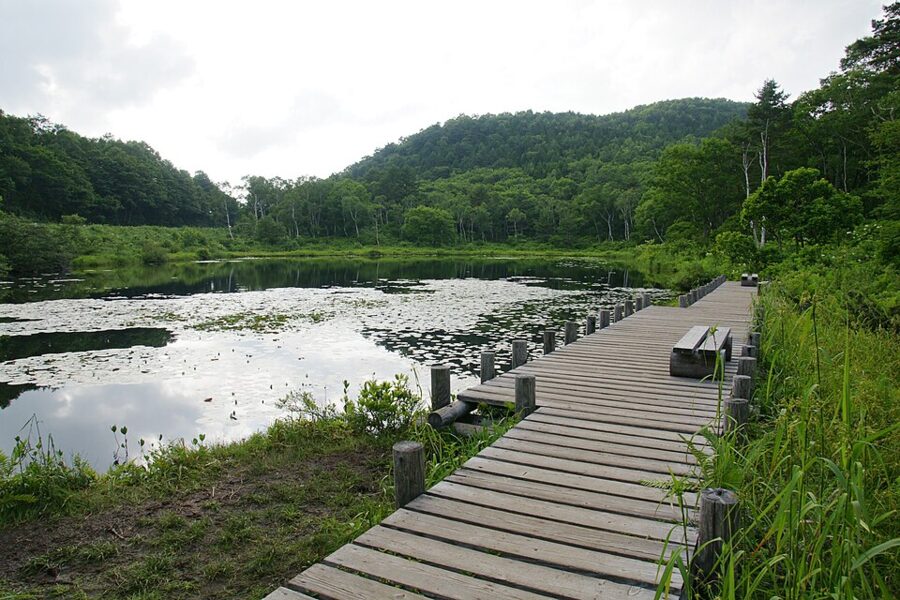
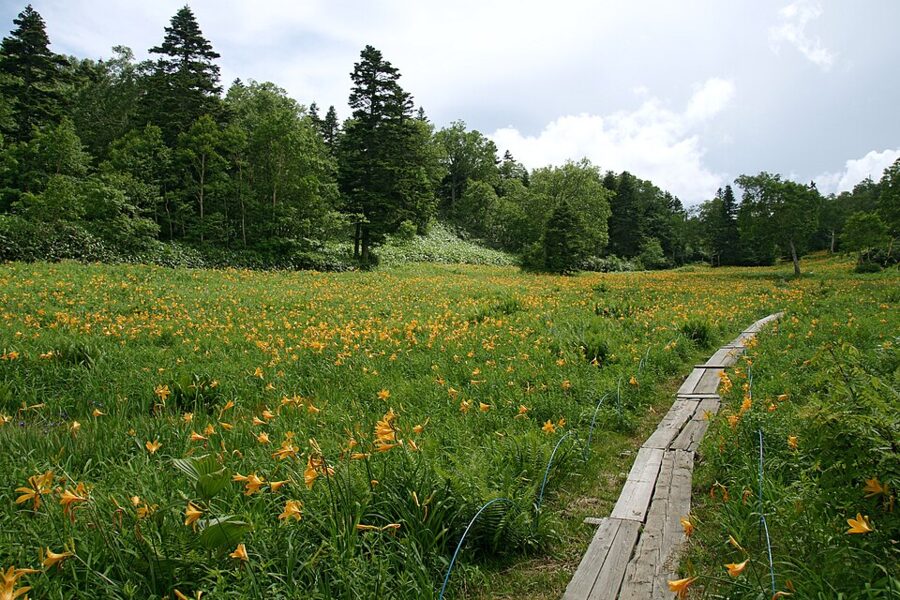
When the snow goes, the plateau turns into one of the best easy walking areas in Nagano. The trails open from mid-May, though most are still under snow at Golden Week and the high ones can hold snow into June. New leaves come in late May and June, the alpine flowers in July and August, and September is the coolest, quietest month to walk. The Shiga Kogen Guide Association runs guided walks from early June to late October from the Shiga Kogen Visitor Center at Hasuike.
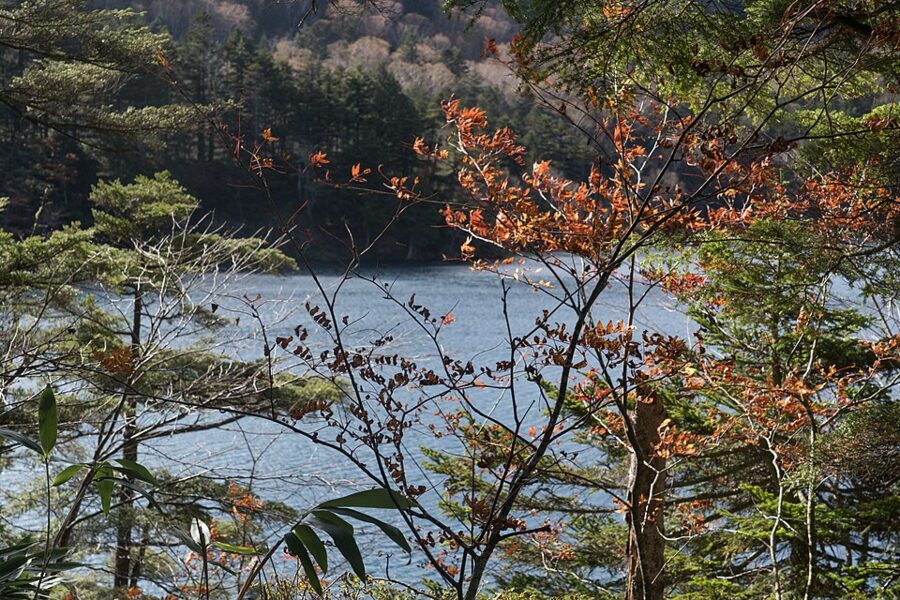

The pond walk: Shijuhachi-ike and Onuma-ike
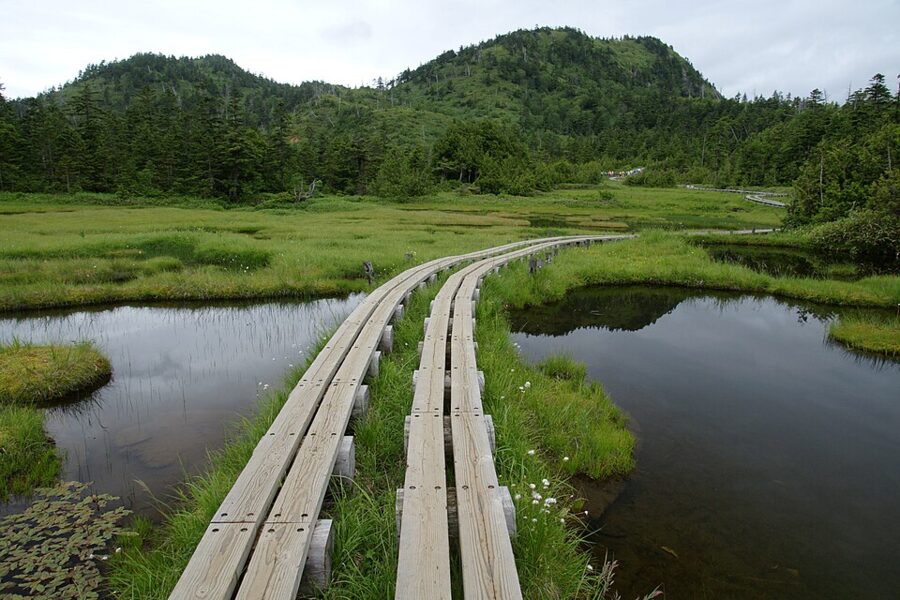
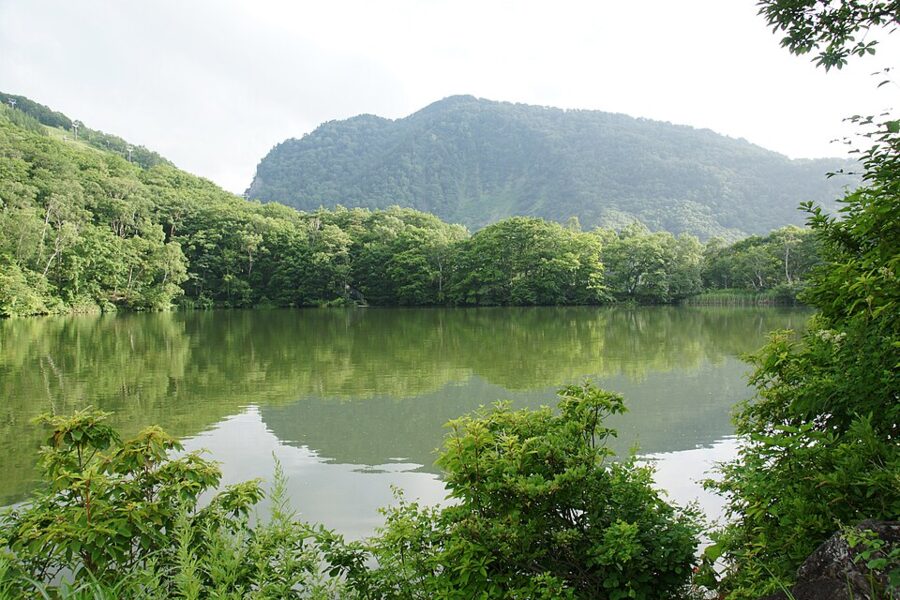
The classic walk is the pond walk, the plateau’s signature trail. It starts at Hotaru Onsen, rides or climbs up to the Maeyama marsh, crosses the boardwalks of the Shijuhachi-ike marsh at about 1,880 m and drops to Onuma-ike, the biggest pond on the plateau, before finishing at the Onuma-ike Iriguchi bus stop on the Okushiga road. Without the lift, the climb from the Suzurigawa car park is about 1 km and 100 m of ascent, about 30 minutes.
The Maeyama summer lift ran from 20 June to 18 October in 2026, on weekends, holidays and booked days, and daily from 11 July to 16 August, at ¥600 one way. Onuma-ike itself is 26.2 m deep and about 5 km round, its water an acid blue-green; a torii stands at the shore for the giant serpent said to live in the pond, honoured at a festival each August. From the Onuma-ike Iriguchi bus stop, the shore is about an hour on foot.
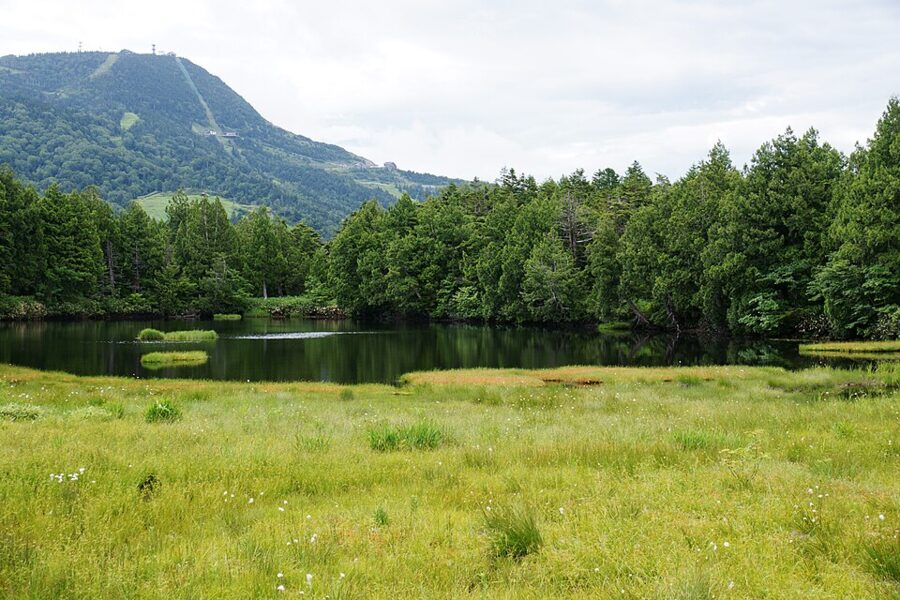

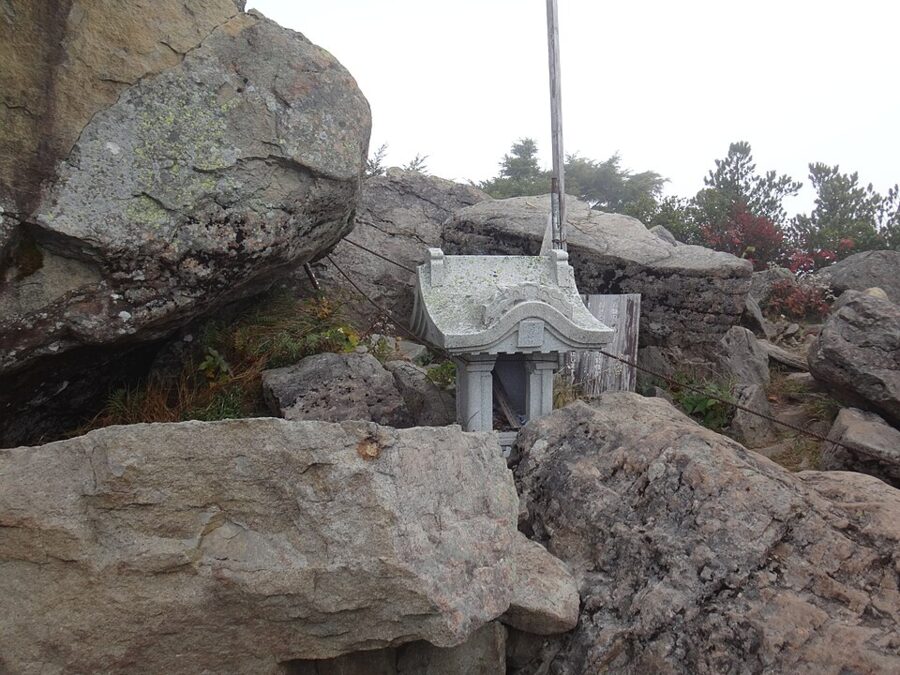
Stronger walkers can take in Shigayama on the way: the route from Hotaru Onsen over the summit to the Onuma-ike entrance is 12.6 km. The other summit worth the effort is Kasagatake, the plateau’s sharp landmark. The trail from Hotaru Onsen via Toge no Chaya is about 7 km there and back; from the Toge no Chaya car park the summit is about an hour round trip, with the inner shrine of Sano Shrine on the rocks at the top.
The big day is Iwasugeyama. The marked route leaves the Takamagahara bus stop, climbs over Higashidateyama and Terakoya to the Nokkiri junction below the summit, and comes back down past the old Kosaburo hut site to the Ichinose ski area: 18.5 km in all. Start early, carry all your water and take the Higashidateyama gondola up if it is running to save the first climb.


Kidoike, Yokoteyama and the summer lifts
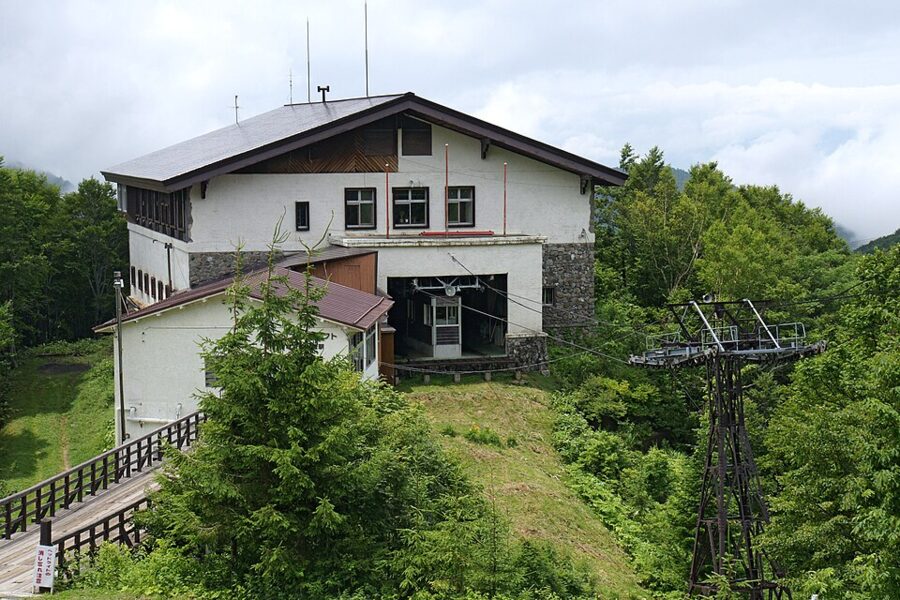
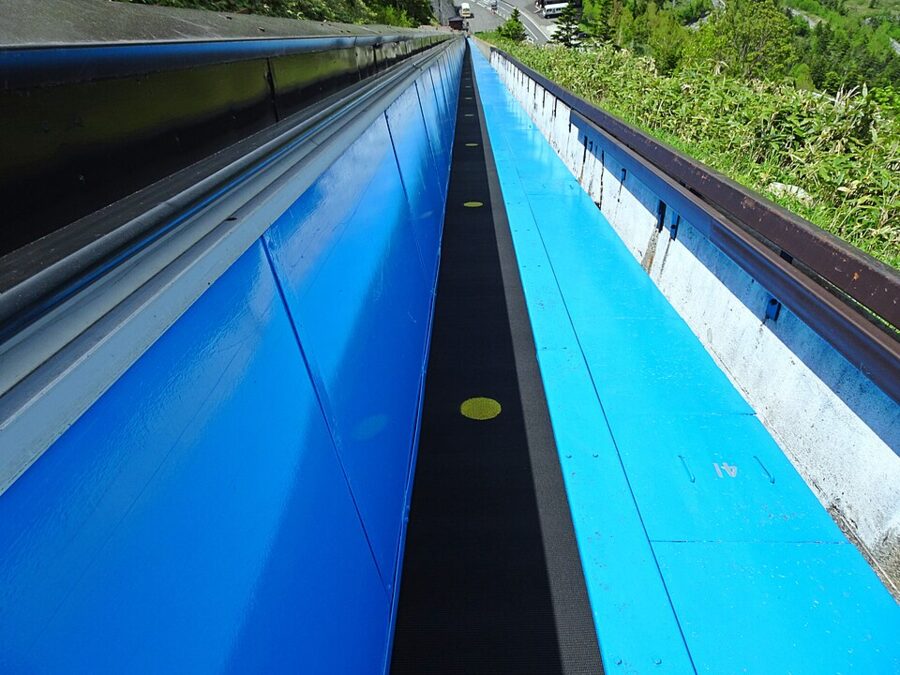
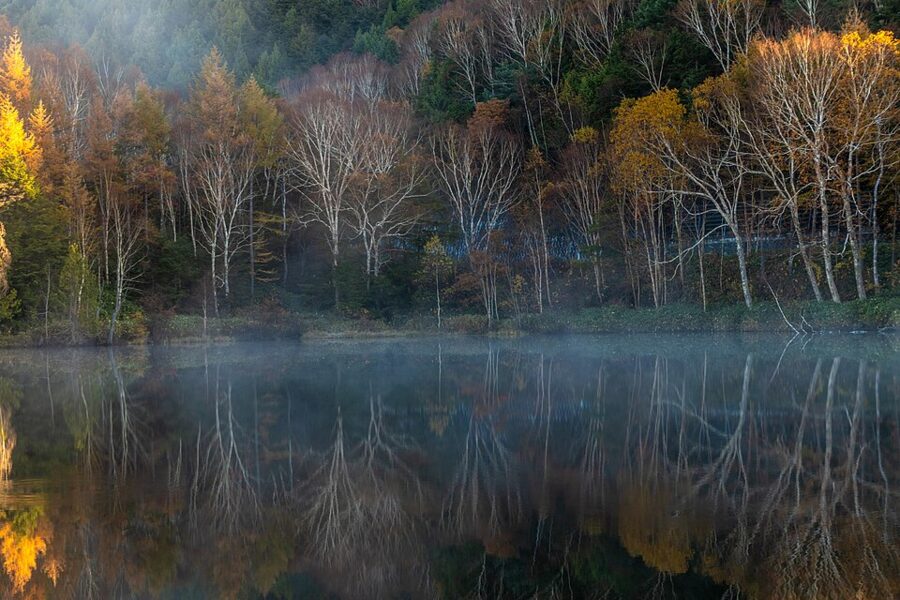
Kidoike is the pond for photographers: clear water ringed by birch and Erman’s birch, often dead calm in the early morning, beside the Tanohara marsh walk. Yokoteyama’s summit is a ride rather than a walk. The Skylator, a 200 m moving walkway rising 35 m, and the Sky Lift take you from the Nozoki car park on Route 292 to the top, and the tourism association’s summer lift page lists a return at ¥2,200 for adults; in 2026 everything ran from 11 July to 25 October.
On foot, the summit and its shrine are about 30 minutes from the Shibutoge car park or 50 minutes from the Yokoteyama Drive-in. In the central area, the Higashidateyama gondola ran from 20 June to 1 November in 2026, ¥2,000 return for adults, to the Higashidateyama alpine garden at the top, where more than 500 plants native to the plateau grow on the south slope and entry is free.




Autumn colour and bears
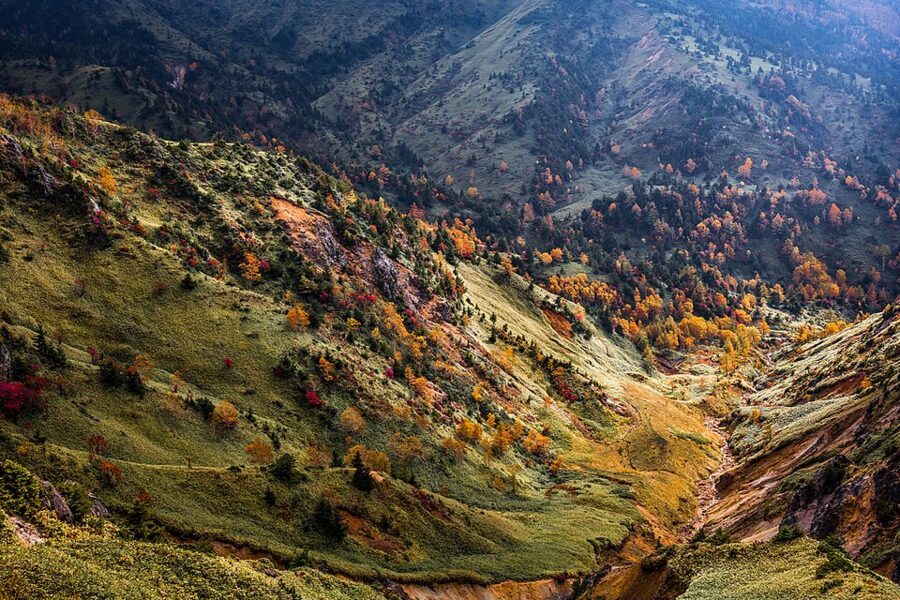
Autumn arrives early. According to the tourism association’s autumn page, colour starts on Yokoteyama in late September and moves down the mountain; Hasuike, Maruike and Biwaike, at about 1,500 m, turn from around 10 October, and the whole plateau is usually at its best in early to mid-October, lasting into late October. The first snow can come in mid-October, and by November the leaves are gone and the snow is lying.
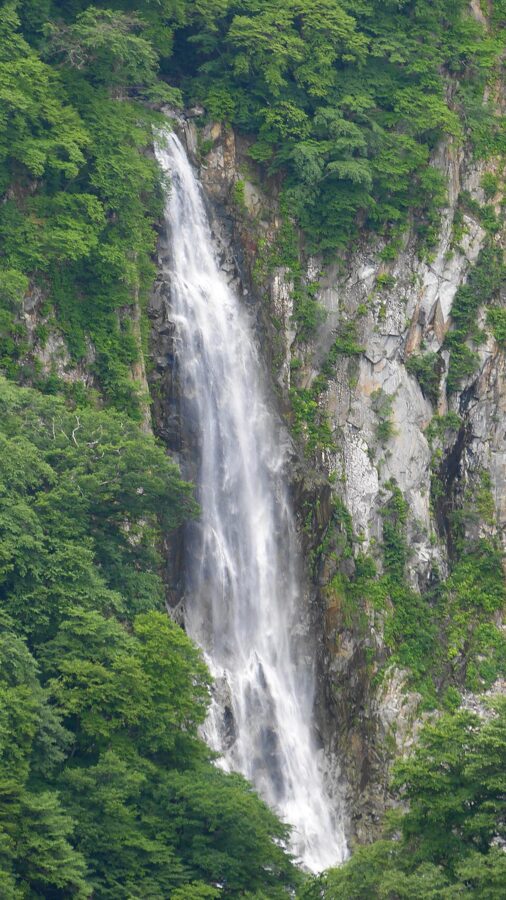
On the way up or down, stop at the Kanman falls lookout on Route 292, a minute’s walk from its car park. The fall drops 107 m down the cliffs at the plateau’s western edge, and the light reaches it from early afternoon.

Asiatic black bears live across the plateau, and the Ministry of the Environment has a current bear warning for this national park, so carry a bell and read what to do about bears before walking alone.

The last chair
Shiga Kogen rewards a plan. Ski the central area on the first day, cross to Yakebitaiyama and Okushiga on the second, and give Yokoteyama a day of its own, with the bus times in your pocket. In spring, go up early for the 06:00 lift and be done by lunch.
And when you are standing on top of Yokoteyama at 15:30, at 2,307 m with the Northern Alps lined up across the valley, you now know the score: the 4 km run to the No. 1 lift, the short walk along Route 292, and the shuttle bus back to Hasuike, which runs free until 17:30.